
Short Answer
Understanding Gravity: A Fundamental Force and Geometric Phenomenon
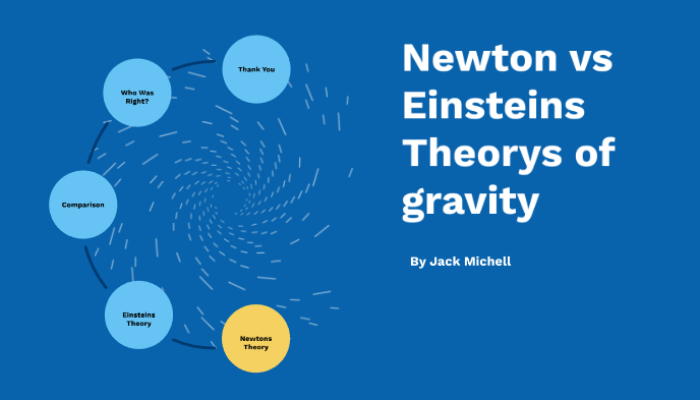
Gravity is commonly envisioned as an unseen connection that draws objects toward one another, orchestrating a perpetual cosmic interaction. This mysterious influence has fascinated humanity for centuries, serving as both a familiar presence and a profound enigma. Is gravity simply a force exerting pull between masses, or is it a more intricate phenomenon involving the bending of the very fabric of reality? To explore this question, it is essential to examine the contrasting perspectives of two monumental figures in physics: Isaac Newton and Albert Einstein.
Newtonian Gravity: The Force of Attraction
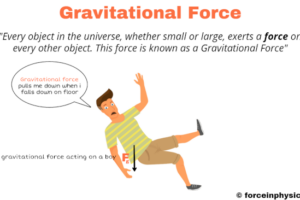
Isaac Newton conceptualized gravity as a force-an invisible yet tangible interaction between masses. His pioneering work described gravity as an instantaneous attraction acting across empty space, responsible for phenomena such as apples falling to Earth and the Moon’s orbit around our planet. This framework proved highly effective, enabling precise calculations of trajectories, navigation across oceans, and predictions of planetary motions.
- Law of Universal Gravitation:
Newton’s formula states that every two masses exert a force on each other proportional to the product of their masses and inversely proportional to the square of the distance separating them. - Practical Applications:
This law underpinned advancements in astronomy, engineering, and navigation, forming the foundation of classical mechanics.
Newton’s gravity can be likened to a puppeteer’s strings, invisibly pulling celestial bodies with a steady, unyielding grip. For over two centuries, this concept dominated scientific thought, providing a reliable explanation for motion and laying the groundwork for modern physics.
Limitations of Newtonian Gravity
Despite its success, Newton’s theory faced challenges as scientific inquiry delved deeper into the cosmos. The notion of instantaneous action at a distance-gravity acting immediately across empty space without a medium-raised conceptual difficulties. These issues became more pronounced with the advent of 20th-century physics, prompting a reevaluation of gravity’s true nature.
Einstein’s General Relativity: Gravity as Curved Spacetime
Albert Einstein revolutionized the understanding of gravity by discarding the idea of it as a force. His general theory of relativity, introduced in 1915, portrayed the universe as a four-dimensional fabric of space and time-spacetime-that can bend and warp in response to mass and energy.
- Spacetime Curvature:
Massive objects cause distortions in spacetime, and these deformations dictate the motion of other bodies. - Geodesics:
Objects follow the straightest possible paths within this curved geometry, which appear as curved trajectories in three-dimensional space.
To visualize this, imagine a flexible trampoline stretched taut. When a heavy object rests on it, the surface dips, causing smaller objects nearby to move along curved paths toward the mass. In this analogy, gravity is not a pulling force but the effect of moving along a warped surface.
Implications and Advances from Einstein’s Theory
Einstein’s geometric interpretation of gravity introduced profound changes in physics:
- Gravity and Geometry:
Gravity became understood as a manifestation of spacetime’s shape rather than a conventional force. - Speed of Gravitational Changes:
Unlike Newton’s instantaneous action, changes in the gravitational field propagate at the speed of light, aligning gravity with the causal structure of the universe. - Predictive Power:
This framework enabled predictions of phenomena such as black holes and gravitational waves-ripples in spacetime confirmed by observation a century later.
Comparing Newtonian and Einsteinian Views
The contrast between Newton’s and Einstein’s models highlights the evolution of scientific understanding:
- Newton’s Model:
Offers a direct, force-based explanation effective for everyday scales and velocities. - Einstein’s Model:
Provides a more comprehensive description necessary for extreme conditions like near black holes or at cosmological distances.
While Newtonian gravity remains practical for most terrestrial and planetary applications, Einstein’s theory is indispensable for high-precision astrophysics and cosmology.
Common Misconceptions About Gravity
Gravity acts instantaneously across space.
According to general relativity, gravitational effects propagate at the speed of light.
Gravity is always a force pulling objects.
Gravity can also be understood as the curvature of spacetime guiding the motion of objects.
The Significance of Gravity in Science and Daily Life
Gravity is fundamental to both our everyday experiences and the grand structure of the cosmos. It governs the motion of planets, the formation of stars, and the dynamics of galaxies. On Earth, gravity shapes everything from the flow of rivers to the ability to walk upright. Its dual nature-as both a force and a geometric property-exemplifies the depth and complexity of natural laws, inspiring ongoing exploration and discovery.
Conclusion: Gravity as a Gateway to Cosmic Understanding
The story of gravity, from Newton’s force to Einstein’s geometry, invites us to appreciate the universe through increasingly sophisticated perspectives. It challenges intuition and expands our comprehension of reality, revealing the intimate relationship between matter, motion, and the fabric of spacetime. Gravity remains a profound testament to humanity’s enduring quest to decode the fundamental principles that govern existence.
Leave a Reply