
Short Answer
Definition of Topological Semimetals
Topological semimetals are an intriguing class of materials situated at the intersection of condensed matter physics, quantum mechanics, and materials science. Unlike conventional semiconductors, these materials exhibit partially filled conduction and valence bands, allowing electrons to move between them with minimal energy input. The incorporation of topological principles reveals that certain semimetals possess unique surface states protected by fundamental symmetries such as time-reversal symmetry, distinguishing them from ordinary semimetals.
Fundamental Concepts: Topological Invariants
Topological invariants serve as crucial mathematical tools that categorize topological semimetals. These invariants, including the Chern number and the Z2 invariant, provide a framework to understand the electronic states beyond traditional band theory, which primarily focuses on energy level occupancy. The presence of these invariants indicates that the electronic states in these materials are robust against disturbances, making them promising candidates for applications requiring stability, such as spintronics and advanced electronic devices.
Classification of Topological Semimetals
Topological semimetals are broadly divided into three main categories based on their band structures and physical properties:
- Dirac Semimetals:
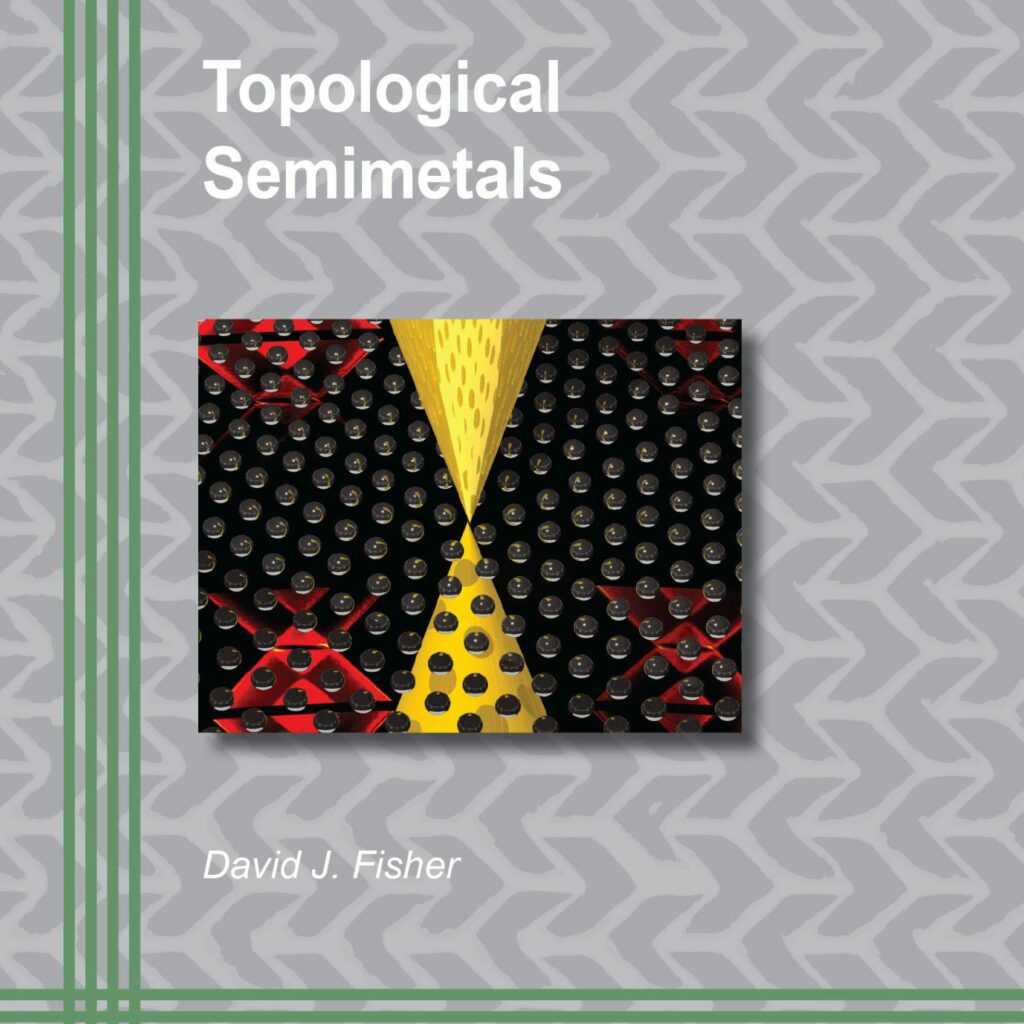
These materials feature Dirac points where conduction and valence bands intersect at discrete momentum space points, forming a conical dispersion. This results in massless Dirac fermions, which contribute to exceptional charge carrier mobility and unique quantum effects. - Weyl Semimetals:
Characterized by Weyl points-band crossing points in momentum space-these semimetals exhibit phenomena such as the chiral anomaly, where an applied electric field causes an imbalance in Weyl fermions. This leads to extraordinary transport properties, including ultra-high conductivity and distinctive electromagnetic responses. - Nodal-Line Semimetals:
These possess band degeneracies forming closed loops rather than isolated points, giving rise to complex topological behaviors and robust surface states. The unique geometry of these nodal lines opens avenues for engineering novel quantum phases through material design.
Material Synthesis and Fabrication Methods
The production of topological semimetals is essential for both experimental investigation and practical application. Techniques such as chemical vapor deposition (CVD), molecular beam epitaxy (MBE), and hydrothermal synthesis are commonly employed to grow high-quality single crystals. Materials like zirconium tetraarsenide (ZrAs), tantalum arsenide (TaAs), and nickel phosphide (NiP) are prominent examples, each exhibiting distinct topological characteristics that facilitate the study and utilization of these exotic phases.
Techniques for Experimental Characterization
Identifying and analyzing the topological features of semimetals requires sophisticated experimental tools. Angle-resolved photoemission spectroscopy (ARPES) is pivotal for mapping electronic band structures and pinpointing Dirac or Weyl points. Complementary methods such as transport measurements help verify electronic behavior and the stability of topological states. Additionally, scanning tunneling microscopy (STM) and time-resolved spectroscopy provide insights into the dynamic properties of surface states and charge carriers, enriching our understanding of these materials.
Applications and Technological Implications
The distinctive electronic properties of topological semimetals position them as promising materials for future technologies. Their high conductivity and topologically protected surface states are particularly advantageous for spintronics, where electron spin is harnessed for information processing. Moreover, their inherent robustness against external disturbances is crucial for quantum computing, potentially enhancing qubit stability and reducing decoherence.
Beyond electronics, topological semimetals are gaining attention for thermoelectric applications. Their ability to maintain high electrical conductivity while suppressing thermal conductivity offers a pathway to more efficient energy conversion devices, which could revolutionize power generation and waste heat recovery technologies.
Common Misconceptions About Topological Semimetals
Topological semimetals are just ordinary semimetals with no special properties.
Unlike conventional semimetals, topological semimetals possess protected surface states and unique electronic behaviors arising from their topological invariants.
All semimetals exhibit the same electronic transport phenomena.
Different classes of topological semimetals (Dirac, Weyl, nodal-line) display distinct transport properties due to their unique band structures and topological features.
Why Topological Semimetals Are Important
Topological semimetals represent a significant advancement in our understanding of quantum materials, merging classical band theory with modern topological concepts. Their exceptional electronic properties and resilience to perturbations make them vital for the development of next-generation electronic devices, spintronic technologies, and quantum computers. Furthermore, their potential in thermoelectric applications highlights their versatility and impact on energy technologies. As research continues, these materials are expected to unlock new physical phenomena and drive innovation across multiple scientific and technological domains.
FAQ
What distinguishes topological semimetals from ordinary semimetals?
Topological semimetals have protected surface states and unique electronic behaviors arising from topological invariants, unlike ordinary semimetals which lack these features.
What are the main types of topological semimetals?
The main types are Dirac semimetals, Weyl semimetals, and nodal-line semimetals, each characterized by distinct band structures and topological properties.
What are common methods to synthesize topological semimetals?
Common synthesis techniques include chemical vapor deposition (CVD), molecular beam epitaxy (MBE), and hydrothermal synthesis.
What applications do topological semimetals have?
They are used in spintronics, quantum computing, and thermoelectric devices due to their high conductivity and robust topological surface states.






Leave a Reply