
Short Answer
Understanding Black Holes
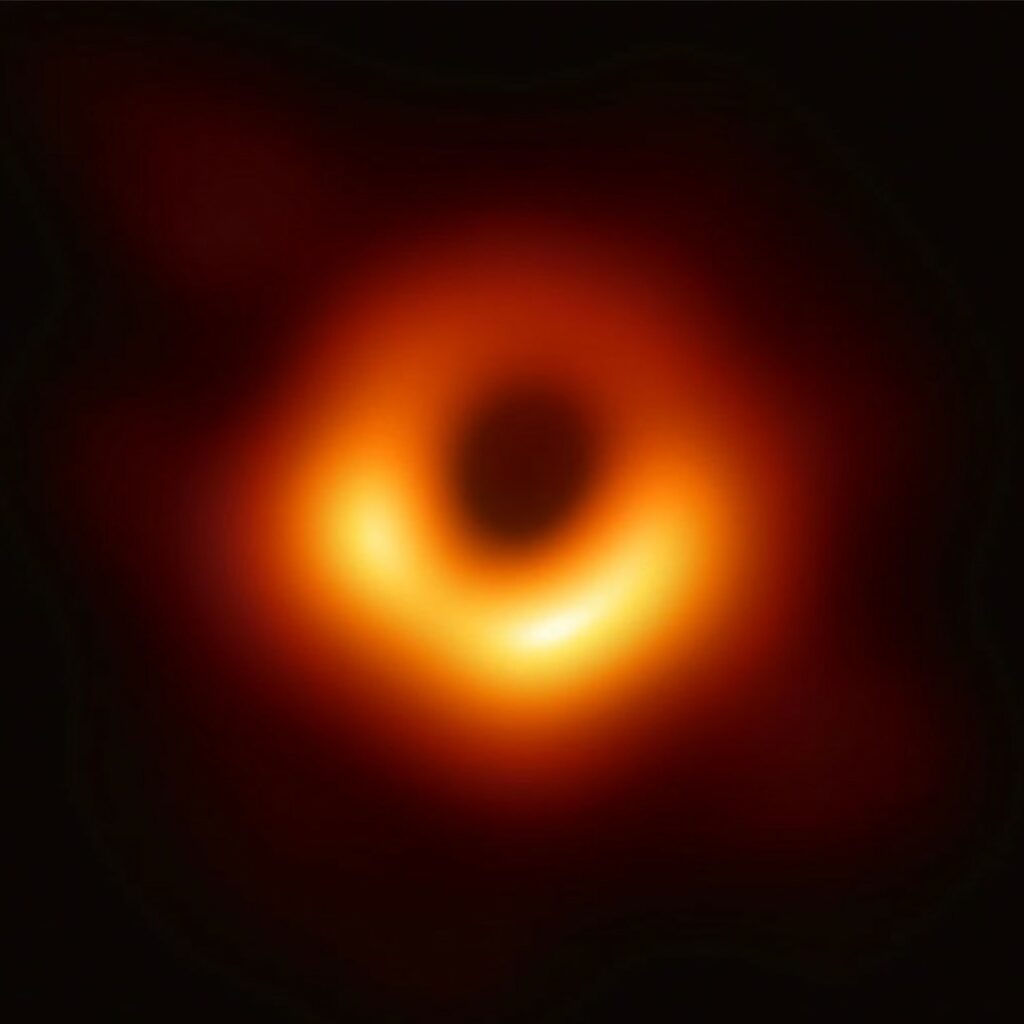
Black holes are extraordinary cosmic entities defined by regions in spacetime where gravitational forces are so overwhelmingly strong that nothing, including light, can escape once it crosses the event horizon. This boundary marks the point of no return, rendering black holes inherently invisible to direct optical observation. Since traditional telescopes rely on detecting light to form images, black holes themselves remain hidden behind an impenetrable veil of darkness.
Indirect Observation of Black Holes
Despite their invisibility, black holes reveal their presence through their profound effects on nearby matter and spacetime. They influence the motion of stars, distort the fabric of spacetime, and generate detectable signals such as X-rays and gravitational waves. Modern astronomy leverages these indirect clues to study black holes, as direct imaging is fundamentally impossible with conventional light-based methods.
The James Webb Space Telescope’s Role in Black Hole Research
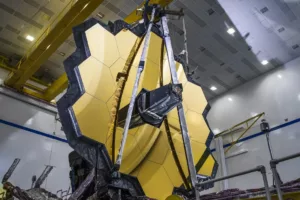
The James Webb Space Telescope (JWST) is a cutting-edge observatory designed to observe the universe primarily in the infrared spectrum. This capability allows it to penetrate dense cosmic dust clouds that obscure many celestial phenomena in visible light, providing unprecedented views of the environments surrounding black holes.
- Infrared Observation:
JWST’s sensitivity to infrared wavelengths enables it to detect the heat emitted by accretion disks-vast spirals of gas and dust heated by gravitational forces as they orbit supermassive black holes. - Studying Accretion Disks:
These disks radiate strongly in the infrared, and JWST’s observations reveal details about the inflow of matter and energetic processes that influence galaxy evolution. - Exploring Early Universe Quasars:
By capturing infrared light stretched by cosmological redshift, JWST observes ancient quasars powered by supermassive black holes, offering insights into black hole formation during the universe’s infancy.
How JWST Complements Other Black Hole Observations
While projects like the Event Horizon Telescope (EHT) use synchronized radio telescopes to directly image the shadow of a black hole’s event horizon, JWST’s approach is more indirect but equally vital. It focuses on the broader galactic context, examining how black holes affect their surroundings through stellar dynamics, accretion phenomena, and radiative emissions. This complementary perspective enriches our understanding of black hole properties and behaviors.
Black Holes and Galactic Evolution
JWST’s observations extend beyond black holes themselves to the complex interactions between these cosmic giants and their host galaxies. Active black holes emit powerful jets and outflows that influence the gas reservoirs within galaxies, regulating star formation. This feedback mechanism illustrates the paradoxical role of black holes as both suppressors and catalysts of cosmic growth, a dynamic that JWST captures with remarkable clarity.
Scientific and Philosophical Significance
Black holes represent the ultimate frontier where the known laws of physics-quantum mechanics, general relativity, and thermodynamics-intersect and challenge our understanding. JWST’s detailed study of black hole environments brings us closer to unraveling these cosmic paradoxes. Beyond scientific inquiry, the data inspire profound reflections on the nature of existence, infinity, and the universe’s hidden structure.
Summary: JWST’s Impact on Black Hole Exploration
Although the James Webb Space Telescope cannot directly image black holes due to their light-trapping nature, it excels at unveiling the phenomena surrounding them. By observing accretion disks, quasar environments, and the interplay between black holes and galactic ecosystems across vast distances and early cosmic epochs, JWST ushers in a new era of black hole research. This indirect yet powerful vision enhances our knowledge of black hole formation, growth, and influence, while deepening humanity’s fascination with these enigmatic cosmic features.
Why Studying Black Holes Matters
Black holes are not only fundamental to understanding the universe’s structure and evolution but also serve as natural laboratories for testing the limits of physics. Insights gained from studying black holes inform theories about gravity, spacetime, and the origins of galaxies. The James Webb Space Telescope’s contributions are pivotal in advancing these fields, making black hole research a cornerstone of modern astrophysics and cosmology.



Leave a Reply