

Short Answer
Understanding Dark Matter and Dark Energy
Dark matter and dark energy are two of the most mysterious and dominant components of the universe, together accounting for about 95% of its total content. Despite their prevalence, they exhibit fundamentally different behaviors and properties, making their study one of the most challenging frontiers in modern astrophysics and cosmology.
Dark Matter: The Invisible Framework
Dark matter is an unseen form of matter that neither emits nor absorbs electromagnetic radiation, rendering it invisible to traditional telescopes. Its presence is inferred through its gravitational effects, which act as a cosmic scaffold supporting the formation and stability of galaxies, galaxy clusters, and the large-scale structure of the universe. Key observational evidence includes:
- Galactic Rotation Curves:
Stars in galaxies rotate at speeds that cannot be explained by visible matter alone, implying additional unseen mass. - Gravitational Lensing:
Light from distant objects bends around massive invisible structures, revealing the presence of dark matter. - Cosmic Microwave Background (CMB):
Fluctuations in the CMB provide indirect evidence of dark matter’s influence on the early universe’s structure.
Dark Energy: The Cosmic Accelerator
In contrast, dark energy is a mysterious force responsible for the accelerated expansion of the universe. Discovered in the late 1990s through observations of distant supernovae, dark energy constitutes approximately 68% of the universe’s total energy density. Unlike dark matter’s attractive gravitational pull, dark energy exerts a repulsive pressure that stretches the fabric of space, causing galaxies to move away from each other at an increasing rate.
The Challenge of Unification
Dark matter and dark energy present a paradoxical coexistence: one acts as an attractive force that clumps matter together, while the other drives cosmic expansion apart. This stark contrast raises a profound question in cosmology-can a single theoretical framework reconcile these two phenomena and reveal a deeper connection between them?
The Dark Fluid Hypothesis
One promising approach to unification is the concept of a “dark fluid,” an exotic substance whose properties change depending on the environment. In regions of high density, such as within galaxies, this fluid behaves like dark matter, clustering and exerting gravitational attraction. On the vast, low-density scales of the cosmos, it exhibits the repulsive qualities attributed to dark energy, driving accelerated expansion. This dual behavior could potentially simplify our understanding of the universe’s composition.
However, modeling such a fluid is highly complex. It requires an evolving equation of state that can simultaneously mimic cold dark matter’s gravitational effects and generate negative pressure in expansive regions. This demands sophisticated theoretical constructs and must align with stringent observational data from the CMB, galaxy surveys, and supernova measurements.
Modified Gravity Theories
Another avenue explores the possibility that dark matter and dark energy are not distinct substances but rather manifestations of modifications to Einstein’s general relativity on cosmological scales. Theories such as Tensor-Vector-Scalar gravity (TeVeS) and f(R) gravity propose alterations to gravitational laws that could replicate the effects attributed to dark matter and dark energy without invoking new particles or fields.
While these theories offer an elegant unification, they face significant challenges. They must accurately reproduce a wide range of astrophysical observations and often introduce additional fields or degrees of freedom, which can paradoxically resemble dark sector components. Despite these complexities, modified gravity remains a vibrant research area, combining advanced mathematics with precise astronomical measurements.
Quantum and Higher-Dimensional Perspectives
Some theoretical physicists suggest that dark matter and dark energy might emerge from quantum phenomena or higher-dimensional frameworks. For instance, quintessence models describe a slowly evolving scalar field permeating space that acts as dark energy and may weakly interact to form dark matter structures. String theory and brane-world scenarios introduce extra spatial dimensions and exotic particles that could unify these cosmic mysteries within a more fundamental theory.
These hypotheses are mathematically sophisticated but currently lack direct empirical support, placing their verification beyond the reach of present-day experiments.
Philosophical and Scientific Implications
The pursuit of a unified theory for dark matter and dark energy also raises deep philosophical questions about the nature of reality. Are these entities simply placeholders for unknown physical laws yet to be discovered? Or do they hint at aspects of spacetime and matter that transcend our current scientific paradigms? This quest challenges the boundaries of human knowledge and inspires both empirical investigation and conceptual reflection.
Current Status and Future Directions
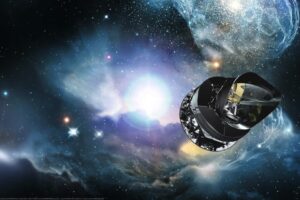
Despite significant progress in observational cosmology-through missions like the Planck satellite, extensive galaxy surveys, and gravitational wave detectors-a definitive unified theory remains out of reach. Ongoing research integrates theoretical innovation, computational simulations, and increasingly precise data to refine our understanding and test new models.
The journey toward unification continues to stimulate technological advancements, foster interdisciplinary collaboration, and expand our cosmic perspective. Whether or not a single comprehensive theory emerges soon, the endeavor enriches our grasp of the universe’s profound complexity and wonder.




Leave a Reply