A Cracking Approach to Nanotechnology: Breaking Boundaries with Atoms

Definition of Nanotechnology Nanotechnology refers to the science and engineering involved in manipulating matter at the scale of atoms and molecules, typically within the range of 1 to 100 nanometers. This multidisciplinary field integrates principles from physics, chemistry, biology, and engineering to create materials and devices with novel properties and functions. By controlling structures at […]

Read More →

Does light hit atoms? If it does do atoms have a shadow?

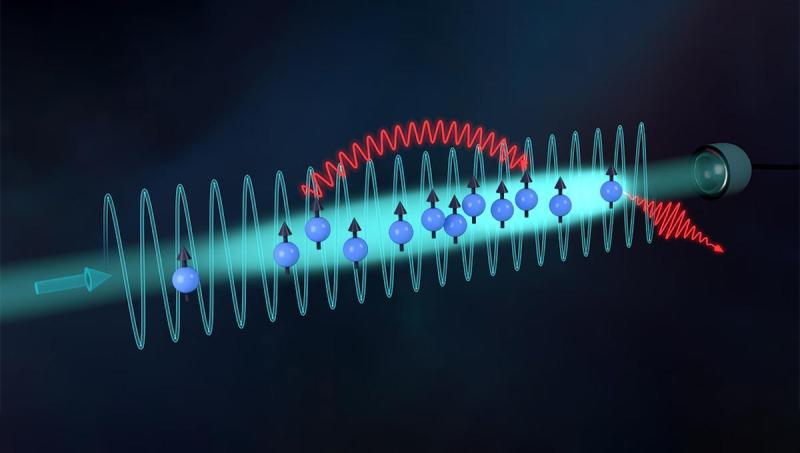
Definition of Light-Atom Interaction Light, a fundamental form of electromagnetic radiation, permeates the universe, enabling visibility and energy transfer. The interaction between light and atoms involves the exchange of energy at the quantum level, where photons-the elementary particles of light-engage with the atomic constituents of matter. This interaction is central to understanding phenomena such as […]

Read More →

Can we interact with atoms or anything on the atomic level?

Definition of Atomic-Level Interaction Atomic-level interaction refers to the study and manipulation of atoms and their constituent particles-protons, neutrons, and electrons-using advanced scientific methods and instruments. This field lies at the crossroads of physics and chemistry, focusing on how atoms behave, interact, and can be controlled to reveal fundamental properties of matter and enable technological […]

Read More →

How do we know that atoms don’t have a brain of their own?

Understanding Atomic Consciousness: A Scientific Inquiry The question of whether atoms possess consciousness or the ability to think independently, similar to living beings, has intrigued both scientists and philosophers. While the idea might evoke fanciful images of sentient particles, a detailed scientific analysis rooted in atomic structure and quantum physics strongly refutes the possibility of […]

Read More →

Why are atoms and molecules always in motion?

Definition of Atomic and Molecular Motion Atomic and molecular motion refers to the continuous movement of atoms and molecules, which forms a fundamental aspect of physical science. This ceaseless activity occurs at scales far beyond human perception, involving particles that are in constant vibration, rotation, and translation. Understanding this motion provides insight into the microscopic […]

Read More →

What are the origins of atoms?

Definition of Atomic Origins The concept of atomic origins explores the beginnings and formation of atoms, the fundamental units that compose all matter in the universe. This topic intersects various scientific fields such as physics, chemistry, and cosmology, revealing the profound history and processes that led to the existence of atoms. Understanding atomic origins provides […]

Read More →

How do atoms stick together to form molecules?

Definition of Atomic Bonding Atomic bonding refers to the process by which atoms connect to form molecules, the essential units of matter that compose the substances around us. This phenomenon is a cornerstone of chemistry and illustrates the fundamental forces that govern natural interactions. Through bonding, atoms achieve more stable arrangements, enabling the vast diversity […]

Read More →

How do similar atoms form molecules?

Definition of Molecular Formation Among Similar Atoms Molecular formation involving atoms of the same element is a fundamental concept in chemistry that explains how identical atoms bond to create molecules. This process is governed by the interactions of atomic structures and the principles underlying chemical bonding. At its essence, it involves the behavior of electrons […]

Read More →

What are the building blocks of atoms?

Definition of Atomic Building Blocks The fundamental components that constitute atoms are far more intricate than the traditional view of indivisible units. Atoms themselves are composed of smaller particles, which form the basis of all matter in the universe. Understanding these building blocks requires delving into the subatomic realm, where particles such as protons, neutrons, […]

Read More →

What causes atoms to form molecules?

Definition of Atomic Bonding Atoms serve as the essential units of matter, and their tendency to combine into molecules forms a fundamental principle in both chemistry and physics. This phenomenon explains why atoms rarely exist in isolation and instead prefer to associate with one another, creating the diverse substances that compose the universe. Understanding why […]

Read More →