
Short Answer
Definition of Atomic Origins
The concept of atomic origins explores the beginnings and formation of atoms, the fundamental units that compose all matter in the universe. This topic intersects various scientific fields such as physics, chemistry, and cosmology, revealing the profound history and processes that led to the existence of atoms. Understanding atomic origins provides insight into the fundamental nature of matter and the cosmic events that shaped it.
The Birth of Atoms: From the Big Bang to Nucleosynthesis
Approximately 13.8 billion years ago, the universe emerged from the Big Bang, an event marking the origin of time and space. Initially, the universe existed as an extremely hot, dense singularity filled with energy and elementary particles in a highly unstable state. As expansion occurred, the universe cooled, creating conditions suitable for the formation of atomic nuclei in a process called nucleosynthesis.
- Primordial Nuclei Formation:
Within the first few minutes after the Big Bang, protons and neutrons combined to form the nuclei of the lightest elements, primarily hydrogen and helium. - Role of Fundamental Forces:
The strong nuclear force played a crucial role in stabilizing these nuclei despite the high-energy environment, enabling the first atomic building blocks to form.
Cosmic Evolution: From Dark Ages to Star Formation
Following nucleosynthesis, the universe entered a period often referred to as the “cosmic dark age,” during which matter cooled and began to clump together under gravity. This gravitational attraction led to the birth of the first stars, composed mainly of hydrogen and helium. These stars initiated nuclear fusion in their cores, synthesizing heavier elements and transforming the chemical makeup of the cosmos.
Stellar Nucleosynthesis and Element Formation
The life cycles of stars are essential to the creation of elements beyond hydrogen and helium. Through stellar nucleosynthesis, stars generate elements such as carbon, oxygen, and iron. When stars exhaust their fuel, many end in supernova explosions, dispersing these heavier elements into space and seeding the formation of new stars, planets, and eventually life.
Atoms as Cosmic Heritage
The atoms that constitute our bodies and the Earth itself are remnants of ancient stellar processes. The iron in human blood, the carbon in organic molecules, and the oxygen we breathe all originated from the nuclear furnaces of long-extinct stars. This realization highlights that atoms are not just physical components but also historical records of cosmic evolution, linking us intimately to the universe’s past.
Quantum Mechanics and Atomic Structure
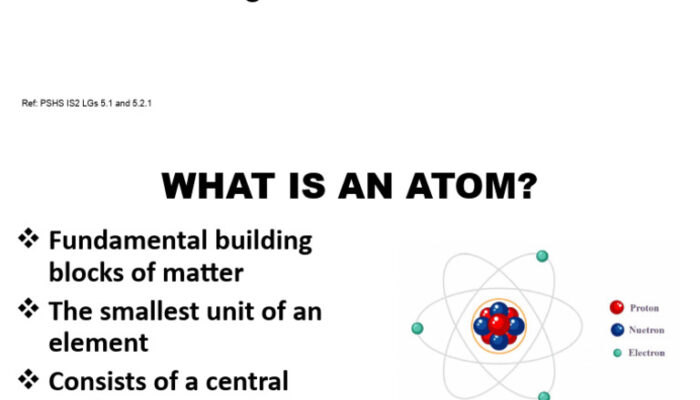
Atoms consist of a dense nucleus surrounded by electrons arranged in specific configurations that determine chemical properties. The behavior of these subatomic particles is governed by quantum mechanics, which introduces concepts such as wave-particle duality and the uncertainty principle. These quantum phenomena add complexity to our understanding of atomic behavior and origins, emphasizing the intricate relationship between particles and fundamental forces.
Subatomic Particles and Modern Discoveries
Advancements in particle physics have revealed that protons and neutrons themselves are composed of smaller entities called quarks, held together by gluons within the framework of quantum chromodynamics. This deeper understanding of atomic constituents sheds light on how matter emerges from the fabric of spacetime and enhances our comprehension of atomic origins at the most fundamental level.
Historical Perspectives on Atomic Theory
The idea of atoms has evolved over millennia. Ancient philosophers like Democritus proposed the existence of indivisible particles called “atomos,” laying the philosophical foundation for atomic theory. In the early 20th century, scientists such as Ernest Rutherford and Niels Bohr revolutionized atomic science through experiments that revealed the structure of the atom, catalyzing further scientific progress and technological innovation.
Technological Advances in Atomic Exploration
Modern tools like atomic force microscopy and particle accelerators have dramatically expanded our ability to observe and manipulate atomic structures. These technologies enable scientists to visualize atomic arrangements with unprecedented precision and investigate atomic interactions, pushing the boundaries of our knowledge about atomic origins and behavior.
Why Understanding Atomic Origins Is Important
Exploring the origins of atoms connects us to the grand narrative of the universe, bridging cosmology, physics, and chemistry. This knowledge not only deepens our scientific understanding but also enriches our philosophical perspective on existence, highlighting the interconnectedness of all matter and life. Recognizing that we are composed of stardust fosters a profound appreciation for the cosmos and our place within it.
Common Misconceptions About Atomic Origins
Atoms have always existed in their current form.
Atoms formed after the Big Bang through nucleosynthesis and stellar processes; they evolved over billions of years.
Atoms are indivisible and fundamental.
Atoms are made up of smaller particles such as protons, neutrons, and electrons, with protons and neutrons themselves composed of quarks.
FAQ
What are the origins of atoms?
Atoms originated from the Big Bang and evolved through processes like nucleosynthesis and stellar evolution.
How are atoms formed?
Atoms are formed through nucleosynthesis in the early universe and within stars, where elements are created during fusion.






Leave a Reply