What is the most powerful man-made light source?

Understanding Powerful Artificial Light Sources The pursuit of increasingly efficient and intense artificial light sources has captivated scientists and engineers for decades, akin to a modern quest for the “gold” of illumination-photons. As technology advances, the question arises: which man-made light source holds the title of the most powerful? This article explores the defining features, […]

Read More →

Optics and Lasers: Where Light Meets Power

Definition of Optics and Lasers Optics is a specialized branch of physics focused on the study of light-its behavior, properties, and interactions with matter. This field investigates various phenomena including reflection, refraction, diffraction, and polarization. Lasers, an acronym for Light Amplification by Stimulated Emission of Radiation, represent a pinnacle of optical innovation. They combine theoretical […]

Read More →

Is there an 18th elementary particle?

Definition of Elementary Particles Elementary particles are the most fundamental constituents of matter and forces, indivisible into smaller components. They form the foundation of particle physics and are categorized within the Standard Model, which currently identifies 17 such particles. These include six types of quarks, six leptons, gauge bosons responsible for mediating forces, and the […]

Read More →

Barrow Wins Religion Prize: Where Physics Meets Philosophy

Definition The intersection of physics and philosophy represents a rich domain where scientific inquiry meets metaphysical reflection. This convergence explores not only the empirical aspects of the universe but also the deeper existential and ontological questions that arise from scientific discoveries. The work of physicist John D. Barrow, notably recognized with the Religion Prize, exemplifies […]

Read More →

Black Hole Eclipse Sheds Light on X-Ray Source Size

Definition of Black Hole Eclipses A black hole eclipse is an astronomical event where the X-ray emissions from a black hole’s accretion disk are temporarily obscured by another celestial object. This natural phenomenon offers a rare observational window into the structure and behavior of black holes and their surrounding environments, particularly the regions emitting high-energy […]

Read More →

Is CERN really that powerful?

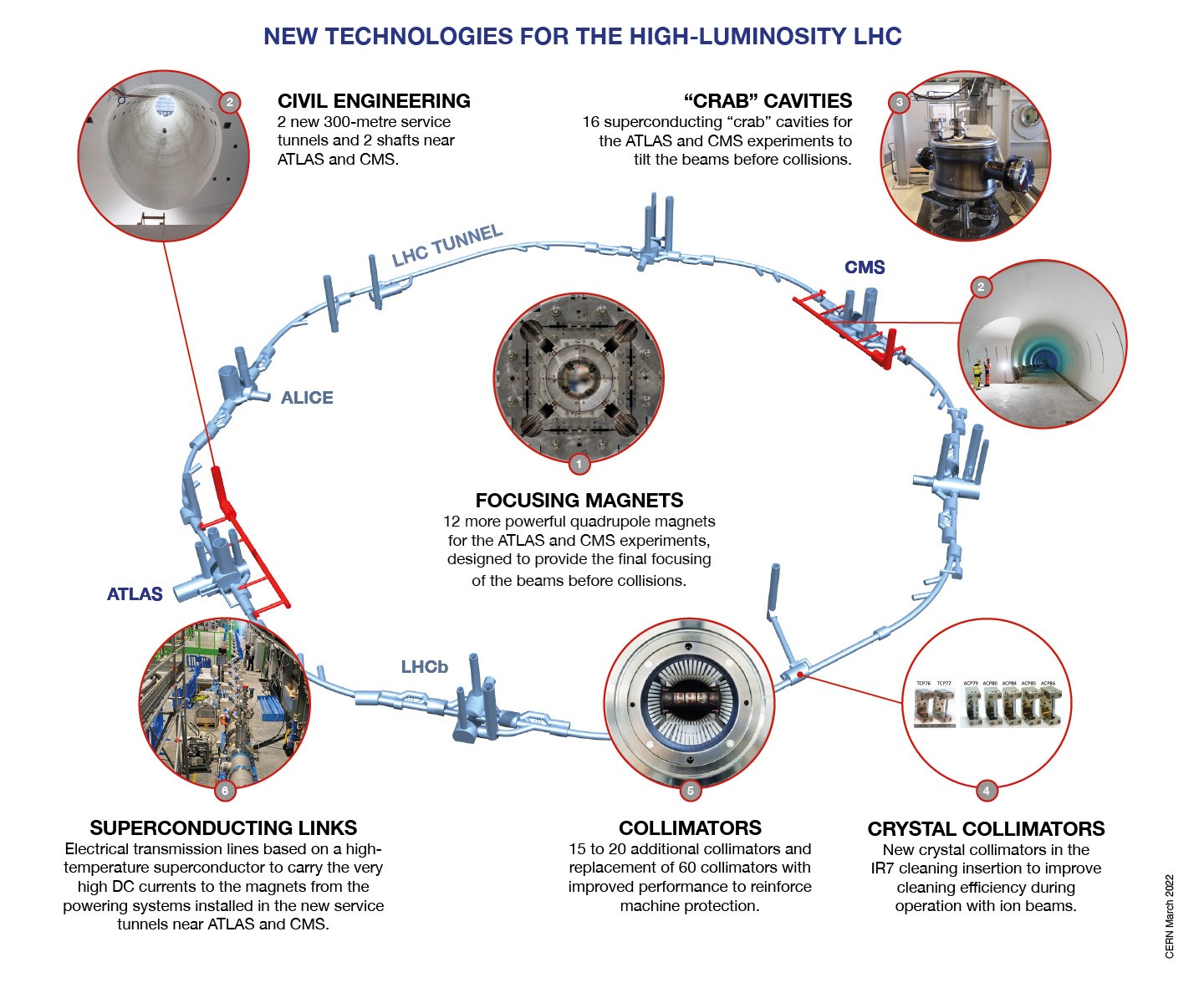
Definition of CERN The European Organization for Nuclear Research, commonly known as CERN, is the world’s premier particle physics laboratory. Situated beneath the border between Switzerland and France, CERN hosts the Large Hadron Collider (LHC), the most powerful particle accelerator ever constructed. This institution integrates multiple scientific disciplines-including physics, engineering, computer science, and philosophy-to explore […]

Read More →

What do you study in particle physics and astrophysics?

Overview of Particle Physics and Astrophysics Particle physics and astrophysics are two captivating branches of physics that explore the universe from vastly different scales yet remain deeply interconnected. While particle physics investigates the smallest building blocks of matter, astrophysics examines the grandest cosmic structures and phenomena. Together, these disciplines address fundamental questions about the universe’s […]

Read More →

From Code to Collider: Industrial Applications of Computational Physics

Definition of Computational Physics in Industry Computational physics is a scientific discipline that employs numerical algorithms and computer simulations to solve complex physical problems. Traditionally rooted in academic research, it has expanded its reach into various industrial sectors, enabling the modeling and analysis of phenomena that are difficult or impossible to study experimentally. By leveraging […]

Read More →