What are the differences between hadrons and leptons?

Definition of Hadrons and Leptons In particle physics, fundamental particles are broadly classified into two main categories: hadrons and leptons. These groups differ significantly in their composition, properties, and the forces they experience. Hadrons: Composite particles made up of quarks bound together by the strong nuclear force, mediated by gluons. Hadrons are further divided into […]

Read More →

¿Para qué se utilizan matrices en Química?

Definition and Overview of Matrices in Chemistry Matrices, traditionally known as rectangular arrays of numbers, have evolved into fundamental tools within the field of chemistry. Much like the complex sequences found in DNA, matrices provide a structured framework to organize, manipulate, and interpret multifaceted chemical data. Their applications extend beyond simple numerical representation, serving as […]

Read More →

Revelations of a Golden Age: Rediscovering Ancient Brilliance

Definition of Golden Ages and Ancient Brilliance Golden Ages refer to distinct historical periods marked by exceptional advancements in creativity, innovation, and philosophical thought. These eras are celebrated for their remarkable contributions to human knowledge and culture, often inspiring a collective aspiration toward enlightenment and intellectual growth. The term “Ancient Brilliance” encapsulates the multifaceted achievements […]

Read More →

With only 1 qubit

Definition of a Qubit A qubit, or quantum bit, is the fundamental unit of quantum information, distinct from the classical bit used in traditional computing. Unlike a classical bit that can only be in one of two states-0 or 1-a qubit can exist in a superposition, simultaneously representing both 0 and 1. This unique property […]

Read More →

From Quantum Fields to Healing Fields: Is Physics the Future of Medicine?

Definition of Quantum Fields in Medicine The intersection of quantum physics and medical science represents an emerging frontier that could transform our understanding of health and healing. Quantum field theory (QFT), a cornerstone of modern physics, describes the universe as composed of continuous fields rather than discrete particles. These quantum fields permeate all space, with […]

Read More →

How to learn quantum computing on my own?

Definition of Quantum Computing Quantum computing is an innovative computational paradigm that fundamentally differs from traditional classical computing. It leverages the principles of quantum mechanics to process information in ways that classical computers cannot, offering the potential to solve certain complex problems more efficiently. This emerging field combines elements of physics, mathematics, and computer science […]

Read More →

What is quantum computing

Definition of Quantum Computing Quantum computing is an innovative computational paradigm that harnesses the principles of quantum mechanics to process information in ways that surpass the capabilities of classical computers. Unlike traditional computing, which relies on binary bits representing either 0 or 1, quantum computing utilizes quantum bits, or qubits, which can exist in multiple […]

Read More →

Where does the World Sheet ‘begin’ in SU (3) QCD?

Understanding the World Sheet in SU(3) Quantum Chromodynamics Definition and Context In the realm of particle physics, particularly within Quantum Chromodynamics (QCD) governed by the SU(3) gauge group, the concept of the world sheet serves as a fundamental theoretical construct. It represents a two-dimensional surface that encapsulates the evolution and interactions of quarks and gluons-the […]

Read More →

How to Start Bioengineering (a.k.a. Synthetic Biology) as a Student

Understanding Bioengineering Bioengineering, also known as synthetic biology, represents a dynamic fusion of biological sciences and engineering principles aimed at designing and constructing new biological parts, devices, and systems. This interdisciplinary field challenges learners to not only grasp complex scientific methodologies but also to envision transformative innovations that can revolutionize healthcare, environmental sustainability, and biotechnology. […]

Read More →

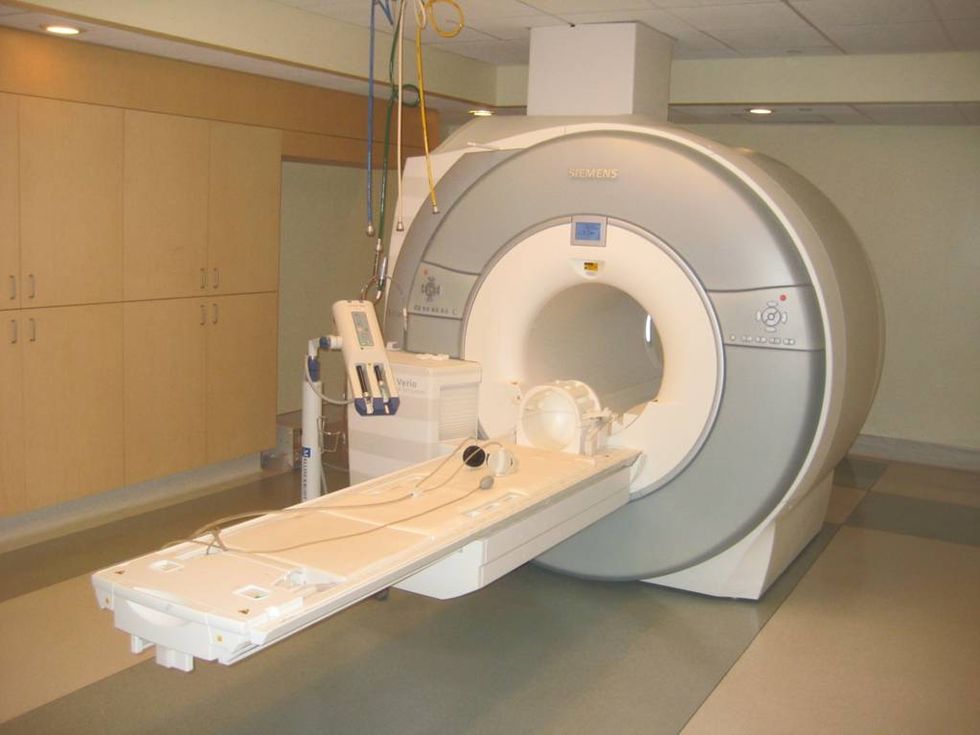
What is a need for non uniform magnetic field in MRI?

Definition of Non-Uniform Magnetic Fields in MRI Magnetic resonance imaging (MRI) relies on magnetic fields to generate detailed images of the human body. While uniform magnetic fields are traditionally used to align hydrogen nuclei, non-uniform magnetic fields refer to magnetic fields that vary in strength or direction across the imaging volume. These variations are intentionally […]

Read More →