
Short Answer
Definition of Instrumentation
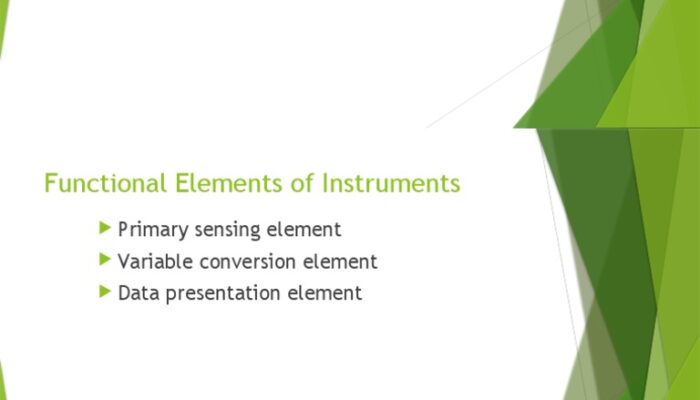
Instrumentation is a specialized branch within engineering and science focused on the creation and utilization of devices designed for measurement, monitoring, and control of physical variables. An instrument is any tool or device capable of detecting, measuring, or regulating physical quantities. This field encompasses a wide array of disciplines including physics, chemistry, biology, and various engineering sectors, highlighting its interdisciplinary nature.
Core Purpose and Importance
The fundamental role of instruments is to provide both quantitative and qualitative data about physical phenomena. Such data is essential for experimental verification, theoretical development, and practical applications. By accurately capturing measurements, instruments enable scientists and engineers to analyze conditions, validate hypotheses, and optimize processes.
Classification of Instruments
Based on Measurement Type
Instruments can be primarily divided into two categories depending on how they present data:
- Analog Instruments:
These devices offer continuous measurement outputs, often displayed on scales or dials. Examples include traditional thermometers and dial gauges, which provide a smooth, real-time representation of the measured quantity. - Digital Instruments:
These convert physical signals into discrete numerical values, facilitating easier interpretation and higher precision. Digital multimeters and electronic balances are common examples, representing a significant advancement in measurement accuracy and usability.
Based on Physical Quantities Measured
Instruments are also categorized by the specific physical parameters they assess:
- Mechanical Instruments:
Devices such as pressure gauges and accelerometers that measure forces, pressures, and motion-related variables. - Electrical Instruments:
Tools like oscilloscopes and voltmeters used to evaluate electrical properties including voltage, current, and resistance, crucial for electronic diagnostics. - Thermal Instruments:
Instruments that measure temperature and heat flow, such as thermocouples and infrared thermometers. - Chemical Instruments:
Devices like spectrophotometers and gas chromatographs that analyze chemical compositions and reactions.
Based on Application Areas
Instrumentation varies significantly depending on the environment and purpose:
- Laboratory Instruments:
Highly specialized tools designed for precise experimental measurements, including spectrophotometers and chromatographs. - Industrial Instruments:
Equipment used for process control and monitoring in manufacturing, such as flow meters and temperature controllers, ensuring optimal operational conditions. - Medical Instruments:
Advanced devices like MRI machines and biosensors that facilitate non-invasive diagnostics and patient monitoring.
Operational Principles of Instruments
The functionality of instruments is grounded in diverse physical principles that enable measurement and control:
- Thermoelectric Effect:
Thermocouples generate a voltage proportional to temperature differences, allowing precise thermal measurements. - Resistance Change:
Strain gauges detect mechanical deformation by varying their electrical resistance, converting physical strain into measurable electrical signals. - Optical Absorption:
Spectrophotometers measure the amount of light absorbed by a sample to determine its concentration or properties.
Role of Instrumentation in Control Systems
Instrumentation is integral to control systems, where it provides essential feedback for regulating processes. Feedback loops depend on accurate measurements to maintain variables such as temperature, pressure, and humidity within desired limits. For example, automatic climate control systems in buildings utilize sensors and controllers to ensure comfortable and energy-efficient environments.
Instrumentation in Medical Technology
Modern healthcare relies heavily on sophisticated instrumentation for diagnosis and treatment. Devices like MRI and CT scanners offer detailed internal images without invasive procedures, while biosensors monitor physiological parameters in real time. The precision and reliability of these instruments are critical, necessitating stringent calibration and validation protocols to safeguard patient health.
Applications in Research and Environmental Monitoring
Instrumentation plays a vital role in scientific research and environmental protection:
- Environmental Science:
Instruments measure air and water quality, detecting pollutants at trace levels to support ecological conservation and public health. - Astrophysics:
Telescopes equipped with advanced sensors enable the exploration of cosmic phenomena, contributing to our understanding of the universe’s structure and dynamics.
Future Trends in Instrumentation
The evolution of instrumentation is increasingly intertwined with emerging technologies such as artificial intelligence (AI) and the Internet of Things (IoT). Future instruments are expected to feature real-time data processing, self-calibration, and autonomous operation, enhancing measurement accuracy and operational efficiency. These advancements promise to revolutionize scientific research, industrial automation, and everyday applications.
Summary
In summary, instrumentation is a cornerstone of measurement science, underpinning advancements across multiple disciplines. By understanding the diverse types, principles, and applications of instruments, one gains insight into their critical role in driving innovation and discovery. The continuous development of instrumentation technologies ensures their enduring impact on science, industry, and healthcare.
FAQ
What is instrumentation?
Instrumentation is a specialized field that deals with the design and use of instruments for measuring, monitoring, and controlling physical variables.
What are the types of instruments?
Instruments can be categorized based on measurement type (analog or digital), physical quantities measured (mechanical, electrical, thermal, chemical), and application areas (laboratory, industrial, medical).
How does instrumentation impact healthcare?
Instrumentation in healthcare includes devices like MRI machines and biosensors that provide critical diagnostic and monitoring capabilities.

Leave a Reply