
Short Answer
Definition and Overview of the International Space Station
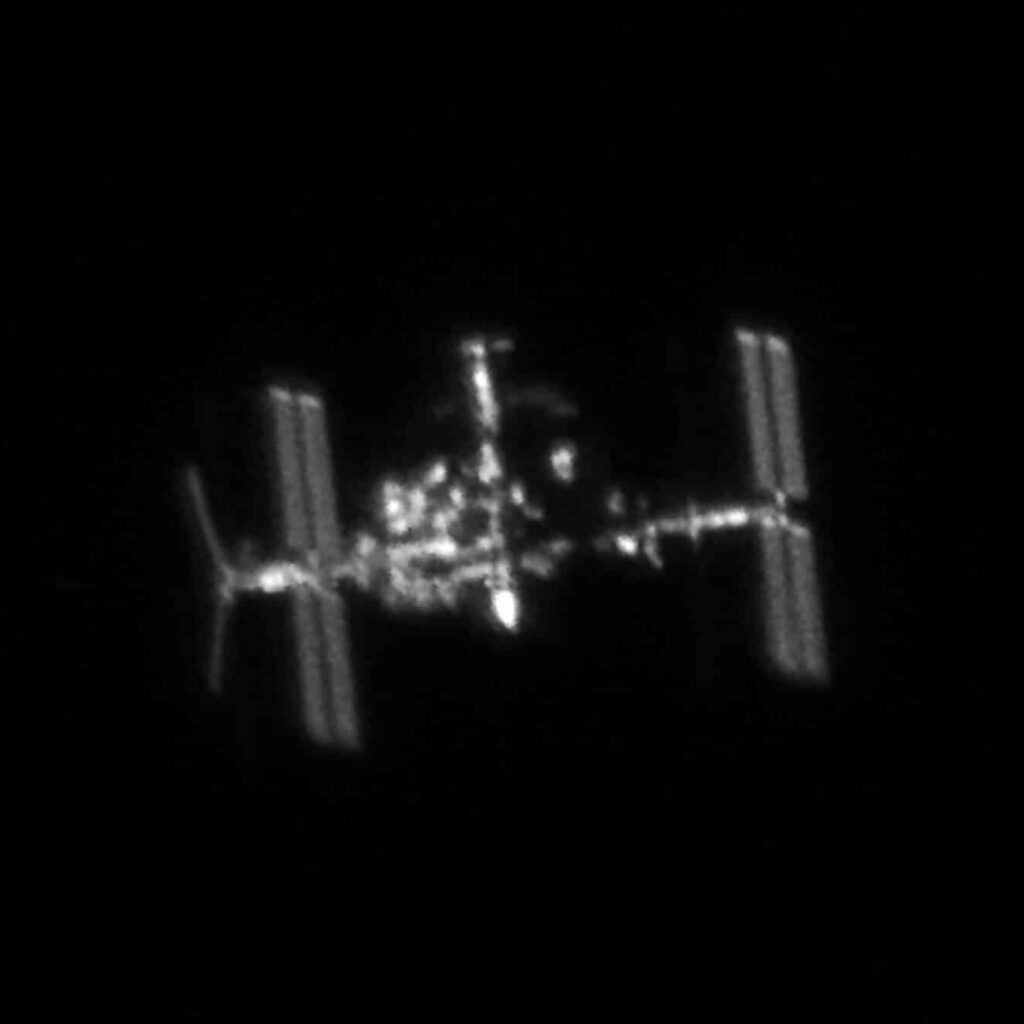
The International Space Station (ISS) represents a pinnacle of human innovation and international collaboration, serving as a multifaceted laboratory in low Earth orbit. Positioned roughly 250 miles above the planet, the ISS facilitates a wide spectrum of scientific research across disciplines such as biology, physics, meteorology, and astronomy. Its unique orbital location provides an exceptional platform for observing both Earth and the cosmos, although it is not primarily outfitted with large, traditional telescopes.
Telescopic Instruments on the ISS
While the ISS does not host a large, dedicated optical telescope akin to ground-based observatories or space telescopes like Hubble, it is equipped with several specialized telescopic devices designed for specific scientific objectives.
Alpha Magnetic Spectrometer (AMS-02)
One of the most notable instruments aboard the ISS is the Alpha Magnetic Spectrometer (AMS-02). Although not a telescope in the conventional sense, the AMS-02 is a sophisticated particle physics detector mounted externally on the station. Its mission focuses on analyzing cosmic rays to detect evidence of dark matter and antimatter, offering insights into fundamental astrophysical processes that cannot be replicated on Earth.
Earth Observation Instruments
The ISS also carries an array of cameras and sensors dedicated to monitoring Earth’s atmosphere and surface. These instruments capture high-resolution imagery and data that contribute to understanding climate dynamics, weather patterns, and natural disasters. While these devices do not explore deep space, they provide invaluable observational capabilities from orbit.
Temporary Telescopic Experiments
Throughout its operational history, the ISS has hosted various temporary telescopic experiments. Astronauts have deployed compact optical and ultraviolet telescopes to study celestial objects, cosmic radiation, and the behavior of light in microgravity. These portable instruments are designed for ease of installation and removal, supporting short-term scientific investigations rather than permanent observation.
How Telescopes Function on the ISS
The telescopic equipment aboard the ISS operates under unique conditions distinct from terrestrial observatories. The station’s microgravity environment and orbital vantage point eliminate atmospheric distortion, enabling clearer observations of ultraviolet, X-ray, and cosmic ray phenomena. However, the ISS’s constant motion, vibrations, and electromagnetic interference pose challenges for the precision and stability required by large-scale telescopes.
Satellite-Based Telescopes and CubeSats
Expanding the ISS’s observational reach, small satellite telescopes such as CubeSats and nanosatellites are often launched from the station or associated missions. These miniature satellites perform targeted astronomical observations and experimental imaging at lower costs and with greater operational flexibility. This decentralized approach allows for diverse data collection from multiple orbital perspectives.
Challenges of Hosting Large Telescopes on the ISS
- Orbital Motion and Stability:
The ISS’s continuous orbit and onboard vibrations complicate the precise alignment and stability required for large telescopes. - Electromagnetic Interference:
The station’s electronic systems can interfere with sensitive observational instruments. - Primary Mission Focus:
The ISS prioritizes multidisciplinary scientific research and technology development over dedicated astronomical observation.
Future Prospects for Telescopic Technology on the ISS
Advancements in lightweight optics, adaptive systems, and robotic assembly techniques hold promise for enhancing the ISS’s telescopic capabilities. Proposed concepts include deployable or modular telescopes that could be constructed and calibrated in orbit, potentially transforming the station into a more powerful astronomical observatory in the future.
Educational and Outreach Impact
Beyond scientific research, telescopic instruments on the ISS play a vital role in education and public engagement. The breathtaking images and data captured from orbit inspire global audiences and promote interest in space exploration and STEM disciplines. The unique perspective of observing Earth and space from a human-occupied platform enriches both research and outreach efforts.
Why Telescopes on the ISS Are Important
The ISS’s combination of human presence, advanced instrumentation, and orbital vantage point creates a distinctive environment for space observation. Although it lacks a flagship telescope, the station’s suite of telescopic tools contributes significantly to our understanding of the universe and Earth’s systems. These capabilities complement terrestrial and other space-based observatories, offering unique opportunities for scientific discovery.
Summary
In summary, the International Space Station is equipped with a variety of telescopic devices, albeit in unconventional and versatile forms tailored to its broad scientific mission. These instruments enable valuable astronomical and Earth observation research that often surpasses what is achievable from the ground. As space technology continues to evolve, the ISS is poised to expand its role as a platform for advanced telescopic exploration and innovation.
FAQ
Does the ISS have a large telescope?
No, the ISS does not host a large, traditional optical telescope like those found on the ground or in space.
What types of telescopic instruments are on the ISS?
The ISS has specialized telescopes for specific scientific objectives, including temporary telescopic experiments and Earth observation cameras.
How does microgravity affect observations made from the ISS?
Microgravity eliminates atmospheric distortion, allowing clearer observations, but challenges like vibrations and electromagnetic interference can affect precision.

Leave a Reply