
Short Answer
Definition of Gravitational Influence from Other Stars
Gravity is the fundamental force that governs the motion of celestial bodies, orchestrating the complex interactions within our solar system. A key question in astrophysics is whether stars beyond our Sun exert any meaningful gravitational effect on the planets, asteroids, and comets orbiting within our solar system. Exploring this involves understanding the scale of gravitational forces, the distances between stars, and the delicate balance of gravitational interactions that shape our cosmic environment.
The Dominance of the Sun’s Gravity
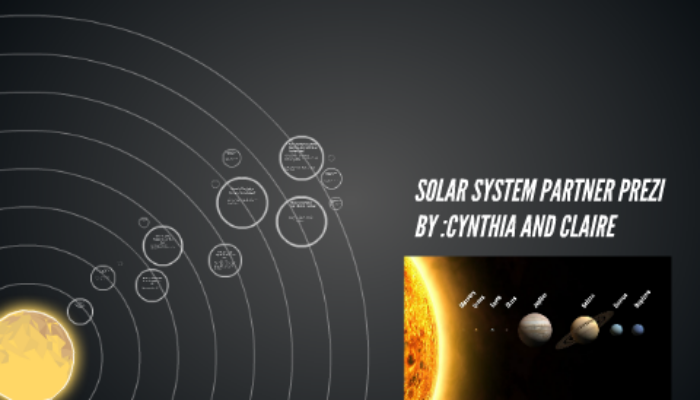
At the center of our solar system lies the Sun, whose immense mass-accounting for roughly 99.86% of the system’s total mass-creates a powerful gravitational well. This dominant force governs the orbits of the eight planets, numerous smaller bodies, and interplanetary dust. Due to this overwhelming influence, the gravitational pull from stars outside our solar system, separated by vast distances measured in light-years, is extremely weak and generally negligible in affecting the internal dynamics of our solar system.
Gravitational Principles and Distance
Gravity operates as a long-range force that diminishes in strength according to the inverse-square law, meaning its intensity decreases proportionally to the square of the distance between objects. Consequently, while the Sun’s gravity is overwhelmingly strong within the solar system, the gravitational pull from other stars, even those relatively close like Alpha Centauri at about 4.37 light-years away, is minuscule. These distant stars do not produce significant accelerations or disturbances in the orbits of planets under typical conditions.
Galactic Context: The Solar System’s Environment
The solar system is not isolated but moves through the Milky Way galaxy, immersed in a gravitational environment composed of neighboring stars, stellar remnants, giant molecular clouds, and dark matter. On a grand scale, the combined gravitational field of the galaxy dictates the solar system’s orbit around the galactic center. This galactic gravity acts as a subtle, persistent external force that influences the solar system’s path through the spiral arms of the Milky Way over millions of years.
Close Stellar Encounters and Their Effects
Although rare on human timescales, close flybys of stars can temporarily enhance gravitational effects on our solar system. When a star passes within a few light-years or less, its gravitational field can perturb objects in the distant Oort Cloud-a vast spherical shell of icy bodies extending up to 100,000 astronomical units (AU) from the Sun. These perturbations can alter the trajectories of some icy bodies, occasionally sending them inward as long-period comets.
The Oort Cloud as a Gravitational Frontier
The Oort Cloud represents a boundary region where the Sun’s gravitational dominance weakens, allowing the gravitational influence of passing stars to compete. While the Sun controls the inner solar system, the feeble gravity of nearby stars can disturb these distant icy bodies, indirectly affecting the flux of comets entering the inner solar system over geological timescales.
Negligible Effects on Planetary Orbits
Within the inner solar system, tidal forces from external stars are insignificant. The inner planets-Mercury, Venus, Earth, and Mars-are tightly bound by the Sun’s gravity, rendering external stellar influences effectively undetectable. Similarly, the orbits of the gas giants beyond Mars remain stable and unaffected by the gravitational pull of stars outside our solar system.
Gravitational Lensing: A Related Phenomenon
Gravitational lensing occurs when a massive object bends the path of light from more distant sources, illustrating gravity’s influence over vast distances. However, this effect is distinct from the gravitational dynamics within a star system. It highlights gravity’s reach but does not imply that stars exert significant gravitational forces on planetary orbits in other systems like ours. This reinforces the concept that stellar gravity is predominantly a local phenomenon, rapidly diminishing with distance.
Influence of the Interstellar Medium and Dark Matter
Beyond stars, the interstellar medium-composed of gas and dust-and dark matter contribute to the gravitational landscape surrounding our solar system. Although their combined mass exerts a continuous, diffuse gravitational pull, this influence primarily affects the solar system’s overall orbit around the Milky Way rather than the internal gravitational interactions among solar system bodies.
Advancements in Measuring Stellar Influences
Progress in astrometry and celestial mechanics has significantly improved our understanding of gravitational interactions between the solar system and passing stars. Instruments like the Gaia spacecraft provide highly precise measurements of stellar positions and motions, enabling astronomers to predict past and future close encounters. These data help assess when gravitational perturbations from nearby stars might become more pronounced.
Summary: The Extent of External Stellar Gravity on Our Solar System
In conclusion, while stars beyond the Sun do generate gravitational fields that permeate space, their direct impact on the solar system’s internal gravitational structure is minimal under normal circumstances. The Sun’s gravitational dominance ensures the stability of planetary orbits and other solar system objects. However, in the distant Oort Cloud, passing stars can exert subtle influences that occasionally alter cometary trajectories, adding a dynamic element to the solar system’s outermost regions.
Significance of Understanding Stellar Gravitational Interactions
Recognizing the interplay of gravitational forces between our solar system and neighboring stars enriches our comprehension of cosmic stability and evolution. It highlights how gravity binds celestial bodies locally while diminishing with distance, shaping not only planetary orbits but also the broader galactic environment. This knowledge is crucial for astrophysics, informing models of solar system dynamics, cometary behavior, and the solar system’s journey through the Milky Way.
FAQ
Do other stars significantly affect our solar system's gravity?
No, the gravitational influence of stars outside our solar system is negligible compared to the Sun's dominant gravity.
What is the Oort Cloud?
The Oort Cloud is a distant region of our solar system where the Sun's gravitational influence weakens, allowing nearby stars to exert some gravitational effects.
How does gravity diminish with distance?
Gravity follows the inverse-square law, meaning its strength decreases with the square of the distance between objects.


Leave a Reply