
Short Answer
Definition and Scope of Physics and Astrophysics
Physics is the fundamental natural science dedicated to understanding the basic forces and laws that govern the universe. It covers a wide range of topics including mechanics, electromagnetism, thermodynamics, quantum mechanics, and relativity. This discipline employs both theoretical frameworks and experimental methods to explore phenomena from the tiniest subatomic particles to the macroscopic behavior of materials.
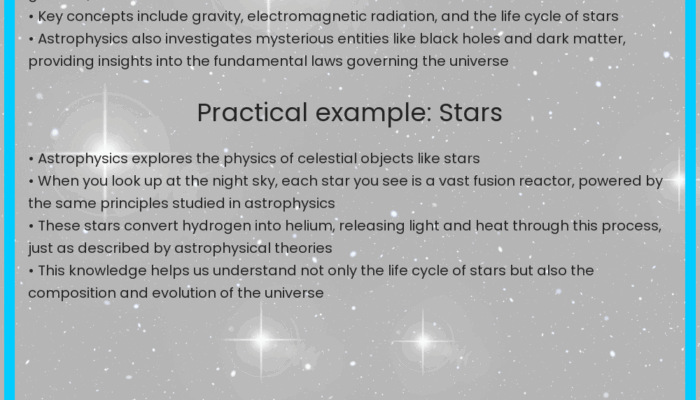
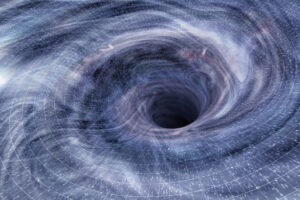
Astrophysics, on the other hand, is a specialized branch of physics that applies these fundamental principles to the study of celestial objects and cosmic phenomena. It focuses on understanding stars, galaxies, black holes, dark matter, and the structure of space-time, often dealing with phenomena occurring on an immense scale and over vast periods.
Academic Foundations and Curriculum Differences
The study of physics generally begins with classical mechanics and progressively advances to more abstract and mathematically intensive subjects such as vector calculus, partial differential equations, and statistical mechanics. Success in physics requires strong quantitative skills, logical reasoning, and the ability to conceptualize abstract ideas. Mastery of these foundational topics is essential before engaging with advanced theories like quantum field theory or particle physics, which are known for their conceptual complexity.
Astrophysics builds upon this physics foundation but adds further layers of complexity. It incorporates observational data gathered through telescopes, satellites, and various detectors, necessitating expertise in data analysis, programming, and instrumentation across multiple wavelengths including radio, infrared, optical, X-ray, and gamma-ray astronomy. The field often relies on indirect measurements and inference to study objects millions or billions of light years away, presenting unique challenges not typically encountered in other physics disciplines.
Core Areas of Study in Astrophysics
Stellar Astrophysics
This subfield examines the life cycles of stars, including nuclear fusion processes, energy transport mechanisms, and stages of stellar evolution that culminate in events such as supernovae or the formation of neutron stars. Understanding these phenomena requires integrating nuclear physics within dynamic and extreme environments where multiple physical processes interact simultaneously.
Cosmology
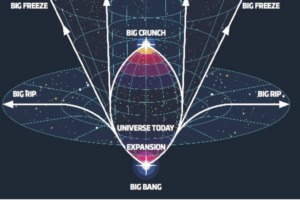
Cosmology explores the origin, evolution, and large-scale structure of the universe. It involves studying the cosmic microwave background radiation, the universe’s expansion rate, and the enigmatic dark energy. This area demands familiarity with advanced mathematical frameworks derived from general relativity and the ability to conceptualize phenomena on scales and times far beyond everyday experience.
Research Methodologies and Challenges
Experimental physics typically involves designing controlled laboratory experiments to test theoretical predictions, where the main difficulty lies in isolating variables and maintaining precise conditions. Conversely, astrophysical research depends heavily on observational campaigns that must contend with uncontrollable factors such as weather, cosmic background noise, and instrumental limitations. The inherent uncertainty and incomplete nature of astrophysical data require researchers to develop strong inferential reasoning and creativity in constructing reliable models.
Interdisciplinary Nature of Astrophysics
Modern astrophysics is increasingly interdisciplinary, involving collaboration with chemists, material scientists, computer scientists, and biologists. Fields such as astrochemistry and astrobiology exemplify this trend, broadening the scope of astrophysics and raising the bar for the diverse skill sets required. This interdisciplinarity enriches the field but also increases the complexity of the learning process.
Subjective Difficulty and Personal Aptitude
The perceived difficulty of astrophysics versus physics often depends on an individual’s strengths and interests. Those who enjoy abstract mathematical reasoning may find pure physics more accessible, while those fascinated by cosmic phenomena and observational challenges might be more motivated by astrophysics despite its complexities. Ultimately, passion, perseverance, and intellectual curiosity play significant roles in shaping one’s experience in either field.
Career Perspectives and Practical Considerations
Astrophysics careers can be highly competitive and often require developing specialized expertise. Research projects may span several years, with progress typically being incremental rather than revolutionary. Physics careers, while also demanding, tend to offer broader opportunities across various industries such as engineering, computing, and finance, providing more diverse professional pathways compared to the often narrowly focused domain of astrophysics.
Why Understanding the Differences Matters
Both physics and astrophysics demand dedication, intellectual rigor, and creativity. Recognizing the unique challenges and methodologies of each field helps students and professionals make informed decisions about their academic and career paths. Astrophysics pushes the boundaries of human understanding by exploring phenomena beyond direct sensory experience, combining theoretical depth with observational ingenuity. Physics addresses fundamental questions about nature with a focus on mathematical precision and experimental validation.
Summary: Comparing the Complexity of Astrophysics and Physics
It is neither accurate nor productive to categorically state that astrophysics is more difficult than physics. Instead, appreciating the distinct challenges and intellectual rewards of each discipline offers a more balanced perspective. Both fields illuminate the universe’s profound complexities from different vantage points, inviting those willing to embrace their rigorous demands to contribute meaningfully to humanity’s quest for knowledge and understanding.
FAQ
What is the main difference between physics and astrophysics?
Physics is a broad field studying the fundamental laws of nature, while astrophysics specifically applies these principles to understand celestial phenomena.
What skills are essential for studying astrophysics?
Essential skills include strong quantitative abilities, logical reasoning, data analysis, and programming.

Leave a Reply