
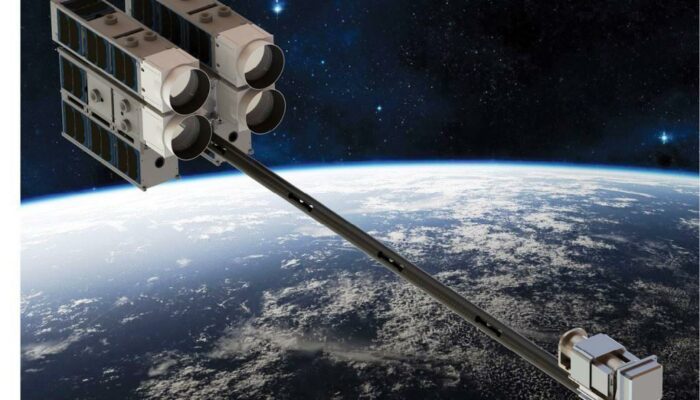
Short Answer
Definition of Robotic Assembly in Telescope Construction
Robotic assembly refers to the use of automated robotic systems to construct large-scale telescopes by autonomously handling, aligning, and securing their components. This approach leverages advanced robotics, sensor technologies, and artificial intelligence to build astronomical instruments with precision and efficiency beyond traditional human capabilities.
Challenges in Building Giant Telescopes
Constructing telescopes designed to observe the farthest reaches of the universe involves overcoming significant technical and logistical hurdles. These instruments require enormous mirrors, often segmented into thousands of precisely shaped pieces, which must be aligned with micron-level accuracy to ensure optimal image quality. Traditional manual assembly methods face limitations due to the fragility of optical components, human fatigue, and environmental constraints, making the process slow, costly, and prone to error.
Modular Design and Its Role in Robotic Assembly
To facilitate construction, engineers adopt a modular approach by dividing the primary mirror into smaller, interlocking segments rather than fabricating a single monolithic piece. This segmentation simplifies manufacturing, transportation, and storage but increases the complexity of the assembly phase. Robots equipped with advanced manipulation tools and sensors take on the critical task of assembling these segments with high precision and repeatability, unaffected by human limitations such as fatigue or distraction.
Technological Components of Robotic Assembly
- Precision Manipulation:
Robots perform delicate maneuvers to position mirror segments accurately, using actuators capable of nanometer-scale adjustments. - Sensor Integration:
Laser metrology, interferometry, tactile sensors, and high-resolution cameras provide real-time feedback on alignment and contact forces. - Artificial Intelligence:
Machine learning algorithms enable robots to adapt to errors, optimize movements, and improve assembly efficiency over time.
Operational Environment and Its Impact
Many large telescopes are situated in remote, high-altitude locations such as mountaintops or deserts to maximize observational clarity. These environments pose challenges including limited human accessibility, harsh weather conditions, and safety risks. Robotic assemblers, including terrestrial units and aerial drones, can operate continuously in these settings without fatigue or oxygen limitations, accelerating construction schedules and reducing human exposure to hazards.
Control Systems and Coordination
Robotic assembly requires sophisticated software to manage path planning, collision avoidance, and synchronization among multiple robotic agents performing specialized tasks such as lifting, aligning, and securing components. A decentralized control architecture ensures harmonious operation, while fault tolerance and real-time diagnostics mitigate risks of damage or delays caused by system failures or miscommunications.
Self-Assembly and Autonomous Maintenance
Beyond assembly, emerging concepts envision robots capable of fabricating, assembling, and maintaining telescope components autonomously. This self-assembly paradigm could enable telescopes to adapt their configurations dynamically in response to scientific needs or environmental changes. Self-healing capabilities, where robotic units detect and repair minor damages, promise to extend operational lifespans and reduce maintenance costs, marking a significant leap toward fully autonomous observatories.
Advantages of Robotic Assembly in Telescope Development
- Enabling Novel Designs:
Robotic assembly facilitates the creation of lightweight, deployable telescope structures that can unfold in situ, particularly beneficial for space-based observatories constrained by launch payload limits. - Enhanced Precision and Consistency:
Robots maintain exacting alignment standards over extended periods without fatigue, improving image resolution and overall telescope performance. - Cost and Time Efficiency:
Automation reduces labor costs, shortens construction timelines, and minimizes human risk in challenging environments.
Real-World Example: The Extremely Large Telescope (ELT)
The ELT exemplifies the scale and complexity addressed by robotic assembly. Its primary mirror spans over 39 meters in diameter and consists of nearly 8,000 hexagonal segments. Autonomous robotic systems are essential for managing the precise placement and alignment of these segments, compensating for environmental factors such as temperature variations, vibrations, and dust to maintain optimal optical performance.
Common Misconceptions About Robotic Telescope Assembly
Robots can replace all human involvement in telescope construction.
While robots handle precise assembly tasks, human expertise remains vital for design, oversight, and troubleshooting complex issues.
Robotic assembly is prohibitively expensive.
Although initial investments are high, long-term savings arise from reduced labor costs, faster construction, and lower maintenance expenses.
Importance of Robotic Assembly in Astronomy and Beyond
The integration of robotics into telescope construction represents a transformative advancement in astronomical instrumentation. By overcoming physical and logistical constraints, robotic assembly enables the creation of larger, more precise telescopes that deepen our understanding of cosmic phenomena such as star formation, black hole behavior, dark matter, and the early universe. Moreover, the technologies developed for this purpose have cross-disciplinary applications in aerospace, manufacturing, and medical fields, highlighting the broader impact of this innovation.
Future Outlook
As robotic technologies continue to evolve, the prospect of fully autonomous, self-assembling telescopes moves closer to reality. These intelligent systems will not only build but also adapt and maintain observatories, ensuring sustained scientific discovery with minimal human intervention. This synergy between robotics and astronomy embodies humanity’s quest to transcend limitations and explore the cosmos with unprecedented clarity and scale.
FAQ
What is robotic assembly?
Robotic assembly refers to the use of automated robotic systems to construct telescopes by precisely handling, aligning, and securing components.
How does robotic assembly improve telescope construction?
It enhances precision, reduces labor costs, and allows for construction in challenging environments.






Leave a Reply