

Short Answer
Definition
The intersection of physics and medicine represents a dynamic and essential collaboration where physical principles are applied to enhance healthcare. This multidisciplinary field integrates scientific concepts from physics to improve diagnostic methods, treatment techniques, and medical technologies, ultimately advancing patient care and clinical outcomes.
Key Areas Where Physics Influences Medicine
Physics plays a critical role across various medical domains, underpinning technologies and methodologies that are fundamental to modern healthcare.
- Diagnostic Imaging:
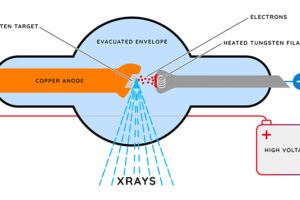
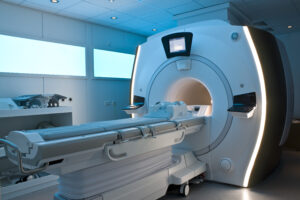
Techniques such as X-rays, Magnetic Resonance Imaging (MRI), and Computed Tomography (CT) scans rely on electromagnetic radiation and magnetic fields to generate detailed images of the body’s internal structures. These imaging modalities enable precise diagnosis and guide treatment decisions. - Radiation Therapy:
The treatment of cancer using targeted radiation involves careful calculation of dose distribution to maximize tumor destruction while protecting healthy tissues. This requires collaboration between oncologists and medical physicists to apply principles of radiation physics and dosimetry. - Nuclear Medicine:
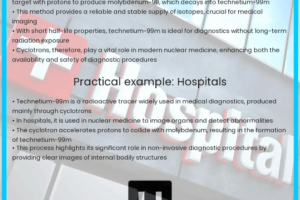
Utilizing radioactive isotopes, nuclear medicine combines physics concepts like radioactive decay and half-life to both diagnose and treat diseases such as hyperthyroidism and certain cancers through imaging and radiopharmaceutical therapies. - Biomechanics:
The study of forces and motion in the human body helps physical therapists and rehabilitation specialists understand injury mechanisms and design effective recovery programs by applying mechanical principles. - Emerging Medical Technologies:
Innovations such as wearable health monitors and telemedicine devices employ sensors and physical measurement techniques to track physiological parameters in real-time, enhancing accessibility and continuous patient monitoring. - Surgical Techniques:
Physics informs the application of force, leverage, and instrument manipulation during surgery. Advanced robotic surgery systems, grounded in physical principles, improve precision and patient outcomes.
How Physics Enhances Medical Practice
Physics contributes to medicine by providing a scientific framework that supports the development and optimization of diagnostic tools, therapeutic interventions, and medical devices. For example, understanding electromagnetic radiation enables the creation of imaging technologies that reveal internal body structures without invasive procedures. Similarly, knowledge of radiation physics ensures that cancer treatments are both effective and safe. In biomechanics, analyzing mechanical forces helps tailor rehabilitation strategies to individual patient needs. Furthermore, the integration of physics in emerging technologies facilitates continuous health monitoring and remote care, transforming traditional healthcare delivery models.
Mathematical and Physical Principles in Medicine
Several fundamental formulas and concepts from physics are integral to medical applications:
- Electromagnetic Radiation:
The energy of photons used in X-rays is given by E = hν, where E is energy, h is Planck’s constant, and ν is frequency. This principle explains how X-rays penetrate tissues to create diagnostic images. - Radioactive Decay:
The decay of isotopes follows N(t) = N_0 e^{-λt}, where N(t) is the number of undecayed nuclei at time t, N_0 is the initial quantity, and λ is the decay constant. This formula is crucial in nuclear medicine for timing diagnostic and therapeutic procedures. - Dosimetry in Radiation Therapy:
Dose calculations often use the inverse square law, I = I_0 / r^2, where I is intensity, I_0 is initial intensity, and r is distance from the source, ensuring precise radiation delivery. - Biomechanics:
Newton’s laws of motion and principles of force (F = ma) and torque are applied to analyze human movement and design rehabilitation protocols.
Practical Applications in Healthcare
Physics-based technologies and principles manifest in numerous real-world medical scenarios:
- Imaging Diagnostics:
Radiologists use MRI scans to detect brain tumors by exploiting magnetic fields and radio waves, enabling non-invasive visualization of soft tissues. - Cancer Treatment:
Radiation oncologists collaborate with physicists to plan and deliver precise radiation doses that target malignant cells while sparing healthy tissue. - Rehabilitation:
Physical therapists apply biomechanical analysis to develop personalized exercise regimens that restore mobility after injuries such as fractures or ligament tears. - Wearable Health Devices:
Smartwatches equipped with photoplethysmography sensors monitor heart rate and oxygen saturation, providing continuous health data outside clinical settings. - Robotic Surgery:
Surgeons utilize robotic systems that translate physical principles into enhanced dexterity and control, improving surgical precision and reducing recovery times.
Common Misunderstandings About Physics in Medicine
- Misconception: Physics is only relevant to medical imaging.
Correction: While imaging is a major application, physics also underpins treatment methods, biomechanics, surgical techniques, and emerging technologies. - Misconception: Doctors do not need to understand physics.
Correction: Medical education increasingly incorporates physics to equip healthcare professionals with the knowledge necessary to utilize and innovate medical technologies effectively. - Misconception: Radiation therapy is unsafe due to radiation exposure.
Correction: Precise dosimetry and physics-based safety protocols ensure that radiation therapy maximizes tumor control while minimizing harm to healthy tissues.
Significance of Physics in Modern Medicine
The integration of physics into medicine is vital for advancing healthcare quality and innovation. It enables the development of sophisticated diagnostic tools, enhances therapeutic precision, and fosters the creation of novel medical devices that improve patient monitoring and treatment. As medical technology evolves, the role of physics becomes increasingly prominent, driving improvements in patient outcomes and expanding the possibilities for personalized medicine. This synergy between physics and medicine not only enriches scientific understanding but also transforms clinical practice, making it indispensable in contemporary healthcare.
FAQ
How often do doctors use physics in their work?
Doctors frequently use physics principles daily, especially in diagnostics, treatment planning, and using medical devices that rely on physical concepts.
Is understanding physics important for doctors?
Yes, understanding physics is increasingly important for doctors to effectively use and innovate medical technologies.
Is radiation therapy safe?
Radiation therapy is safe due to precise dosimetry and physics-based protocols that maximize tumor targeting while protecting healthy tissue.



Leave a Reply