

Short Answer
Definition of Full-Body MRI Scans
Full-body Magnetic Resonance Imaging (MRI) is a non-invasive diagnostic technique that produces detailed images of the entire human body. Utilizing powerful magnetic fields and radio waves, this imaging method reveals internal anatomical structures without the need for surgical intervention or exposure to ionizing radiation.
Fundamental Principles of MRI Technology
At the heart of MRI technology lies the phenomenon of nuclear magnetic resonance, which capitalizes on the abundant hydrogen atoms found in the body’s water content. When a patient is placed inside the MRI scanner’s strong magnetic field, the hydrogen nuclei align with this field. The application of radiofrequency pulses temporarily disturbs this alignment, causing the nuclei to resonate. As they realign, they emit radio signals that are captured by the scanner and converted into high-resolution images.
Imaging Process and Techniques
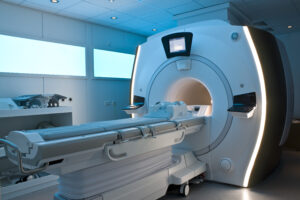
The MRI procedure involves several precise steps. The patient is positioned within a cylindrical magnet where the magnetic field strength is optimal. Depending on the diagnostic requirements, the scan duration ranges from 30 to 90 minutes. The computer system processes the emitted signals to generate three-dimensional images of organs, tissues, and other internal structures.
Various imaging sequences are employed to highlight different tissue characteristics:
- T1-weighted imaging:
Provides detailed anatomical information, distinguishing fat from water content in tissues. - T2-weighted imaging:
Emphasizes fluid distribution, useful for detecting abnormalities such as tumors or inflammation. - Functional MRI (fMRI):
Measures brain activity by tracking cerebral blood flow, aiding in the study of neuroanatomical functions.
Use of Contrast Agents in MRI
In certain cases, gadolinium-based contrast agents are introduced intravenously to enhance the visibility of blood vessels and lesions. These agents improve diagnostic accuracy but require careful consideration due to potential safety concerns, especially in patients with kidney issues or allergies.
Safety Considerations and Contraindications
Full-body MRI scans are widely regarded as safe because they do not involve ionizing radiation, unlike X-rays or CT scans. This makes MRI particularly suitable for vulnerable groups such as pregnant women and children. However, safety precautions include:
- Implanted Medical Devices:
Patients with pacemakers, cochlear implants, or other metallic implants may face risks due to magnetic interference. - Metallic Foreign Bodies:
Individuals with metal fragments or a history of metalworking must inform their healthcare provider to avoid complications. - Contrast Agent Allergies:
Allergic reactions to gadolinium are rare but possible, necessitating thorough pre-scan screening. - Kidney Function:
Gadolinium can exacerbate renal impairment, so kidney health must be evaluated before contrast administration.
Technological Advancements and Patient Comfort
Recent innovations have improved both the efficiency of MRI scans and patient experience. Open MRI machines offer a less confined environment, reducing claustrophobia for some patients, though sometimes at the expense of image resolution. Additionally, artificial intelligence is increasingly integrated into MRI systems to optimize image acquisition and interpretation, enhancing diagnostic precision and reducing scan times.
Clinical Applications and Importance
Full-body MRI scans are invaluable in diagnosing a wide range of conditions, from neurological disorders to musculoskeletal injuries. Their ability to provide comprehensive, detailed images without radiation exposure makes them a cornerstone of modern medical diagnostics. As MRI technology evolves, it promises to further personalize patient care and improve clinical outcomes.
Understanding MRI for Patients
For individuals undergoing MRI examinations, understanding the technology’s principles and safety measures can alleviate concerns and foster informed decision-making. Awareness of how MRI works and its benefits empowers patients to approach their diagnostic journey with confidence and clarity.
FAQ
What is a full-body MRI scan?
A full-body MRI scan is a non-invasive diagnostic procedure that uses magnetic fields and radio waves to create detailed images of the entire body.
Is a full-body MRI scan safe?
Yes, full-body MRI scans are considered safe as they do not use ionizing radiation. However, certain precautions are necessary for patients with specific medical conditions.
How long does a full-body MRI scan take?
The duration of a full-body MRI scan typically ranges from 30 to 90 minutes, depending on the diagnostic requirements.




Leave a Reply