
Short Answer
Definition of Gravitational Waves
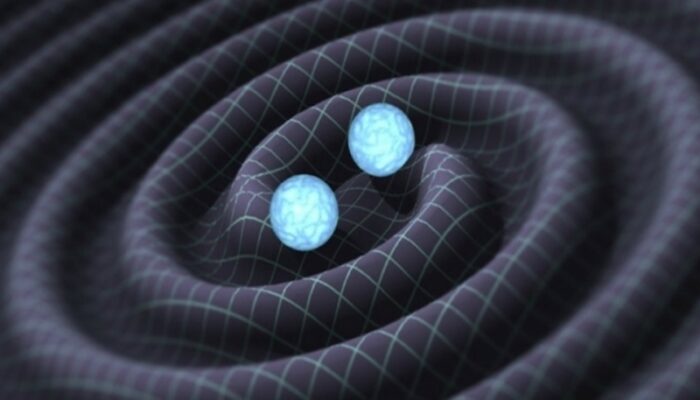
Gravitational waves are ripples in the fabric of spacetime generated by accelerating massive objects, especially during violent cosmic events. Predicted by Albert Einstein’s general theory of relativity, these waves propagate outward at the speed of light, carrying information about their cataclysmic origins. Unlike electromagnetic radiation, gravitational waves are distortions in spacetime itself, offering a fundamentally different way to observe the universe.
- Origin:
Produced when massive bodies such as black holes or neutron stars accelerate asymmetrically, often during mergers or collisions. - Nature:
Fluctuations in spacetime geometry that travel as waves, unaffected by intervening matter. - Detection:
Measured by highly sensitive instruments that detect minute changes in distance caused by passing waves.
Historical Background and Theoretical Foundations
Einstein’s 1915 general relativity theory revolutionized our understanding of gravity, describing it as the curvature of spacetime caused by mass and energy. Within this framework, gravitational waves emerge as dynamic perturbations traveling through spacetime when massive objects undergo rapid, uneven acceleration. For decades, these waves remained theoretical until technological advances enabled their direct detection, confirming Einstein’s predictions and opening a new observational window into the cosmos.
Mechanism of Gravitational Wave Generation
Gravitational waves arise when massive bodies accelerate in a non-symmetric manner, producing distortions that ripple outward. The most potent sources include merging black holes, colliding neutron stars, and supernova explosions. As these waves travel, they stretch and compress spacetime perpendicular to their direction of propagation, albeit by incredibly small amounts, requiring ultra-precise instruments to detect them.
Mathematical Description and Key Parameters
The behavior of gravitational waves can be described by perturbations ( h_{munu} ) to the spacetime metric ( g_{munu} ), satisfying the linearized Einstein field equations in vacuum:
[
Box h_{munu} = 0
]
where ( Box ) is the d’Alembert operator. The wave strain ( h ), representing the fractional change in length caused by the wave, is a critical measurable quantity. Key parameters include:
- Amplitude (h):
The dimensionless strain indicating the wave’s strength. - Frequency (f):
The rate at which spacetime oscillates, related to the orbital dynamics of the source. - Polarization:
Gravitational waves exhibit two transverse polarization states, often denoted as “plus” and “cross.”
Observational Techniques and Instruments
Detecting gravitational waves requires measuring minuscule distortions in spacetime, often smaller than a proton’s diameter. Ground-based interferometers like LIGO (Laser Interferometer Gravitational-Wave Observatory) and Virgo use laser beams traveling along perpendicular arms to detect these changes. Future detectors such as KAGRA in Japan and the space-based LISA (Laser Interferometer Space Antenna) will expand sensitivity and frequency coverage, enabling detection of a broader range of sources.
Scientific Insights from Gravitational Wave Astronomy
Gravitational waves provide unparalleled access to phenomena invisible to traditional electromagnetic telescopes. They reveal the properties of black holes and neutron stars, including mass, spin, and orbital dynamics, by analyzing waveform patterns. This data allows physicists to test general relativity under extreme conditions and explore the behavior of matter at nuclear densities.
Additionally, gravitational waves penetrate cosmic dust and gas clouds that obscure electromagnetic signals, enabling observation of events from the early universe, such as core-collapse supernovae and the moments following the Big Bang. This transparency offers a unique glimpse into epochs previously inaccessible.
Cosmological Applications and the Expansion of the Universe
Gravitational waves serve as “standard sirens” for measuring cosmic distances independently of traditional methods. By combining luminosity distance derived from waveforms with redshift data, scientists can estimate the Hubble constant, which quantifies the universe’s expansion rate. This approach provides an alternative perspective that may help resolve current discrepancies between different cosmological measurements.
Exploring the Dark Sector and Early Universe Physics
While dark matter and dark energy remain elusive, gravitational wave observations hold promise for probing these mysterious components. Potential detection of primordial gravitational waves generated during cosmic inflation could shed light on physics at energy scales unreachable by particle accelerators. Such discoveries would deepen our understanding of the universe’s origin and fundamental forces.
Challenges and Future Prospects
Gravitational wave astronomy is still emerging, with current detectors operating near technological limits. Enhancements in sensitivity and new observatories will broaden the detectable frequency range, capturing signals from diverse sources including supermassive black hole mergers and hypothetical phenomena like cosmic strings. As detection capabilities improve, gravitational waves will increasingly complement electromagnetic observations, enriching our multi-messenger view of the cosmos.
Common Misconceptions About Gravitational Waves
Gravitational waves are the same as electromagnetic waves.
Gravitational waves are distortions in spacetime itself, not electromagnetic radiation, and interact very weakly with matter.
Gravitational waves can be easily detected.
Their effects are extraordinarily subtle, requiring extremely sensitive instruments and sophisticated data analysis.
Gravitational waves only come from black hole mergers.
They originate from various astrophysical events, including neutron star collisions, supernovae, and potentially the early universe.
Significance of Gravitational Waves in Modern Science
The discovery and study of gravitational waves mark a transformative milestone in astronomy and physics. They provide a direct probe of the universe’s most energetic and enigmatic processes, enabling tests of fundamental theories under extreme conditions. By complementing electromagnetic observations, gravitational waves enrich our understanding of cosmic evolution, the nature of gravity, and the universe’s large-scale structure. This new observational channel promises to drive scientific breakthroughs and expand humanity’s cosmic perspective for decades to come.

Leave a Reply