
Short Answer
Understanding Black Holes and Dark Energy
Black holes have traditionally been viewed as mysterious cosmic entities that consume everything in their vicinity, including light, making escape impossible beyond their event horizons. Meanwhile, dark energy is recognized as a pervasive force driving the accelerated expansion of the universe. The intriguing question arises: do black holes generate or annihilate dark energy? This inquiry invites a deeper exploration of how these two fundamental cosmic phenomena interact with spacetime and the universe’s energy composition.
Definition of Key Concepts
- Black Holes:
Regions in space where gravity is so intense that nothing, not even photons, can escape once crossing the event horizon. - Dark Energy:
A mysterious form of energy constituting about 68% of the universe’s total energy, thought to be responsible for the accelerating expansion of the cosmos, often modeled as vacuum energy intrinsic to space itself.
Contrasting Roles in the Cosmos
At first glance, black holes and dark energy appear to have opposing influences on the universe. Black holes represent zones of gravitational collapse, pulling matter and energy inward, while dark energy acts as a repulsive force, pushing the universe to expand at an increasing rate. This fundamental opposition raises questions about their possible interactions and mutual influence.
Quantum Perspectives on Black Holes and Energy
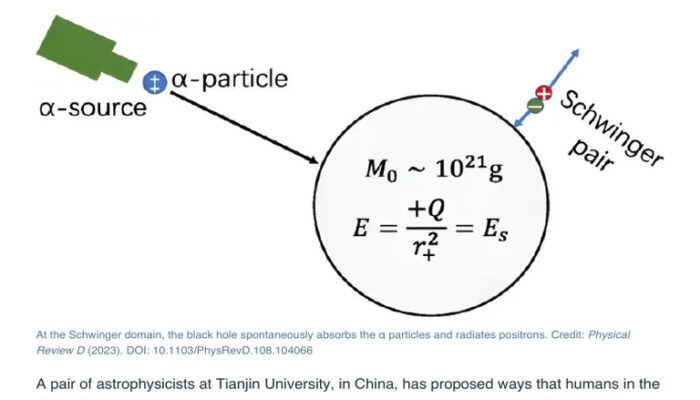
Emerging theories suggest that black holes may not be mere absorbers but active participants in the universe’s energy dynamics. Quantum field theory introduces phenomena such as Hawking radiation, where particle-antiparticle pairs form near the event horizon, allowing black holes to emit radiation and gradually lose mass. This process implies that black holes could contribute energy back into the cosmos, potentially influencing dark energy’s behavior.
Hawking Radiation and Its Implications
Hawking radiation arises from quantum effects at the boundary of black holes, leading to the emission of particles and a slow decrease in black hole mass. Although the energy emitted is minuscule compared to the vast scale of dark energy, this mechanism challenges the notion of black holes as purely destructive forces. Instead, it opens the possibility that black holes might play a role in redistributing or even generating forms of energy akin to dark energy.
Black Holes as Potential Absorbers of Dark Energy
Conversely, some hypotheses propose that black holes could act as sinks for dark energy, absorbing or diminishing its local density. Given their immense gravitational pull, black holes might reduce vacuum energy near their event horizons, thereby altering the distribution of dark energy across the universe. This absorption could explain observed variations in cosmic acceleration rates and suggest a more complex relationship between localized gravity and universal expansion.
Dualistic Interaction Models
Advanced theoretical frameworks, particularly those attempting to unify quantum mechanics and general relativity, propose that black holes might simultaneously create and destroy dark energy depending on specific conditions. These models envision bidirectional energy exchanges at the event horizon, with black holes emitting energy that behaves like dark energy while also absorbing fluctuations, effectively regulating the cosmic energy balance.
Influence of Accretion Disks on Energy Dynamics
The turbulent environments surrounding black holes, especially within their accretion disks, present extreme physical conditions where matter is heated to extraordinary temperatures. These regions may facilitate complex energy transformations and particle interactions that either amplify or suppress manifestations of dark energy, serving as natural laboratories for studying the interplay between black holes and the universe’s dark sector.
Observational Clues and Astrophysical Evidence
Recent astrophysical data and simulations have revealed phenomena that might indirectly indicate interactions between black holes and dark energy. Anomalies in the cosmic microwave background, irregular galactic rotation curves, and unexpected gravitational lensing patterns could reflect underlying processes where black holes influence or respond to dark energy. While conclusive proof remains elusive, these observations fuel ongoing research into the dynamic relationship between these cosmic forces.
Cosmological Significance and Future Implications
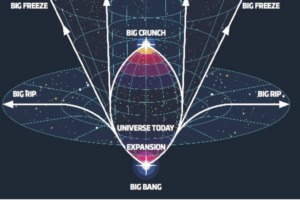
The potential for black holes to either produce or consume dark energy carries profound implications for the universe’s ultimate destiny. If black holes contribute to dark energy generation, they may accelerate cosmic expansion, steering the universe toward a “Big Freeze” or heat death. Alternatively, if they absorb dark energy, they could slow this expansion, possibly leading to contraction or other unforeseen cosmic evolutions. As observational techniques and theoretical models advance, our understanding of these processes will deepen, reshaping our cosmic worldview.
Conclusion: The Frontier of Astrophysical Inquiry
The question of whether black holes create or destroy dark energy epitomizes the cutting edge of modern astrophysics. It highlights significant gaps in current knowledge while inviting a more nuanced appreciation of the universe’s complexity. By considering black holes as dynamic agents in the cosmic energy exchange, scientists are moving beyond simplistic binaries toward a richer understanding of the interconnected fabric of matter, energy, space, and time. This ongoing exploration promises to redefine our grasp of the universe’s structure and fate.
FAQ
What are black holes?
Regions in space where gravity is so intense that nothing, not even light, can escape.
What is dark energy?
A mysterious form of energy that constitutes about 68% of the universe's total energy, responsible for the accelerated expansion of the cosmos.

Leave a Reply