
Short Answer
Definition of Pulsars and the Double Pulsar System
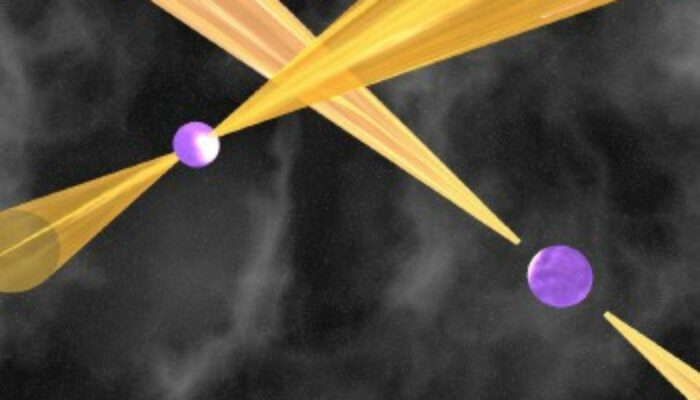
Pulsars are highly magnetized, rotating neutron stars that emit beams of electromagnetic radiation from their magnetic poles. These beams sweep across space, and when aligned with Earth, they are observed as periodic pulses of radiation, much like the rotating beam of a lighthouse. The first known double pulsar system, PSR J0737-3039, consists of two such neutron stars orbiting each other, providing a unique natural laboratory for astrophysical research.
- Pulsars:
Dense remnants of massive stars that have undergone supernova explosions, composed mainly of neutrons and exhibiting intense gravitational and magnetic fields. - Double Pulsar System:
A binary system where both neutron stars are pulsars, enabling detailed studies of gravitational interactions and relativistic effects.
Formation and Characteristics of Neutron Stars
Neutron stars emerge from the catastrophic collapse of massive stars during supernova events. These stellar remnants are incredibly dense, with masses comparable to the Sun compressed into a sphere roughly 20 kilometers in diameter. Their density rivals that of atomic nuclei, resulting in gravitational fields strong enough to significantly warp spacetime. The rapid rotation and strong magnetic fields of neutron stars generate the pulsar phenomenon, where beams of radiation are emitted along magnetic poles.
Orbital Dynamics of PSR J0737-3039
The PSR J0737-3039 system is remarkable due to its binary nature, containing two pulsars named PSR J0737-3039A and PSR J0737-3039B. These neutron stars orbit each other every 2.4 hours, locked in a gravitational embrace that allows scientists to observe relativistic effects with exceptional precision. Their close proximity and rapid orbit make this system an unparalleled environment for testing fundamental physics.
Relativistic Phenomena Observed in the Double Pulsar
The binary pulsar system exhibits a variety of relativistic effects predicted by Einstein’s General Theory of Relativity. One key phenomenon is time dilation, where the intense gravitational fields cause time to pass at different rates for the two pulsars. By monitoring the timing of pulses from PSR J0737-3039A, researchers can measure these effects and compare them to theoretical predictions, providing stringent tests of gravitational theory.
Gravitational Waves and Their Detection
As the two pulsars in PSR J0737-3039 spiral closer due to energy loss, they emit gravitational waves-ripples in the fabric of spacetime. These waves propagate outward and can be detected by observatories such as LIGO and Virgo. The observation of gravitational waves from this system not only confirms predictions of General Relativity but also enhances our understanding of phenomena like black hole mergers and the dynamic behavior of spacetime under extreme conditions.
Implications for Neutron Star Evolution
The interactions within the double pulsar system provide valuable insights into the life cycles of neutron stars. Studying how these dense objects influence each other’s evolution sheds light on the mechanisms governing their magnetic fields, spin rates, and eventual fates. This knowledge contributes to a broader understanding of stellar evolution and the end stages of massive stars.
Connection to Magnetars and Magnetic Phenomena
Magnetars are a subclass of neutron stars distinguished by extraordinarily strong magnetic fields, far exceeding those of typical pulsars. By comparing the magnetic properties and behaviors of the pulsars in PSR J0737-3039 with magnetars, scientists can deepen their comprehension of magnetic field generation and decay in neutron stars, enriching the broader field of astrophysical magnetism.
Philosophical and Cosmological Significance
Beyond their scientific value, double pulsars like PSR J0737-3039 inspire profound reflection on humanity’s place in the universe. These celestial objects highlight the interconnectedness of cosmic phenomena and the delicate balance of forces shaping existence. Observing such systems encourages a perspective that transcends individual experience, fostering a collective awareness of the vast and intricate cosmos.
Summary and Continuing Exploration
PSR J0737-3039 stands as a beacon of astrophysical discovery, combining rigorous scientific inquiry with the wonder of cosmic exploration. Its unique properties enable ongoing tests of fundamental physics, while its existence invites both experts and enthusiasts to engage with the mysteries of the universe. As research progresses, this double pulsar continues to illuminate the complex interplay of gravity, magnetism, and spacetime, guiding humanity toward deeper cosmic understanding.
FAQ
What is a double pulsar?
A double pulsar is a binary system containing two pulsars orbiting each other, allowing detailed studies of their interactions and relativistic effects.
Why is PSR J0737-3039 important?
PSR J0737-3039 is significant for testing theories of gravity and understanding neutron star evolution due to its unique properties.
What are gravitational waves?
Gravitational waves are ripples in spacetime caused by massive objects accelerating, such as the merging of neutron stars.

Leave a Reply