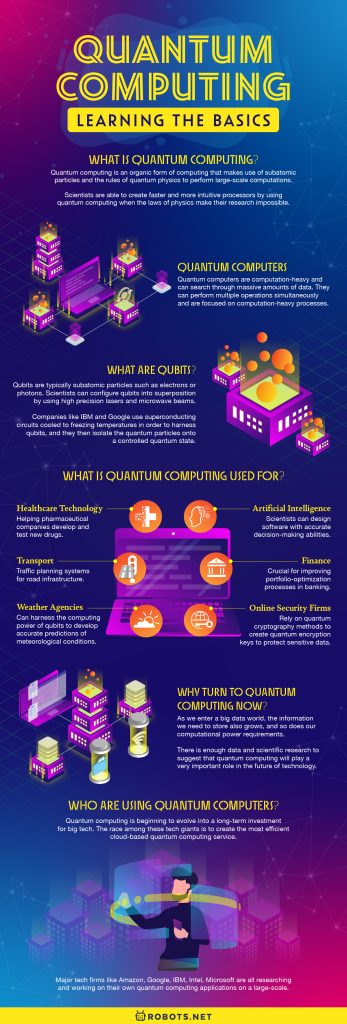
How to learn the basics about quantum computers?

Definition of Quantum Computing Quantum computing represents a groundbreaking computational approach that leverages the unique principles of quantum mechanics to process information. Unlike classical computing, which relies on bits as the smallest unit of data, quantum computing utilizes quantum bits or qubits, enabling new possibilities in processing power and problem-solving capabilities. This emerging technology promises […]

Read More →

Why Quantum Algorithms Are So Powerful (and Weird)

Definition of Quantum Algorithms Quantum algorithms are computational procedures that harness the unique properties of quantum mechanics to perform tasks that are often infeasible for classical algorithms. By exploiting phenomena such as superposition and entanglement, these algorithms enable new methods of processing information, offering significant advantages in speed and efficiency for certain complex problems. Fundamental […]

Read More →

What is scalable quantum computer technology?

Definition of Scalable Quantum Computing Scalable quantum computing refers to the development of quantum systems that can expand the number of quantum bits (qubits) efficiently, without compromising performance or incurring excessive costs. This capability is essential for building quantum computers that can tackle complex problems far beyond the reach of classical machines, marking a transformative […]

Read More →

How can chemistry be related to computer science?

Definition and Overview Chemistry and computer science, though traditionally viewed as distinct disciplines, are increasingly intertwined in ways that drive significant scientific progress. This interdisciplinary fusion leverages computational tools to enhance chemical research, enabling scientists to explore molecular phenomena with greater accuracy and efficiency. The integration of these fields fosters innovative approaches that expand the […]

Read More →

Is quantum computing a scientific snake oil?

Understanding Quantum Computing and the “Snake Oil” Debate Quantum computing has sparked intense discussions across diverse fields, from physics research to corporate boardrooms. Its promise of computational speeds vastly exceeding those of traditional computers has captivated scientists and engineers worldwide. Yet, amid this excitement, a critical question emerges: Could quantum computing be considered a form […]

Read More →

What would be the equivalent of quantum truth table?

Understanding Classical Truth Tables Classical truth tables form the backbone of traditional logic by assigning definitive truth values-true (1) or false (0)-to logical propositions. These tables systematically list every possible combination of input values to determine the corresponding output, providing a clear and deterministic framework for evaluating logical statements. Rooted in Aristotelian principles, classical logic […]

Read More →

Why is it called quantum computing?

Definition of Quantum Computing Quantum computing represents a groundbreaking advancement in technology, rooted in the principles of quantum mechanics. Unlike traditional computing, which relies on classical bits as the smallest units of information, quantum computing harnesses quantum bits, or qubits, that embody the fundamental quanta of nature. These qubits operate under the laws of quantum […]

Read More →

As at May 2017

Overview of May 2017 The month of May 2017 was distinguished by a series of impactful events and advancements across political, technological, cultural, scientific, and social spheres. This period reflected a dynamic interplay between ongoing historical trends and emerging modern developments, offering a rich tableau of global transformation. The following sections provide a comprehensive analysis […]

Read More →

Should we be fearful of Quantum Computers?

Understanding Quantum Computing Quantum computing represents a groundbreaking evolution in technology, distinguished by its ability to solve problems that are currently beyond the reach of classical computers. Unlike traditional computers that process information in binary bits-either 0 or 1-quantum computers utilize quantum bits, or qubits, which can exist in multiple states simultaneously due to the […]

Read More →