
Short Answer
Definition of Bose-Einstein Condensates
Bose-Einstein Condensates (BECs) represent a unique phase of matter that emerges when bosonic particles are cooled to temperatures near absolute zero. At these ultra-low temperatures, a large number of bosons occupy the same quantum ground state, resulting in macroscopic quantum phenomena that defy classical physics. This collective quantum state exhibits remarkable properties such as superfluidity and long-range coherence, where particles behave indistinguishably and act as a single quantum entity.
- Bosons:
Particles with integer spin that can share quantum states, enabling condensation. - Quantum Ground State:
The lowest energy state that particles occupy collectively in a BEC. - Superfluidity:
A frictionless flow characteristic observed in BECs.
Formation and Characteristics of BECs
When a gas of bosons is cooled to temperatures close to absolute zero, thermal motion diminishes, allowing the particles to collapse into the same quantum state. This condensation leads to a phase transition where quantum effects become apparent on a macroscopic scale. The resulting condensate exhibits coherence over large distances and can be manipulated using external fields, making it a powerful platform for exploring quantum mechanics beyond the microscopic realm.
Introduction to BEC Bubbles
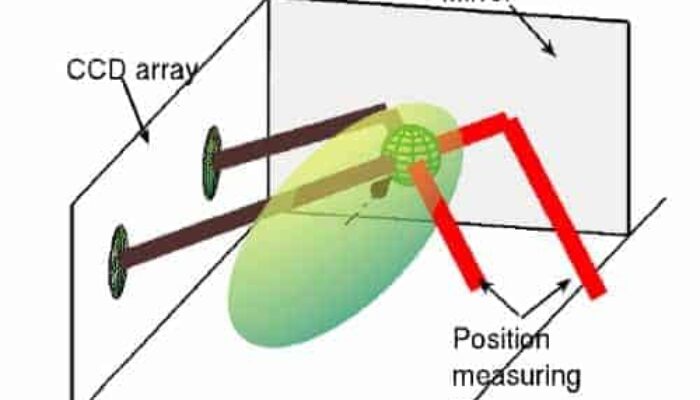
Within the realm of Bose-Einstein Condensates, researchers have developed the concept of BEC bubbles-localized regions within the condensate that form a delicate balance between competing forces. These bubbles are created by engineering areas of higher energy density inside the BEC, producing a confined quantum structure that responds sensitively to external forces. Acting as microscopic probes, BEC bubbles provide a novel method for detecting and measuring forces that are otherwise too subtle for conventional instruments.
Mechanism of BEC Bubble Formation and Function
BEC bubbles arise from the interplay between attractive and repulsive interactions within the condensate. By manipulating these forces, typically through optical trapping and laser cooling techniques, scientists can stabilize bubbles that maintain their shape and size under varying conditions. The bubble’s response to external stimuli-such as electromagnetic fields or gravitational forces-manifests as changes in its geometry and density distribution, which can be precisely monitored to infer the magnitude and nature of the applied forces.
Techniques for Creating and Observing BEC Bubbles
Advanced experimental methods are essential for generating and studying BEC bubbles. Laser cooling reduces the temperature of bosonic atoms to near absolute zero, while optical traps confine and shape the condensate. These tools allow fine control over the bubble’s environment and dynamics. Additionally, imaging technologies like phase contrast microscopy enable real-time visualization of bubble oscillations and deformations, facilitating accurate measurement of minute forces acting on the system.
Applications of BEC Bubbles in Measuring Tiny Forces
BEC bubbles have demonstrated exceptional sensitivity in detecting forces originating from diverse sources, including electromagnetic interactions and gravitational effects. Their ability to register forces at scales far below the threshold of traditional measurement devices opens new avenues in precision metrology. For example, the oscillatory behavior of BEC bubbles under external influences provides quantifiable data that can be analyzed to reveal subtle force dynamics.
Potential Impact on Fundamental Physics and Cosmology
The utilization of BEC bubbles extends beyond measurement, offering profound implications for fundamental physics. They hold promise for investigating quantum phase transitions, entanglement phenomena, and coherence properties that challenge existing theoretical models. Moreover, BEC bubbles could play a pivotal role in exploring the interface between quantum mechanics and gravity, potentially contributing to the development of a unified theory of quantum gravity.
Role in Dark Matter Detection and Quantum Technologies
One of the most exciting prospects of BEC bubble research lies in its application to detecting elusive particles such as dark matter. Traditional detectors often require massive apparatuses and may lack the sensitivity to capture weak interactions at low energies. BEC bubbles, with their heightened responsiveness, could provide a novel detection mechanism, enhancing our understanding of the universe’s hidden components. Furthermore, insights from BEC bubble experiments are expected to advance quantum sensor technology and improve devices like gravimeters, pushing the boundaries of precision measurement.
Challenges in BEC Bubble Research
Despite their potential, working with BEC bubbles involves significant technical hurdles. Producing and maintaining Bose-Einstein Condensates demands sophisticated equipment capable of achieving and sustaining ultra-low temperatures. Controlling environmental variables to preserve bubble stability and ensure reproducible results remains a complex task. Additionally, interpreting the quantum data generated requires advanced theoretical frameworks, as the phenomena observed often transcend classical intuition and involve intricate quantum mechanical principles.
Why Measuring Minuscule Forces Matters
Understanding forces at the quantum scale is crucial for refining physical theories and enhancing experimental techniques. BEC bubbles provide a unique window into these subtle interactions, enabling scientists to test and expand models of force behavior. The knowledge gained not only enriches fundamental science but also drives innovation in technology sectors reliant on ultra-precise measurements, such as navigation, materials science, and quantum computing.
Summary and Future Outlook
The exploration of Bose-Einstein Condensate bubbles as tools for detecting infinitesimal forces represents a frontier in quantum physics research. Their unparalleled sensitivity and versatility promise to deepen our comprehension of quantum phenomena and catalyze breakthroughs in both theoretical and applied sciences. As experimental methods evolve and theoretical understanding matures, BEC bubbles are poised to unlock new insights into the fundamental forces shaping our universe, marking a significant step forward in the quest to unravel nature’s most intricate mysteries.
FAQ
What are Bose-Einstein Condensates?
Bose-Einstein Condensates (BECs) are a unique phase of matter formed when bosonic particles are cooled to temperatures near absolute zero, allowing many bosons to occupy the same quantum state.
How do BEC bubbles form?
BEC bubbles form from the interplay between attractive and repulsive interactions within the condensate, stabilized through techniques like optical trapping and laser cooling.
What are the applications of BEC bubbles?
BEC bubbles have applications in precision metrology, dark matter detection, and the advancement of quantum technologies.





Leave a Reply