Can a particle accelerator make a black hole?

Understanding Black Holes Black holes are among the most fascinating and mysterious objects in the universe, captivating both scientists and the public for decades. According to Einstein’s theory of general relativity, a black hole forms when a mass is compressed into an incredibly small volume, creating a gravitational field so intense that nothing, not even […]

Read More →

What is the Standard Model and is it considered a theory?

Definition of the Standard Model The Standard Model of particle physics represents a highly refined scientific framework that explains the fundamental particles constituting matter and the forces governing their interactions, excluding gravity. It serves as a foundational pillar in modern physics, offering a detailed description of the subatomic world and the mechanisms that underpin the […]

Read More →

What is the particle easiest to remove from an atom?

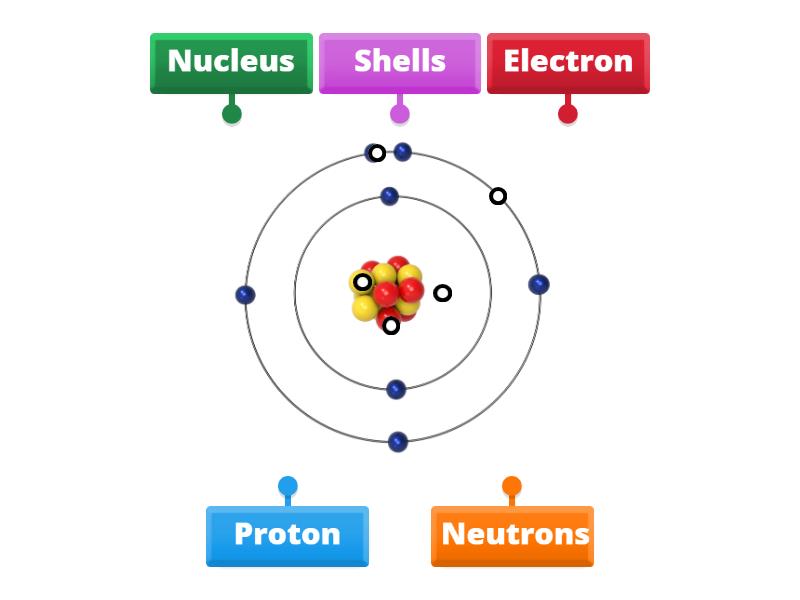
Definition of Subatomic Particles Atoms are composed of three primary subatomic particles: protons, neutrons, and electrons. Each of these particles plays a distinct role in defining the atom’s characteristics and behavior. Protons: Located in the nucleus, protons carry a positive electrical charge and determine the atomic number, which defines the element. Neutrons: Also found in […]

Read More →

Nuclear Structure and Synthesis (Split 1 of 3)?

Understanding Nuclear Structure The nucleus, the dense core at the center of an atom, is composed of protons and neutrons-collectively known as nucleons. These nucleons form the fundamental units of matter, held together by powerful forces that govern their interactions. The nucleus can be metaphorically compared to a miniature solar system, where positively charged protons […]

Read More →

What is chromodynamic energy?

Definition of Chromodynamic Energy Chromodynamic energy refers to the energy associated with the strong interactions between quarks and gluons, the fundamental particles that compose protons, neutrons, and other hadrons. This concept is rooted in quantum chromodynamics (QCD), the quantum field theory that describes the strong nuclear force, one of the four fundamental forces in nature. […]

Read More →

What are the properties of electrons

Definition of the Electron The electron is a fundamental subatomic particle that plays a vital role in the structure and behavior of matter. It is an elementary particle with a negative electric charge, integral to atomic and subatomic physics. Electrons influence a wide range of physical phenomena, from the formation of atoms to the principles […]

Read More →

Is a doctorate in applied physics more flexible than nuclear?

Definition of Applied Physics and Nuclear Physics Physics is a broad scientific discipline encompassing numerous specialized fields, each with unique challenges and career paths. Two notable doctoral-level specializations are applied physics and nuclear physics. Both fields deepen understanding of fundamental physical principles but differ significantly in their scope, applications, and career flexibility. Applied Physics Applied […]

Read More →

Do particle physicists accept quantum field theory?

Definition of Quantum Field Theory Quantum Field Theory (QFT) is a fundamental framework in modern physics that describes particles not as isolated objects but as excitations or disturbances in underlying fields that permeate all of space. This approach unifies quantum mechanics with special relativity, providing a comprehensive language to explain the behavior and interactions of […]

Read More →

Why are quarks the building blocks of all matter?

Definition of Quarks Quarks are elementary particles that form the fundamental components of matter, serving as the substructure of protons and neutrons. They are the smallest known building blocks that combine to create the particles making up atomic nuclei. Quarks are never found in isolation but always exist confined within composite particles called hadrons. Elementary […]

Read More →