What is an example of subatomic particles?

Definition of Subatomic Particles Subatomic particles are the most basic constituents of matter, forming the foundation of the physical universe. These minuscule entities operate within a realm where classical physics gives way to quantum mechanics, revealing a complex and dynamic microcosm. The primary categories of subatomic particles include quarks, leptons, and bosons, each possessing distinct […]

Read More →

What are the differences between hadrons and leptons?

Definition of Hadrons and Leptons In particle physics, fundamental particles are broadly classified into two main categories: hadrons and leptons. These groups differ significantly in their composition, properties, and the forces they experience. Hadrons: Composite particles made up of quarks bound together by the strong nuclear force, mediated by gluons. Hadrons are further divided into […]

Read More →

Where does the World Sheet ‘begin’ in SU (3) QCD?

Understanding the World Sheet in SU(3) Quantum Chromodynamics Definition and Context In the realm of particle physics, particularly within Quantum Chromodynamics (QCD) governed by the SU(3) gauge group, the concept of the world sheet serves as a fundamental theoretical construct. It represents a two-dimensional surface that encapsulates the evolution and interactions of quarks and gluons-the […]

Read More →

Can we make a particle accelerator at home? If yes how?

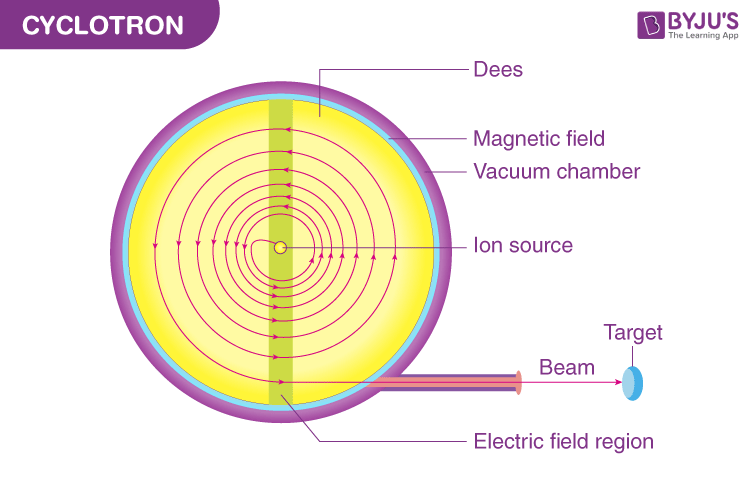
Definition of Particle Accelerators Particle accelerators are advanced scientific instruments designed to propel charged particles, such as electrons or protons, to extremely high speeds using electromagnetic fields. These accelerated particles are then made to collide, enabling researchers to investigate the fundamental components and forces of matter at atomic and subatomic levels. Such devices have been […]

Read More →

What is the structure of the atom and its subatomic particles?

Definition of an Atom An atom is widely recognized as the fundamental unit of matter, serving as the essential building block from which all substances are formed. It is a complex structure that has intrigued scientists, philosophers, and inquisitive thinkers for centuries. Beyond its practical significance in the physical world, the atom’s intricate internal composition […]

Read More →

B-Factories on the Hunt: Closing In on CP Violation

Understanding CP Violation CP violation refers to the phenomenon where the laws of physics differ when particles are replaced by their antiparticles (charge conjugation, C) and their spatial coordinates are inverted (parity transformation, P). This asymmetry is crucial because it reveals that the universe does not treat matter and antimatter identically, a fact that challenges […]

Read More →

What is quantum chromodynamics in layman’s terms?

Definition of Quantum Chromodynamics Quantum Chromodynamics (QCD) is a pivotal theory within particle physics that elucidates the strong nuclear force-the fundamental interaction responsible for binding atomic nuclei together. While it may initially seem specialized, QCD profoundly influences our comprehension of matter at its most elementary level. This theory unravels the intricate dynamics governing the particles […]

Read More →

What is Rutherford’s scattering experiment?

Definition of Rutherford’s Scattering Experiment Rutherford’s scattering experiment, commonly referred to as the gold foil experiment, represents a pivotal breakthrough in atomic physics. Conducted in 1909 by Ernest Rutherford and his team, this experiment fundamentally transformed the scientific community’s perception of atomic structure. It replaced the earlier plum pudding model, which depicted the atom as […]

Read More →