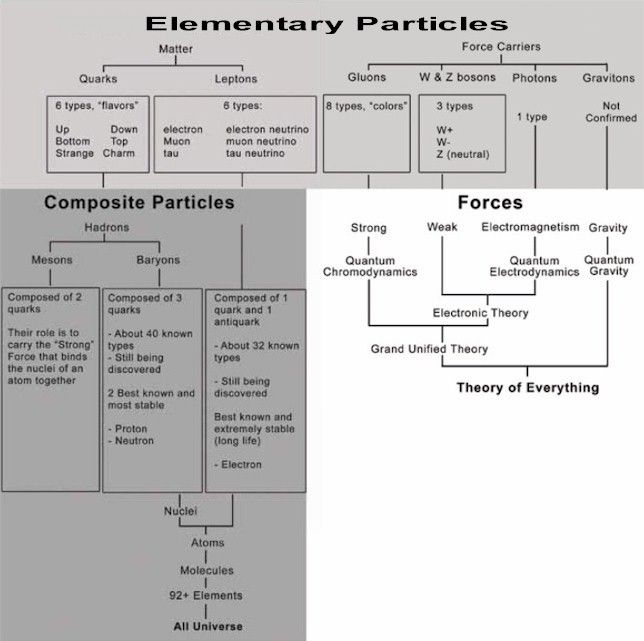
Why can’t there be massless electron neutrinos?

Definition of Electron Neutrinos Electron neutrinos are fundamental particles belonging to the lepton family, characterized by their extremely small mass and weak interaction with matter. As one of the three neutrino flavors-electron, muon, and tau-they play a crucial role in particle physics and cosmology. These neutrinos are electrically neutral and interact primarily through the weak […]

Read More →

What is Higgs boson simply?

Definition of the Higgs Boson The Higgs boson is a fundamental particle integral to the Standard Model of particle physics. It represents a quantized excitation of the Higgs field, an all-pervasive field that exists throughout the universe. This particle is essential for explaining how elementary particles acquire mass, a cornerstone concept in understanding the composition […]

Read More →

What is the structure of the nucleus?

Definition of the Cell Nucleus The nucleus is a vital organelle found in eukaryotic cells, often described as the cell’s control center. It houses the cell’s genetic material and orchestrates numerous biochemical activities essential for cellular function and survival. Far from being a static compartment, the nucleus is a dynamic hub where critical processes such […]

Read More →

How can we detect neutrinos

Understanding Neutrinos Neutrinos are fundamental particles that have captivated scientists in the realms of particle physics and cosmology due to their elusive characteristics and minimal interaction with matter. These nearly massless, electrically neutral particles are produced abundantly in various natural and artificial processes, including stellar reactions, cosmic phenomena, and nuclear reactors. Despite their prevalence, neutrinos […]

Read More →

Meet Sandhya Jain: A Voice Bridging Physics and Public Thought

Overview of Sandhya Jain’s Role in Modern Physics and Society In today’s rapidly evolving scientific landscape, physics has transcended its traditional academic boundaries to become a crucial element in public conversations. Sandhya Jain, a prominent physicist, exemplifies this shift by bridging the gap between complex scientific theories and societal understanding. Her work extends beyond research, […]

Read More →

What is the basic building block for all matter in the universe?

Definition of Matter and Its Fundamental Constituents The exploration of matter’s essential components has intrigued thinkers and scientists for centuries, blending philosophical inquiry with empirical investigation. At the heart of this exploration lies the atom, traditionally regarded as the smallest indivisible unit of matter. However, a deeper understanding reveals that atoms themselves are composed of […]

Read More →

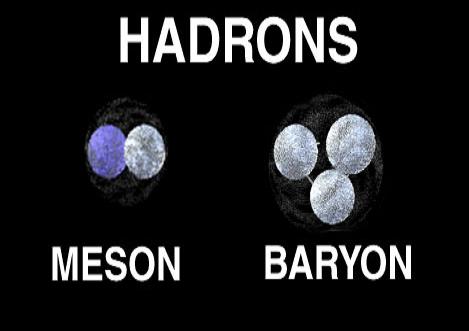
Does the strong nuclear force make any sense?

Definition of the Strong Nuclear Force The strong nuclear force is a fundamental interaction in particle physics, recognized as the most powerful force among the four known fundamental forces. It acts as the essential binding agent that holds protons and neutrons-collectively called nucleons-together within an atomic nucleus. Despite its immense strength, this force operates over […]

Read More →

What do I need to know before I study Nuclear Physics?

Definition of Nuclear Physics Nuclear physics is the branch of science dedicated to exploring the components and interactions within atomic nuclei. It seeks to unravel the fundamental nature of matter and the forces that govern nuclear behavior, offering profound insights into the universe’s underlying structure. This field combines theoretical frameworks and experimental methods to study […]

Read More →