Can particle accelerator make someone like the FLASH?

Understanding Speed in the Context of Physics Speed is fundamentally defined as the measure of how quickly an object changes its position over time. While this concept appears straightforward, its deeper implications are governed by the principles of physics, particularly those articulated in Einstein’s theory of relativity. As an object’s velocity approaches the speed of […]

Read More →

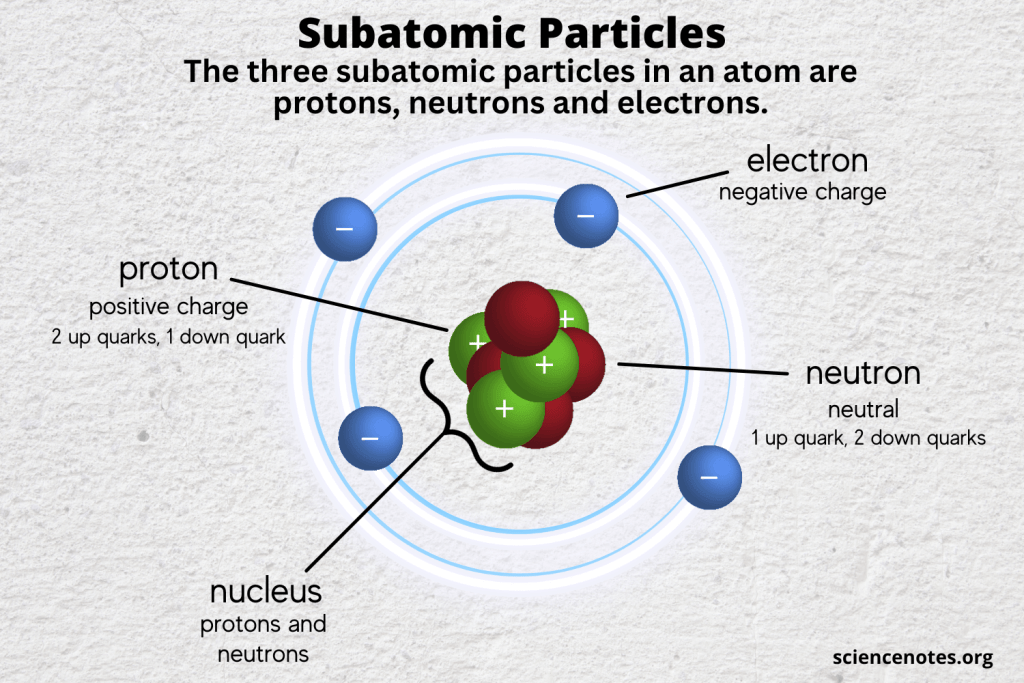
What are quarks and have we been able to split one yet?

Definition of Quarks Quarks are fundamental particles that serve as the essential components of matter, specifically forming protons and neutrons, which constitute atomic nuclei. As elementary fermions with half-integer spin, quarks come in six distinct types, known as flavors: up, down, charm, strange, top, and bottom. Each flavor exhibits unique characteristics such as mass and […]

Read More →

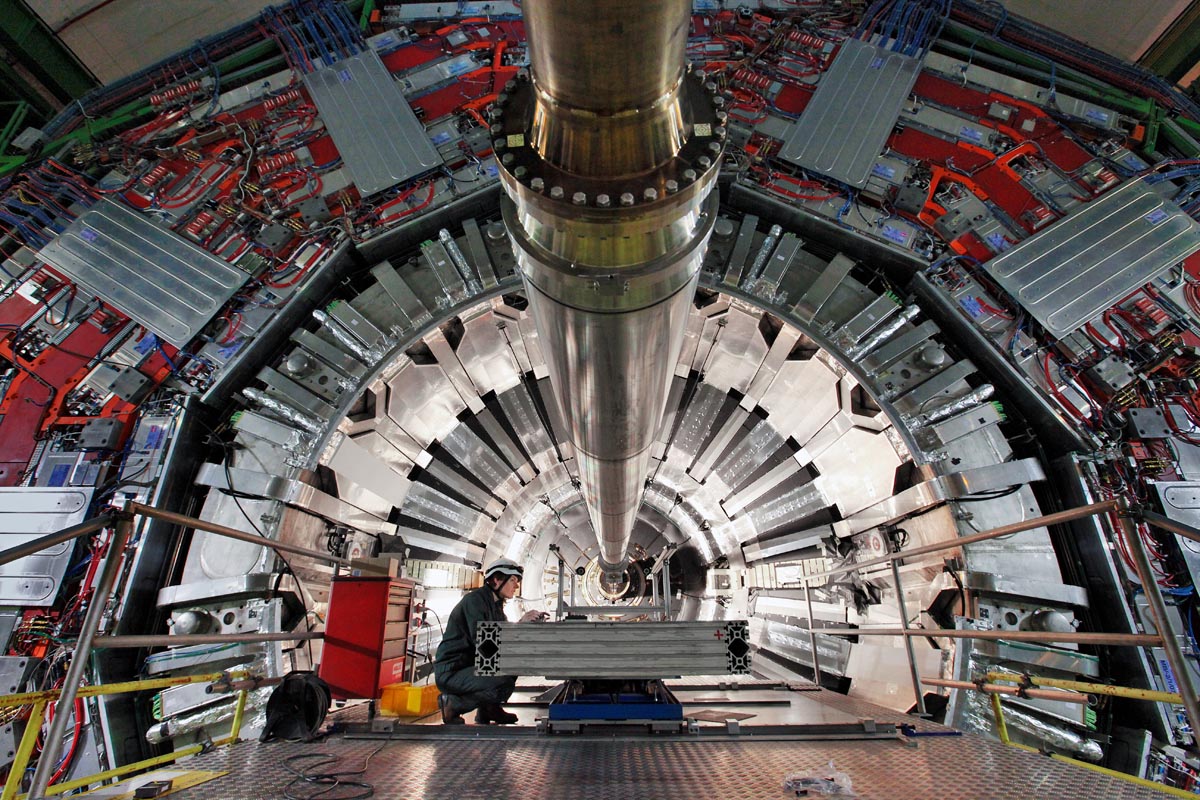
Why was CERN built?

Definition and Purpose of CERN The European Organization for Nuclear Research, widely known as CERN, is a premier scientific institution dedicated to exploring the fundamental components of the universe. Founded in 1954, CERN was established with the ambitious goal of advancing our understanding of particle physics and the forces that shape reality. It serves as […]

Read More →

How were the 12 fundamental particles originally identified?

Overview of Fundamental Particles The discovery of the twelve fundamental particles, which constitute the foundation of the Standard Model in particle physics, represents a remarkable scientific journey spanning many decades. These particles are categorized into two main groups: fermions and bosons. Each plays an essential role in forming matter and mediating the fundamental forces that […]

Read More →

What are elementary particles made of?

Definition of Elementary Particles Elementary particles are the most fundamental constituents of matter and energy in the universe. Unlike composite particles, they are not known to be made up of smaller components. These particles form the basis of all physical substances and forces, serving as the essential building blocks in the fabric of reality. Fermions: […]

Read More →

What are quarks in an atom?

Definition of Quarks Quarks are fundamental particles that serve as the essential building blocks of matter at the subatomic level. Unlike atoms, which were once considered the smallest indivisible units, quarks reside within protons and neutrons, the components of an atom’s nucleus. These particles are elementary constituents in particle physics, meaning they are not composed […]

Read More →

Which particles in an atom are heavy particles?

Definition of Atomic Particles An atom is a fundamental unit of matter, structured much like a miniature solar system, where various particles orbit a central core. The primary constituents of an atom include protons, neutrons, and electrons. Among these, protons and neutrons are classified as heavy particles due to their substantial mass compared to electrons. […]

Read More →

Are there elementary particles undiscovered in the universe?

Understanding Elementary Particles Elementary particles are the most basic building blocks of matter and forces, indivisible into smaller components. They form the foundation of all physical substances and interactions in the universe. The Standard Model of particle physics categorizes these fundamental particles into three main groups: quarks, leptons, and gauge bosons. Quarks combine to form […]

Read More →

Austria Does a CERN U-Turn: Back in the Collider Game

Overview of Austria’s Scientific Evolution in High-Energy Physics Austria has witnessed a significant transformation in its scientific focus, particularly within the domain of high-energy physics. While the country has historically made substantial contributions to various scientific fields, it experienced a period of withdrawal from large-scale particle physics projects. Recently, however, Austria has demonstrated a renewed […]

Read More →

How many physicists know how a nuclear bomb works?

Understanding Physicists’ Knowledge of Nuclear Weapons The field of nuclear physics encompasses a complex and multifaceted domain, especially when examining the knowledge physicists hold about nuclear weapons. The question of how many physicists truly comprehend the operational principles of nuclear bombs invites an exploration that spans academic disciplines, ethical considerations, and societal impacts. This article […]

Read More →