Why doesn’t gravity fit into the standard model?

Gravity, an omnipresent force that governs the motion of celestial bodies and dictates the structure of the cosmos, remains curiously absent from the Standard Model of particle physics. This model, a cornerstone of contemporary theoretical physics, meticulously details the interactions among fundamental particles and three of the four known fundamental forces: electromagnetic, weak nuclear, and […]

Read More →

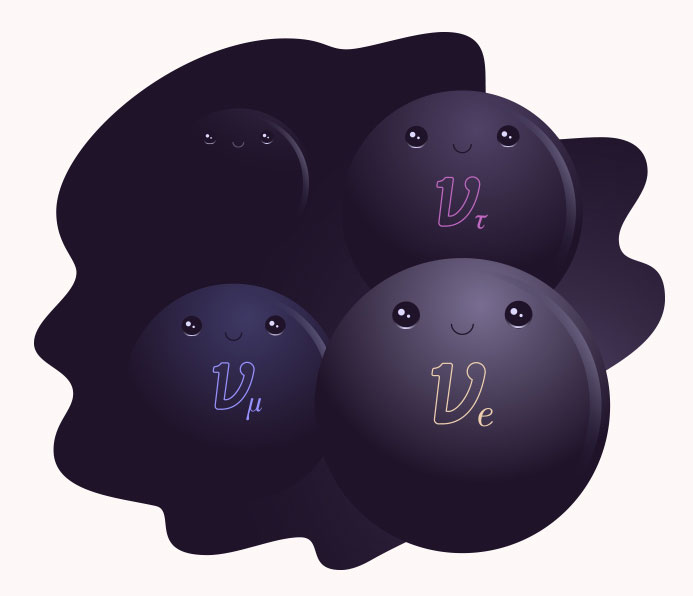
Neutrinos are in box. How to make neutrinos out of box?

Neutrinos are elusive, enigmatic particles that have long captivated the interest of physicists. Born from the nuclear reactions within stars, they traipse across the cosmos virtually undeterred, penetrating matter with a nonchalance that belies their fundamental significance in the universe. To conceptualize the phrase “neutrinos are in a box” invites a plethora of interpretations, extending […]

Read More →

Did the British test their nuclear bomb on their own soldiers?

The ramifications of nuclear testing extend beyond the physical realm—where the cataclysmic forces of atomic energy redefine terrestrial landscapes. They intrude into the moral fabric of society, challenging ethical boundaries and inciting fierce debate. An unsettling question lurks: did the British test their nuclear bomb on their own soldiers? This inquiry invites scrutiny into the […]

Read More →

B-Mesons Misbehave: A New Twist in Particle Decay

The study of particle physics has long captivated the scientific community, with its myriad of subatomic entities engaging researchers and theorists alike. Among these subatomic particles, B-mesons have emerged as particularly interesting subjects due to their pronounced instabilities and anomalous decay patterns. These peculiar behaviors provoke intrigue, hinting at the underlying complexities of the Standard […]

Read More →

Why did you become a particle physicist?

Particle physics represents a frontier of science where the most fundamental constituents of matter are scrutinized. The question, “Why did you become a particle physicist?” beckons not merely for a personal narrative, but invites a comprehensive exploration into the myriad of motivations that compel individuals to delve into this esoteric discipline. Before embarking on this […]

Read More →

What particle is associated with beta decay?

When delving into the fascinating arena of particle physics, one discovers a rich tapestry of interactions and transformations that lie at the heart of nuclear processes. A particularly intriguing phenomenon is beta decay, a type of radioactive decay that transpires within unstable atomic nuclei. But what exactly is the particle responsible for this transformation, and […]

Read More →

What are the advantages and disadvantages of cosmic rays?

Cosmic rays, high-energy particles originating from beyond the Earth’s atmosphere, present a fascinating topic of study due to their intricate interplay with both terrestrial and extraterrestrial environments. As their influence permeates numerous domains—including astrophysics, aviation, and even potential medical applications—understanding the advantages and disadvantages of cosmic rays becomes paramount. This discourse will elucidate the multifaceted […]

Read More →

What are the different types of sub-atomic particles?

Subatomic particles constitute the fundamental building blocks of matter, playing a pivotal role in the structure of atoms and the interactions that govern the behavior of the universe. Within the realm of particle physics, these diminutive entities are categorized primarily into three distinct classes: baryons, mesons, and leptons. This article seeks to delineate these categories […]

Read More →