
Short Answer
Understanding the Atom and Its Constituents
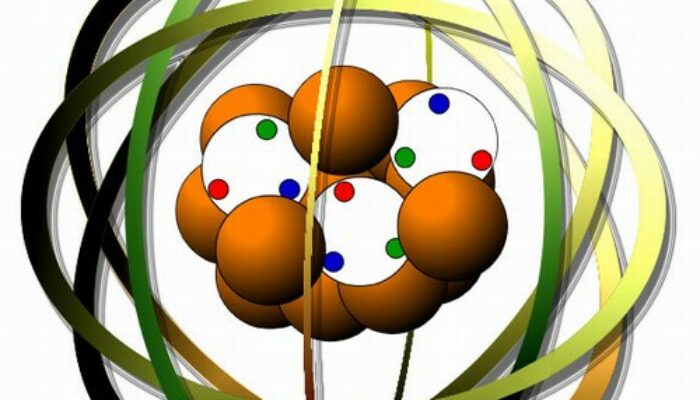
The atom is traditionally recognized as the fundamental unit of matter, serving as the basic building block of all substances. At its simplest, an atom comprises a central nucleus surrounded by electrons. The nucleus itself contains protons, which carry a positive electrical charge, and neutrons, which are electrically neutral. Electrons, much smaller in mass compared to nucleons, orbit the nucleus in defined energy levels and possess a negative charge. This atomic structure forms the foundation of chemistry and physics, but it also prompts a deeper question: are atoms truly the smallest units of matter?
Subatomic Particles: Beyond the Atom
Scientific investigations have revealed that atoms are not indivisible. The protons and neutrons within the nucleus are themselves composed of smaller entities called quarks. Quarks are elementary particles that come in six varieties, known as flavors: up, down, charm, strange, top, and bottom. These quarks are bound together by the strong nuclear force, which is mediated by gluons, to form protons and neutrons. This discovery highlights a complex hierarchy within matter, demonstrating that particles smaller than atoms exist and play critical roles in the structure of the universe.
Elementary Particles in the Standard Model
The Standard Model of particle physics classifies quarks and leptons as fundamental particles. Leptons include electrons, muons, tau particles, and their associated neutrinos. Unlike quarks, leptons do not participate in the strong nuclear force but are essential in various atomic and subatomic processes. While the Standard Model successfully explains many particle interactions, it does not fully account for phenomena such as gravity or dark matter, suggesting that our understanding of the universe is still incomplete.
Theoretical Extensions: Supersymmetry and Beyond
Physicists have proposed theories extending beyond the Standard Model, such as supersymmetry, which predicts the existence of partner particles for every known particle. These hypothetical supersymmetric particles could provide a framework that unifies quantum mechanics with gravitational forces and might offer explanations for dark matter and cosmic expansion. Although these particles remain undetected, their potential existence opens new avenues for understanding the fundamental nature of reality.
Quantum Field Theory and the Nature of Particles
Quantum field theory presents a paradigm shift by describing particles not as isolated points but as excitations of underlying fields permeating space. In this view, particles are akin to waves or ripples on a pond, with their properties emerging from the vibrations of these fields. This perspective challenges classical notions of particles and compels scientists to reconsider the essence of matter and existence at the most fundamental level.
Quantum Entanglement: A Window into Particle Interconnectivity
One of the most intriguing quantum phenomena is entanglement, where particles become linked such that the state of one instantly influences the state of another, regardless of the distance between them. Albert Einstein famously referred to this as “spooky action at a distance.” Entanglement suggests a profound interconnectedness in the quantum realm, raising important questions about the nature of space, time, and causality in relation to subatomic particles.
String Theory: A Multidimensional Perspective
String theory offers a radical hypothesis that the fundamental constituents of matter are not point-like particles but one-dimensional strings vibrating at specific frequencies. These strings exist in multiple dimensions beyond the familiar three spatial and one temporal dimension. This framework aims to reconcile quantum mechanics with general relativity and could potentially explain the properties of all particles and forces, further blurring the lines between matter, space, and time.
Advancements in Particle Physics Research
Technological progress, such as the development of the Large Hadron Collider and sophisticated quantum computing, has propelled the exploration of particles smaller than atoms. These tools enable scientists to probe deeper into the subatomic world, uncovering new particles and interactions that refine our understanding of the universe. This ongoing research not only advances physics and mathematics but also invites philosophical reflection on the nature of reality and existence.
The Broader Significance of Exploring Subatomic Particles
The quest to identify and understand particles smaller than atoms transcends scientific inquiry, touching on fundamental questions about the universe’s composition and origins. This pursuit inspires curiosity and wonder across cultures and disciplines, influencing fields such as physics, chemistry, and philosophy. By unraveling the mysteries of the microscopic world, humanity gains insight into the intricate tapestry of existence and the forces shaping reality.
Historical and Philosophical Context
From ancient philosophical musings on the indivisibility of matter to contemporary particle physics, the investigation into the smallest components of matter reflects humanity’s enduring desire to comprehend the universe. This journey illustrates the evolution of scientific thought and the continuous expansion of knowledge, highlighting the dynamic relationship between observation, theory, and discovery.
Summary and Future Outlook
In summary, the exploration of entities smaller than atoms encompasses the study of subatomic particles like quarks and leptons, theoretical models extending beyond the Standard Model, and advanced concepts such as string theory and quantum fields. Each breakthrough enriches our understanding of the cosmos and challenges existing paradigms. As research progresses, it promises to deepen our grasp of matter, energy, and the fundamental principles governing the universe, affirming that reality is far more intricate than the mere assembly of atoms.
FAQ
What is smaller than an atom?
Subatomic particles like quarks and leptons are smaller than atoms.
What are quarks?
Quarks are elementary particles that combine to form protons and neutrons, which are found in the nucleus of an atom.
What is the Standard Model?
The Standard Model is a theory in particle physics that describes the electromagnetic, weak, and strong nuclear interactions.
What is string theory?
String theory posits that the fundamental constituents of matter are one-dimensional strings rather than point-like particles.






Leave a Reply