Are quarks and leptons field excitations?

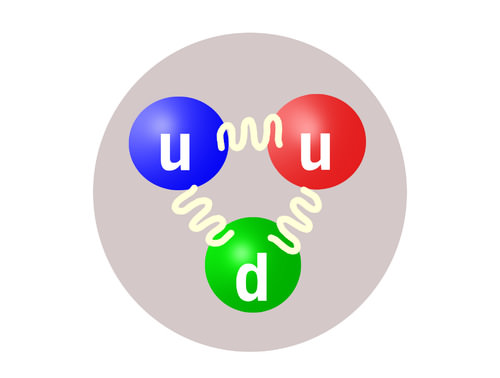
Definition of Quarks and Leptons Quarks and leptons are the fundamental constituents of matter, forming the basis of the subatomic world. They are categorized as elementary particles, meaning they are not composed of smaller components. Quarks combine to create composite particles such as protons and neutrons, which are the building blocks of atomic nuclei. Leptons, […]

Read More →

Has CERN achieved anything yet?

Overview of CERN The European Organization for Nuclear Research, commonly known as CERN, represents a pinnacle of scientific exploration and technological progress. Founded in 1954, CERN is dedicated to probing the fundamental components and forces of the universe. It has consistently led advancements in high-energy physics, expanding our comprehension of matter and the interactions that […]

Read More →

Does the Large Hadron Collider have a screen to see inside?

Definition of the Large Hadron Collider The Large Hadron Collider (LHC) is the world’s most extensive and powerful particle accelerator, situated beneath the border between France and Switzerland. It is designed to explore the fundamental components of matter by accelerating particles to near-light speeds and causing them to collide. This colossal scientific instrument aims to […]

Read More →

Is CERN safe place in terms of radiation?

Overview of CERN and Its Scientific Mission The European Organization for Nuclear Research, widely known as CERN, is a leading center for scientific research located on the border between France and Switzerland. It is internationally recognized for its groundbreaking work in high-energy physics, attracting thousands of scientists and researchers who seek to unravel the fundamental […]

Read More →

When is matter destroyed in a nuclear reaction?

Understanding Nuclear Reactions Nuclear reactions constitute a captivating branch of physics where conventional concepts of matter are often redefined. The question of when matter is considered destroyed during these reactions ties into a broader comprehension of the equivalence between energy and matter, nuclear binding energy, and the subatomic structures that dictate atomic behavior. This article […]

Read More →

LHC Eyes Early September Start: Countdown to Collision

Overview of the Large Hadron Collider The Large Hadron Collider (LHC) represents a pinnacle of contemporary engineering and particle physics research. Situated beneath the border between France and Switzerland, this massive scientific instrument is preparing to commence a new operational phase in early September. This upcoming cycle, often termed Run 3, is anticipated to push […]

Read More →

What is an atom

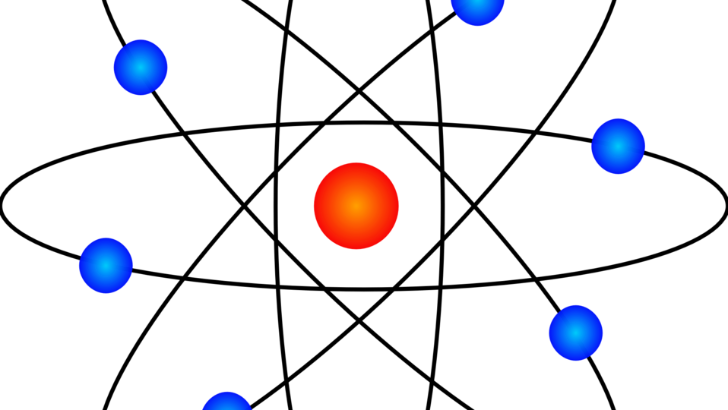
Definition of the Atom The atom is the fundamental unit of matter, serving as the essential building block from which all substances are formed. Originating from the Greek word “atomos,” meaning indivisible, the atom was once thought to be the smallest possible particle. Modern scientific discoveries, however, have revealed that atoms themselves consist of smaller […]

Read More →

Why doesn’t gravity fit into the standard model?

Understanding Gravity and Its Role in Physics Gravity is a fundamental force that governs the motion of planets, stars, and galaxies, shaping the very structure of the universe. Despite its omnipresence and critical influence on cosmic phenomena, gravity remains conspicuously absent from the Standard Model of particle physics. This model, a foundational framework in modern […]

Read More →

Neutrinos are in box. How to make neutrinos out of box?

Definition of Neutrinos Neutrinos are fundamental subatomic particles that intrigue physicists due to their elusive nature and unique properties. Originating from nuclear reactions within stars and other cosmic phenomena, neutrinos traverse vast distances across the universe almost unaffected by matter. Their ability to pass through ordinary material with minimal interaction makes them essential to understanding […]

Read More →