
Short Answer
Definition and Overview of CERN
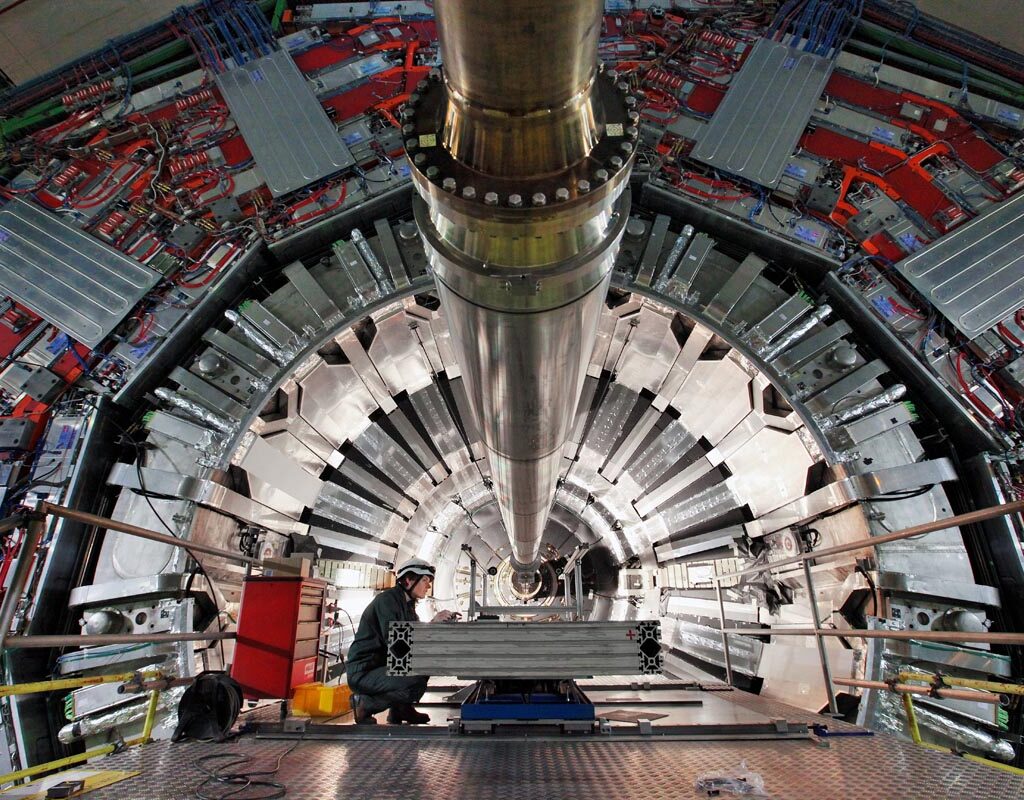
The European Organization for Nuclear Research, widely known as CERN, is a premier international research institution established in 1954. It is dedicated to advancing fundamental knowledge in particle physics, focusing on the study of the universe’s most basic building blocks. CERN is famously home to the Large Hadron Collider (LHC), the world’s largest and most powerful particle accelerator, situated on the border between Switzerland and France. This organization serves as a hub for scientists worldwide, aiming to unravel the mysteries of matter, energy, space, and time.
Scientific Mission and Research Focus
CERN’s primary objective is to investigate the fundamental particles and forces that constitute the universe. By accelerating particles to velocities approaching the speed of light and colliding them at extremely high energies, researchers can simulate conditions similar to those just moments after the Big Bang. These experiments provide critical insights into phenomena such as the origin of mass, the nature of dark matter, and the properties of antimatter. The LHC, as the centerpiece of CERN’s experimental infrastructure, enables these groundbreaking studies by generating unprecedented collision energies.
How CERN Operates: Particle Acceleration and Collision
The core mechanism at CERN involves accelerating subatomic particles, primarily protons, within a circular tunnel spanning 27 kilometers. Using powerful superconducting magnets and radiofrequency cavities, particles are propelled to near-light speeds. When these particles collide, they release vast amounts of energy, producing a variety of secondary particles that detectors analyze. This process allows physicists to probe the fundamental laws of nature and test theoretical models of particle physics.
Key Discoveries and Scientific Contributions
One of CERN’s landmark achievements is the discovery of the Higgs boson in 2012, a particle that explains how other particles acquire mass. This finding confirmed a crucial element of the Standard Model of particle physics. Beyond this, CERN’s research has expanded understanding of quantum mechanics, particle interactions, and the early universe’s conditions. The institution’s open data policies also enable global scientific collaboration, fostering innovation and transparency in research.
Public Perception and Common Misconceptions
The LHC could create black holes that threaten Earth.
The energies produced by the LHC, while significant in particle physics, are minuscule compared to natural cosmic ray collisions that occur regularly in Earth’s atmosphere without harmful effects.
CERN’s experiments might cause apocalyptic events.
Extensive safety assessments and scientific consensus confirm that CERN’s operations pose no existential risk to humanity.
Educational and Public Engagement Initiatives
CERN actively promotes science education and public understanding through various channels. It organizes open days, guided tours, seminars, and lectures accessible both onsite and online. These events demystify complex scientific concepts and highlight the collaborative nature of research. Additionally, CERN develops educational programs targeting students and young learners, fostering curiosity and inspiring future generations of scientists through interactive workshops and experiments.
Media and Cultural Impact
The institution’s work has permeated popular culture, appearing in films, literature, and video games, often portrayed with dramatic or speculative themes. While these depictions can spark interest, they sometimes blur the line between scientific fact and fiction. CERN counters this by providing accurate information through documentaries, social media, and public outreach, helping to clarify misconceptions and present the true scope of its scientific endeavors.
Access to Research and Open Science
CERN champions the principles of open science by making its data and research findings publicly available. This transparency encourages independent verification, collaborative problem-solving, and the democratization of scientific knowledge. By sharing resources globally, CERN exemplifies a modern research paradigm where scientific progress is a collective enterprise rather than a proprietary pursuit.
Why CERN’s Work is Crucial
The research conducted at CERN is vital for deepening humanity’s understanding of the universe’s fundamental laws. Beyond pure science, it drives technological advancements, including innovations in computing, medical imaging, and materials science. Moreover, CERN’s commitment to education and public engagement nurtures scientific literacy, empowering society to make informed decisions about technology and the future.
Conclusion: The Broader Significance of CERN
CERN represents more than a center for particle physics research; it is a beacon of international cooperation, education, and scientific transparency. By bridging the gap between complex scientific inquiry and public comprehension, CERN fosters a culture of curiosity and critical thinking. Through its diverse outreach efforts-ranging from scholarly publications to interactive media-CERN invites individuals worldwide to explore the profound questions about the nature of reality and our place within the cosmos.
FAQ
What is CERN?
CERN is the European Organization for Nuclear Research, dedicated to studying fundamental particles and forces in the universe.
What is the Large Hadron Collider?
The Large Hadron Collider (LHC) is the world's largest particle accelerator, used to collide particles at high energies to study fundamental physics.





Leave a Reply