Cubic Neutrons? Why Some Particles Might Prefer Corners

Definition of Cubic Neutrons The concept of cubic neutrons refers to a speculative idea in particle physics where neutrons, typically considered spherical and point-like, are imagined to adopt geometrical shapes resembling cubes. This notion challenges traditional views by proposing that under certain extreme conditions, neutrons might favor spatial arrangements that emphasize corners or vertices, rather […]

Read More →

Finding Majorana Fermions in Nanowires

Definition of Majorana Fermions Majorana fermions are a unique class of quasiparticles that emerge in certain condensed matter systems, characterized by the property of being their own antiparticles. Originally proposed by physicist Ettore Majorana in the 1930s, these particles have garnered significant interest due to their exotic nature and potential applications in quantum computing. Unlike […]

Read More →

Japan’s Lab Gets Its First Neutrinos

Definition of Neutrinos Neutrinos are fundamental subatomic particles that are incredibly elusive due to their minimal interaction with matter. They are electrically neutral and possess a very small mass, allowing them to pass through ordinary matter almost undisturbed. Often described as ghost-like particles, neutrinos are abundant throughout the universe but are notoriously difficult to detect […]

Read More →

Does CERN have a secret laboratory?

Definition of CERN The European Organization for Nuclear Research, widely known as CERN, stands as a premier hub for advanced particle physics research. Situated along the border between France and Switzerland, this extensive facility is internationally recognized for housing the Large Hadron Collider (LHC), the most powerful and largest particle accelerator ever constructed. CERN’s reputation […]

Read More →

Could there be a 4th particle in an atom?

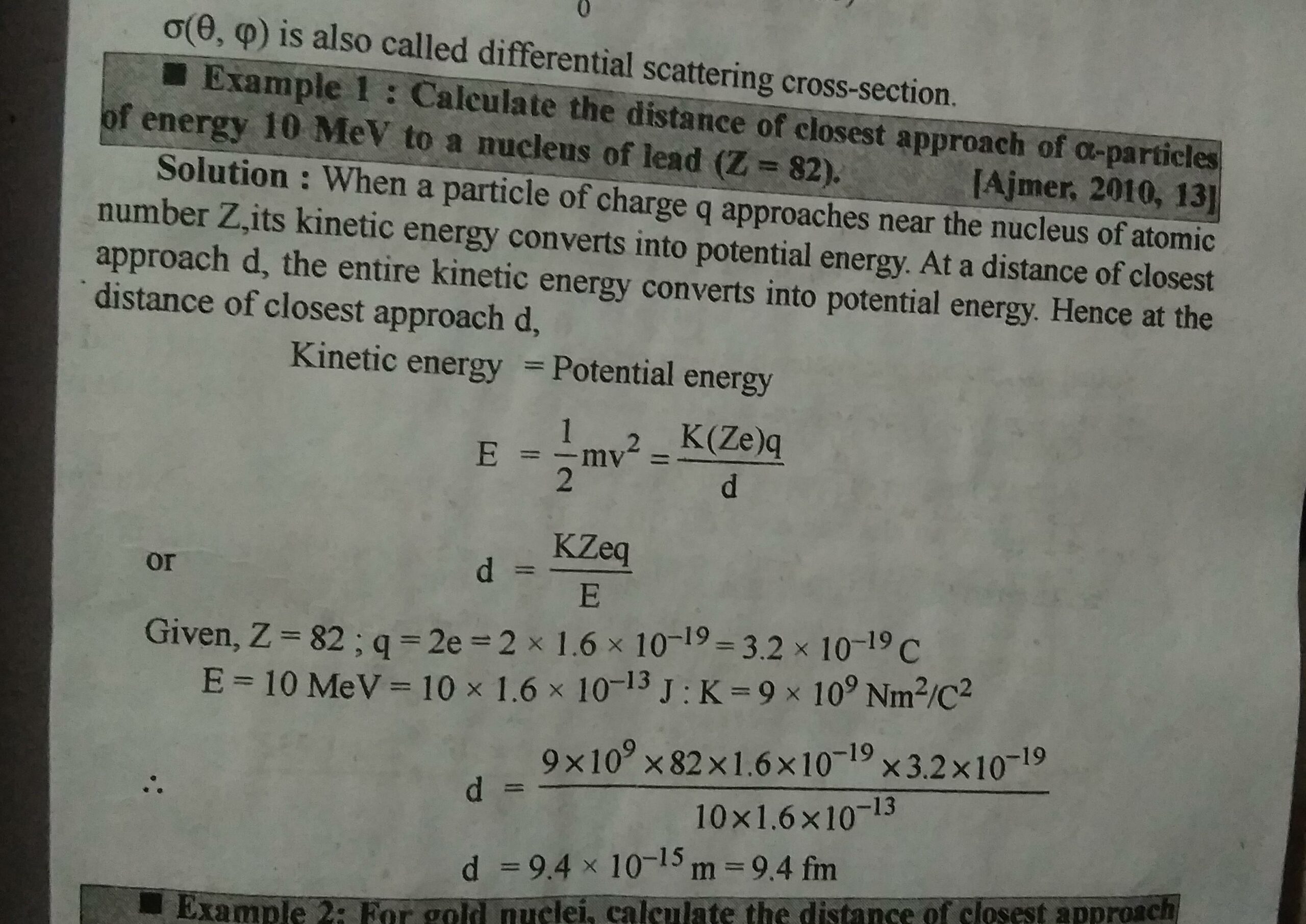
Definition of Atomic Constituents Atoms, the fundamental units of matter, are composed of subatomic particles that define their structure and properties. Traditionally, an atom consists of three main particles: Protons: Positively charged particles located in the nucleus, responsible for the atomic number and identity of an element. Neutrons: Electrically neutral particles also found in the […]
Read More →

How is quantum mechanics relevant for nuclear physics?

Definition of Quantum Mechanics and Nuclear Physics Quantum mechanics is a fundamental branch of physics that explains the behavior and interactions of particles at the smallest scales, such as atoms and subatomic particles. Nuclear physics, on the other hand, focuses specifically on the properties, structure, and reactions of atomic nuclei. The intersection of these two […]

Read More →

Is cosmic radiation producible in a lab?

Understanding Cosmic Radiation Cosmic radiation consists of highly energetic particles that permeate the universe, originating from powerful astrophysical phenomena. This subject has captivated researchers in both astrophysics and particle physics due to its complex nature and the insights it offers into cosmic processes. Studying cosmic radiation involves examining its origins, composition, detection techniques, and the […]

Read More →

What is a nuclear umbrella?

Definition of the Nuclear Umbrella The term “nuclear umbrella” describes a strategic defense arrangement in which a nuclear-armed country extends its protective deterrence to allied nations lacking their own nuclear weapons. This approach aims to shield these allies from potential nuclear threats by assuring them of retaliatory support, thereby reducing the likelihood of hostile attacks. […]

Read More →

Why are fundamental particles referred to as point particles?

Definition of Fundamental Particles and Point Particles In contemporary physics, fundamental particles are considered the most basic constituents of matter, incapable of being broken down into smaller components. According to the Standard Model, these include quarks, leptons, and gauge bosons, which collectively form the foundation of the universe’s structure. The term “point particle” refers to […]

Read More →