
Short Answer
Understanding Cosmic Radiation
Cosmic radiation consists of highly energetic particles that permeate the universe, originating from powerful astrophysical phenomena. This subject has captivated researchers in both astrophysics and particle physics due to its complex nature and the insights it offers into cosmic processes. Studying cosmic radiation involves examining its origins, composition, detection techniques, and the possibility of replicating it within laboratory environments.
Definition and Classification of Cosmic Radiation
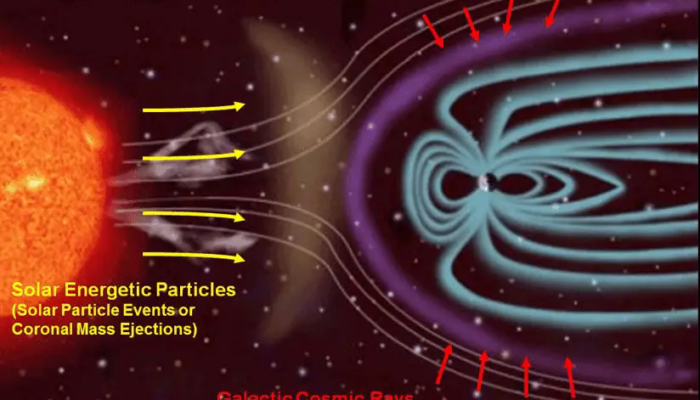
Cosmic radiation primarily refers to energetic particles traveling through space, generated by various celestial sources such as supernova explosions, active galactic nuclei, and other astronomical events. When these particles encounter Earth’s atmosphere and magnetic field, they produce secondary radiation showers that provide valuable data about solar and galactic activities.
- Solar Cosmic Rays:
Emitted during solar phenomena like solar flares and coronal mass ejections, these rays mainly consist of protons and electrons originating from the Sun. - Galactic Cosmic Rays:
These particles, including protons, electrons, and atomic nuclei, come from outside the solar system, often from distant galaxies and supernova remnants.
Laboratory Generation of Cosmic Radiation
Addressing whether cosmic radiation can be produced in a laboratory setting involves understanding the capabilities and limitations of current technology. While it is impossible to perfectly recreate cosmic radiation in its entirety, laboratories can simulate certain aspects by generating high-energy particles that resemble cosmic rays in energy and composition.
Particle accelerators play a crucial role in this endeavor. These devices accelerate protons and heavier ions to extremely high energies, enabling collisions that produce radiation profiles similar to those observed in cosmic rays. Such experiments allow scientists to study particle interactions under controlled conditions that approximate cosmic environments.
Detection and Simulation Techniques
In addition to particle accelerators, specialized setups like cosmic ray observatories employ particle detectors to capture and analyze secondary particles generated when cosmic rays interact with Earth’s atmosphere. These observations help researchers understand the properties and effects of cosmic radiation without needing to replicate the entire cosmic process.
Advanced instruments such as synchrotrons and colliders further facilitate the study of cosmic ray phenomena by simulating particle interactions akin to those occurring in space. These experiments produce a variety of particles, including neutrons and pions, which provide insights into fundamental forces and the mechanisms behind cosmic particle acceleration.
Challenges in Replicating Cosmic Radiation
Despite technological progress, replicating cosmic radiation fully in a laboratory remains challenging due to several factors:
- Energy Scale:
Cosmic rays can reach energies exceeding 1020 electronvolts (eV), far beyond the maximum energies achievable by current particle accelerators. - Particle Composition:
The diverse mixture of particles in cosmic radiation, varying from solar protons to heavy ions in galactic rays, is difficult to reproduce precisely in laboratory conditions.
Biological Implications of Cosmic Radiation
Laboratory-generated high-energy particles are instrumental in studying the biological effects of cosmic radiation. Exposure to such radiation poses significant health risks, particularly for astronauts and airline crew, including increased cancer risk and radiation sickness. Controlled experiments help elucidate these physiological impacts, contributing to the development of protective measures for individuals exposed to cosmic radiation.
Significance of Laboratory Studies on Cosmic Radiation
Recreating aspects of cosmic radiation in laboratories holds substantial importance beyond theoretical physics. It supports advancements in space exploration by informing the design of radiation shielding and safety protocols for long-duration missions. Furthermore, experimental research into high-energy particle interactions enhances our understanding of broader cosmological phenomena, such as dark matter and the fundamental forces shaping the universe.
Summary and Future Perspectives
In summary, while exact duplication of cosmic radiation in laboratory settings is unattainable due to extreme energy scales and complex particle compositions, modern particle physics techniques enable the simulation and study of many of its characteristics. This ongoing research not only deepens our comprehension of cosmic dynamics but also plays a vital role in preparing humanity for the challenges of space travel and exploration. The pursuit of knowledge about cosmic radiation remains a critical frontier in both scientific inquiry and practical application.
FAQ
What is cosmic radiation?
Cosmic radiation consists of highly energetic particles from celestial sources, such as supernovae and active galactic nuclei.
Can cosmic radiation be produced in a laboratory?
While cosmic radiation cannot be perfectly replicated, laboratories can simulate certain aspects using particle accelerators.
What are the health implications of cosmic radiation?
Exposure to cosmic radiation poses health risks, including increased cancer risk for astronauts and airline crews.






Leave a Reply