The First Glimpses of an Anti-Atom

Definition of Antimatter Antimatter is a form of matter composed of antiparticles, which are counterparts to the particles that make up ordinary matter. Each antiparticle mirrors its corresponding particle in mass but exhibits opposite electric charge and other quantum properties. For example, the electron’s antiparticle is the positron, identical in mass but positively charged. When […]

Read More →

A Galaxy Simulation Breaks New Ground

Definition of Galaxy Simulations Galaxy simulations are advanced computational models designed to replicate the formation, evolution, and interactions of galaxies within the universe. These simulations integrate complex physical processes to create detailed visual and theoretical representations of galactic structures and dynamics, offering profound insights into cosmology and astrophysics. Purpose: To understand the mechanisms driving galaxy […]

Read More →

Green Light for European X-Ray Laser: Lighting Up Atomic Worlds

Definition of the European X-ray Free Electron Laser (XFEL) The European X-ray Free Electron Laser (XFEL) is a state-of-the-art scientific facility designed to generate highly coherent, ultra-short pulses of X-ray light. This advanced instrument enables researchers to investigate the atomic and molecular structure of materials with exceptional precision, surpassing the capabilities of traditional X-ray sources. […]

Read More →

Evidence Mounts for Bose Glass: Disorder Meets Quantum Fluids

Definition of Bose Glass The Bose glass represents a unique phase of matter observed in bosonic systems subjected to disorder. It emerges when bosons-particles that follow Bose-Einstein statistics-become localized due to random potential fluctuations, disrupting their ability to form a coherent superfluid state. This phase is distinguished by the coexistence of localized, insulating regions and […]

Read More →

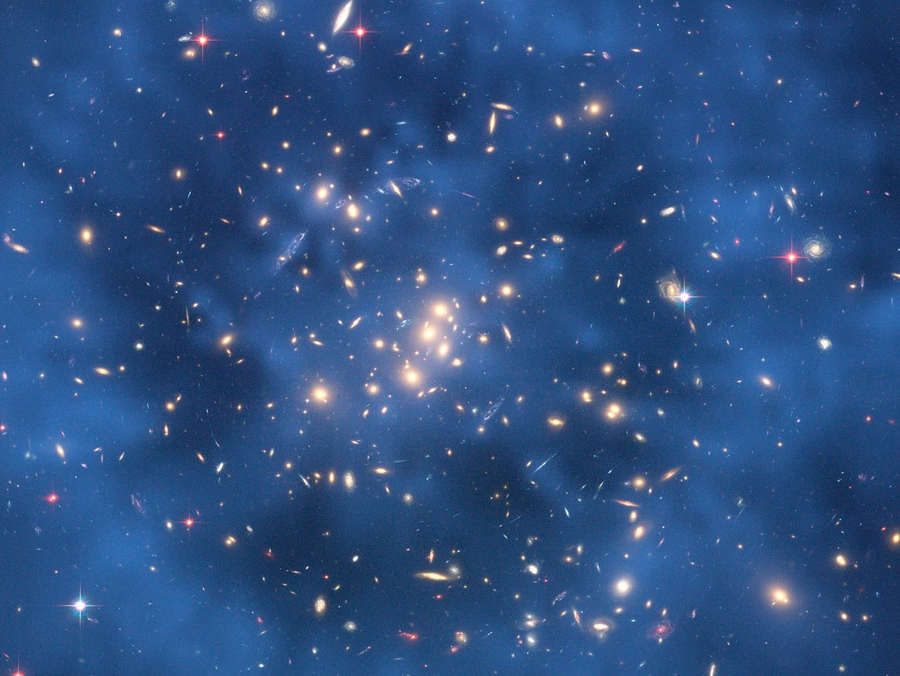
Rethinking the Darkness: Alternative to Dark Matter Tackles Galaxy Curves

Understanding the Dark Matter Debate In astrophysics, the concept of dark matter has been central to explaining the puzzling behaviors observed in galaxy formation and motion. The gravitational lensing effects seen in galaxies reveal a mismatch between the visible matter and the gravitational forces acting upon them, leading scientists to propose the existence of dark […]

Read More →

ESA Charts a Martian Future: Red Planet Missions on the Rise

Definition of Mars Exploration Mars exploration refers to the scientific investigation and study of the Red Planet, aiming to uncover its geological, atmospheric, and potential biological characteristics. This endeavor involves deploying robotic missions, orbiters, and rovers to analyze Mars’s surface, climate, and history, with the ultimate goal of understanding its past habitability and preparing for […]

Read More →

Cosmology’s Bright Future in a Dark Universe

Definition of Cosmology Cosmology is the scientific discipline dedicated to exploring the universe’s beginnings, its ongoing development, and its eventual destiny. It seeks to understand the large-scale properties and fundamental nature of the cosmos, encompassing everything from the earliest moments after the Big Bang to the far future of cosmic evolution. Scope: Investigates the origin, […]

Read More →

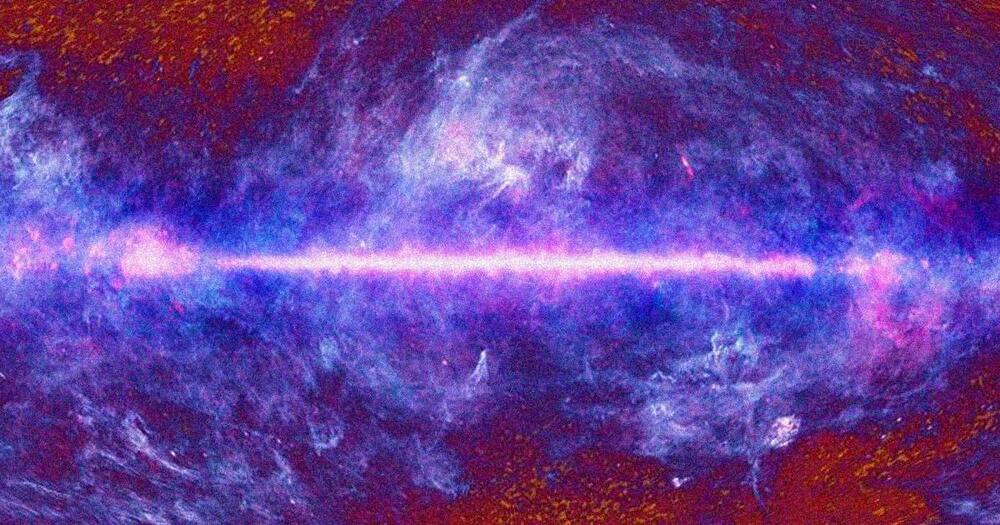
Cosmic Microwave Background: Dark Energy’s Ancient Footprint

Definition of the Cosmic Microwave Background (CMB) The Cosmic Microwave Background (CMB) radiation represents the faint thermal remnant from the universe’s earliest moments, often described as the afterglow of the Big Bang. This pervasive radiation fills the entire cosmos, acting as a spectral imprint from a time when the universe was approximately 380,000 years old-an […]

Read More →

The Early Universe Comes into Focus: Peering Back to the Dawn of Time

Definition of the Early Universe The early universe refers to the initial stages of cosmic history, a period marked by rapid and profound transformations that laid the groundwork for all matter and structure observed today. This epoch encompasses the moments immediately following the universe’s origin, characterized by extreme conditions and the formation of fundamental particles […]

Read More →

Still at Large: The Hunt for Dark Matter Continues

Definition of Dark Matter Dark matter is a mysterious and invisible form of matter that permeates the universe, making up about 27% of its total mass-energy content. Unlike ordinary matter, which constitutes roughly 5% of the universe and interacts with electromagnetic radiation, dark matter does not emit, absorb, or reflect light, rendering it undetectable by […]

Read More →