
Short Answer
Understanding Cosmic Cartography
Mapping the universe is an extraordinary challenge that pushes the boundaries of technology, scientific knowledge, and the very idea of charting space. Unlike terrestrial maps, the cosmos is an infinite, ever-expanding expanse filled with countless stars, galaxies, and unseen phenomena. Creating a detailed cosmic atlas involves not only capturing visible celestial bodies but also interpreting complex data from various wavelengths and invisible forces that shape the universe.
Tools and Techniques for Observing the Universe
The foundation of cosmic mapping lies in advanced observational instruments and innovative methodologies. NASA’s fleet of telescopes and space observatories plays a crucial role in this endeavor. These devices detect a broad spectrum of electromagnetic radiation-including visible light, infrared, and X-rays-transforming these signals into data that scientists analyze to build a comprehensive picture of the cosmos.
- Space Telescopes:
Instruments like the Hubble Space Telescope operate beyond Earth’s atmosphere, avoiding atmospheric distortion and capturing faint light from objects billions of light-years away. - Multi-Wavelength Observations:
By combining data from different wavelengths, astronomers create a multi-dimensional view of celestial phenomena, revealing details invisible in just one spectrum.
Measuring Cosmic Distances and Structure
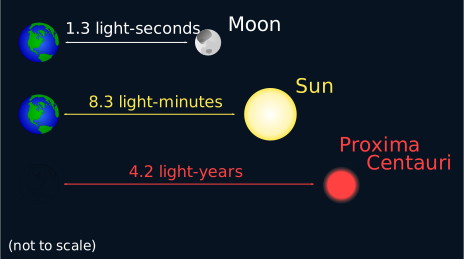
One of the greatest challenges in cosmic cartography is accurately determining the distances to celestial objects. Since the universe is three-dimensional and continuously expanding, astronomers rely on specific methods to place objects within a cosmic coordinate system.
- Standard Candles:
Objects such as Cepheid variable stars and Type Ia supernovae have known intrinsic brightness, allowing scientists to calculate their distance by comparing observed brightness. - Redshift Analysis:
As the universe expands, light from distant galaxies shifts toward longer wavelengths (redshift). Measuring this shift helps determine both distance and the universe’s expansion rate over time.
Revealing the Invisible Universe
Much of the universe is composed of dark matter and dark energy, which do not emit or absorb light, making them invisible to traditional observation methods. To map these elusive components, astronomers use indirect techniques such as gravitational lensing.
- Gravitational Lensing:
Massive objects bend the path of light from background sources, distorting their appearance. By analyzing these distortions, scientists infer the presence and distribution of dark matter, unveiling the hidden framework that shapes cosmic structures.
Data Processing and Simulation in Cosmic Mapping
The vast amounts of data collected from telescopes require sophisticated computational tools for analysis. Algorithms and machine learning models identify patterns and structures that are not immediately apparent to human observers. Additionally, large-scale astrophysical simulations, calibrated with observational data, recreate cosmic evolution over billions of years, helping to fill gaps and predict future configurations.
Notable Missions and Collaborative Efforts
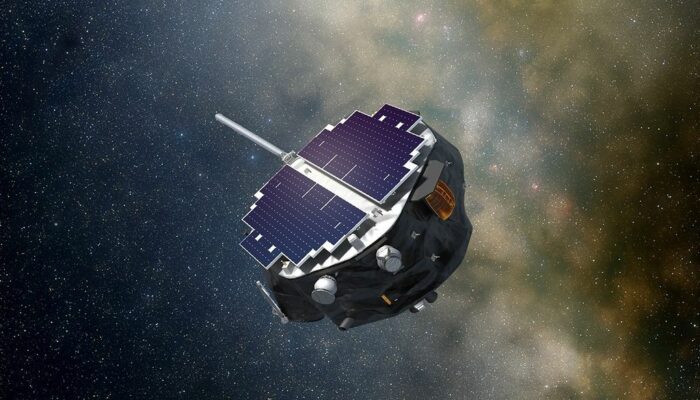
Projects like NASA’s Integrated Mapping of the Atmosphere and Particles (IMAP) mission, while focused on the Sun-Earth environment, demonstrate the precision and integration of data necessary for large-scale cosmic mapping. These methodologies serve as prototypes for broader universal mapping initiatives. Furthermore, global collaborations combine resources from space-based and ground-based observatories to enhance coverage and resolution.
Challenges in Charting the Universe
Despite technological advances, several obstacles remain in creating a complete cosmic map:
- Observational Limitations:
Dust clouds, faint distant signals, and detector sensitivities obscure certain regions, leaving parts of the universe uncharted. - Dynamic Expansion:
The universe’s continuous expansion means the cosmic map is perpetually evolving, with boundaries that recede beyond current observational reach.
Future Prospects in Cosmic Cartography
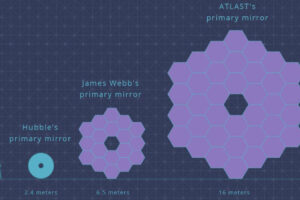
Upcoming instruments like the James Webb Space Telescope promise to revolutionize our understanding by providing unprecedented infrared observations. These will reveal hidden regions of star formation and galaxy assembly, complementing existing data. Enhanced data processing techniques and international cooperation will further deepen our cosmic insights.
Significance of Mapping the Universe
The endeavor to chart the cosmos is more than a scientific pursuit; it embodies humanity’s quest to comprehend our place in the vast expanse. Each data point in a cosmic map narrates a story from the distant past, offering clues about the origins and evolution of the universe. This ongoing project harmonizes technology, theory, and curiosity, driving us toward a richer understanding of the magnificent universe we inhabit.
FAQ
What is cosmic cartography?
Cosmic cartography refers to the methods and technologies used to map the universe, including the study of celestial objects and the cosmic structure.
How does NASA contribute to cosmic mapping?
NASA utilizes advanced telescopes and observational techniques to capture and analyze data from various wavelengths, allowing for a comprehensive understanding of the universe.

Leave a Reply