
Short Answer
Overview of Next-Generation Space Telescopes
The ambition to develop a telescope surpassing the James Webb Space Telescope (JWST) and the Hubble Space Telescope marks a pivotal challenge in contemporary astronomy and engineering. These landmark observatories have revolutionized our cosmic perspective, revealing intricate details of the universe. However, as technological capabilities advance and the demand for deeper astronomical insights grows, the question arises: can we create a telescope that outperforms both Webb and Hubble? This article explores the scientific, technological, and logistical complexities involved in designing a next-generation telescope that exceeds the achievements of its renowned predecessors.
Key Parameters Defining Telescope Performance
At the heart of constructing a superior telescope lie several critical factors that determine its observational effectiveness:
- Aperture Size:
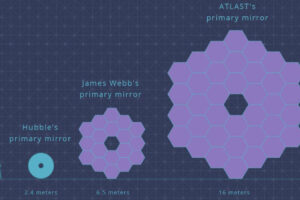
The diameter of the telescope’s primary mirror directly influences its light-gathering power and resolution. Hubble’s 2.4-meter mirror set a high standard, while JWST’s 6.5-meter segmented mirror significantly expanded observational capabilities. - Wavelength Coverage:
The range of electromagnetic spectrum a telescope can observe affects the types of cosmic phenomena it can study. Hubble primarily covers visible to ultraviolet light, whereas JWST focuses on the infrared spectrum, allowing it to peer through cosmic dust. - Imaging Resolution and Sensitivity:
These determine the clarity and faintness of objects the telescope can detect, essential for detailed studies of distant galaxies and stellar formations.
Innovative Approaches to Surpass Current Telescopes
Future telescopes aiming to eclipse JWST and Hubble must innovate across these parameters:
- Expanding Aperture Dimensions:
Concepts like the Large Ultraviolet Optical Infrared Surveyor (LUVOIR) propose mirrors exceeding 15 meters, dramatically increasing light collection and spatial resolution. However, deploying such massive segmented mirrors in space requires ultra-precise alignment and vibration control to maintain image quality. - Broadening Spectral Range:
Next-generation observatories may extend beyond current infrared and visible bands to include far-infrared, submillimeter, X-ray, and gamma-ray wavelengths. This multi-wavelength capability would provide comprehensive insights into diverse cosmic processes, from exoplanet atmospheres to black hole dynamics. - Advanced Adaptive Optics:
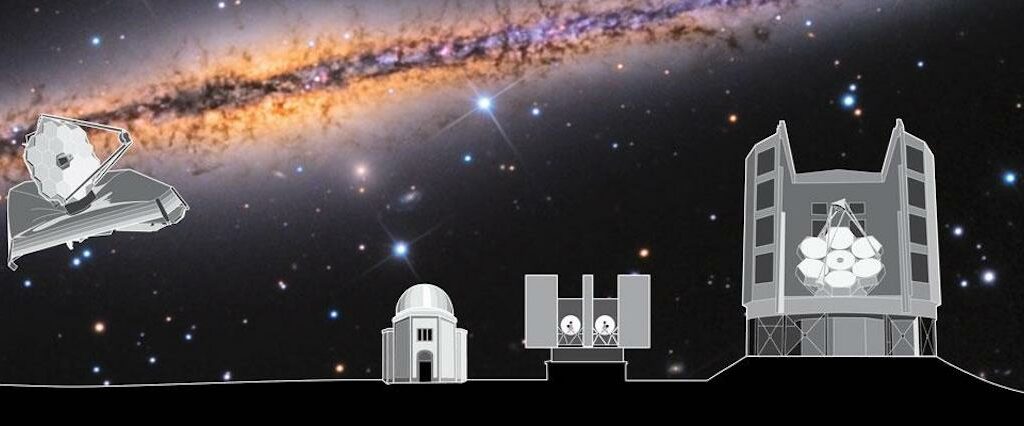
Ground-based telescopes are increasingly overcoming atmospheric distortion through laser guide star adaptive optics, achieving resolutions comparable to space telescopes. Facilities like the Extremely Large Telescope (ELT) and Thirty Meter Telescope (TMT) utilize enormous apertures unattainable in space, complementing space-based observations.
Challenges in Engineering and Deployment
Building a telescope that outperforms JWST and Hubble involves overcoming significant technical and logistical obstacles:
- Precision Engineering:
Large segmented mirrors require sophisticated deployment mechanisms and active control systems to maintain alignment in the harsh environment of space. - Thermal Management:
Infrared detectors demand ultra-low temperatures to function optimally. While JWST uses passive cooling at its L2 orbit, future telescopes may integrate mechanical cryocoolers and advanced heat shields to achieve and sustain necessary temperatures. - Material Innovations:
The use of lightweight, ultra-stable composite materials is crucial to reduce launch mass while ensuring structural integrity under space conditions. - Servicing and Longevity:
Incorporating modular designs and autonomous robotic servicing could extend operational lifespans and allow mid-mission upgrades, enhancing adaptability and scientific return.
Technological Enhancements in Instrumentation
Next-generation telescopes will feature cutting-edge instruments to deepen astronomical investigations:
- Spectrometry and Coronagraphy:
Enhanced spectrographs and coronagraphs will enable detailed analysis of celestial objects and phenomena. - Starshade Technology:
External occulters deployed in tandem with space telescopes can block stellar glare, facilitating direct imaging of exoplanets and the search for biosignatures. - Interferometry:
Combining signals from multiple telescopes to simulate a larger aperture, improving resolution beyond single-mirror limits.
Role of Computational Advances
The vast data output from future telescopes necessitates sophisticated computational tools:
- Data Processing:
Advanced algorithms will handle large-scale data reduction, anomaly detection, and real-time analysis. - Artificial Intelligence and Machine Learning:
These technologies will support instrument calibration, autonomous observation decisions, and enhanced interpretation of complex datasets.
Collaborative Efforts in Telescope Development
The scale and complexity of next-generation telescopes require international cooperation:
- Shared Expertise and Funding:
Pooling resources and knowledge across countries accelerates innovation and mitigates financial risks. - Examples of Collaboration:
Projects like the Square Kilometre Array and the proposed Habitable Exoplanet Observatory exemplify multinational partnerships driving astronomical progress.
Significance of Advancing Telescope Technology
Developing telescopes that surpass JWST and Hubble is vital for expanding humanity’s cosmic understanding. These instruments will unlock unprecedented views of the universe, enabling discoveries about star formation, galaxy evolution, exoplanet characterization, and fundamental physics. Beyond scientific knowledge, such advancements inspire technological innovation and international collaboration, shaping the future of space exploration and astronomy.
Summary
The pursuit of telescopes exceeding the capabilities of the James Webb and Hubble observatories is a multifaceted endeavor involving breakthroughs in mirror design, spectral coverage, adaptive optics, materials science, instrumentation, and computational analysis. Overcoming engineering challenges and fostering global partnerships will be essential to realize these ambitious projects. Ultimately, these next-generation observatories promise to transform our understanding of the cosmos, revealing its mysteries with unparalleled clarity and depth.
FAQ
What are the key parameters for telescope performance?
Key parameters include aperture size, wavelength coverage, and imaging resolution.
What challenges are faced in building next-generation telescopes?
Challenges include precision engineering, thermal management, and material innovations.




Leave a Reply