What the LHC Is Actually Searching For (It’s Not What You Think)

Definition of the Large Hadron Collider The Large Hadron Collider (LHC) is the world’s most powerful particle accelerator, designed to explore the fundamental components of matter and the forces governing the universe. Situated in a 27-kilometer circular tunnel beneath the border of France and Switzerland, the LHC propels particles to velocities near the speed of […]

Read More →

The Bullet Cluster: Proof Dark Matter Exists?

Definition of the Bullet Cluster The Bullet Cluster is a remarkable astronomical phenomenon resulting from the high-speed collision of two galaxy clusters approximately three billion light-years from Earth. This event provides a unique cosmic laboratory where scientists can study the distribution of visible matter and the gravitational effects attributed to an unseen component known as […]

Read More →

New Telescope Data Is Challenging Dark Matter Theories

Understanding Dark Matter Dark matter is a mysterious and invisible form of matter that is believed to constitute a significant portion of the universe’s total mass. It does not emit, absorb, or reflect light, making it undetectable through conventional electromagnetic observations. Despite its invisibility, dark matter is inferred from its gravitational effects on visible matter, […]

Read More →

Are There Different Types of Dark Energy?

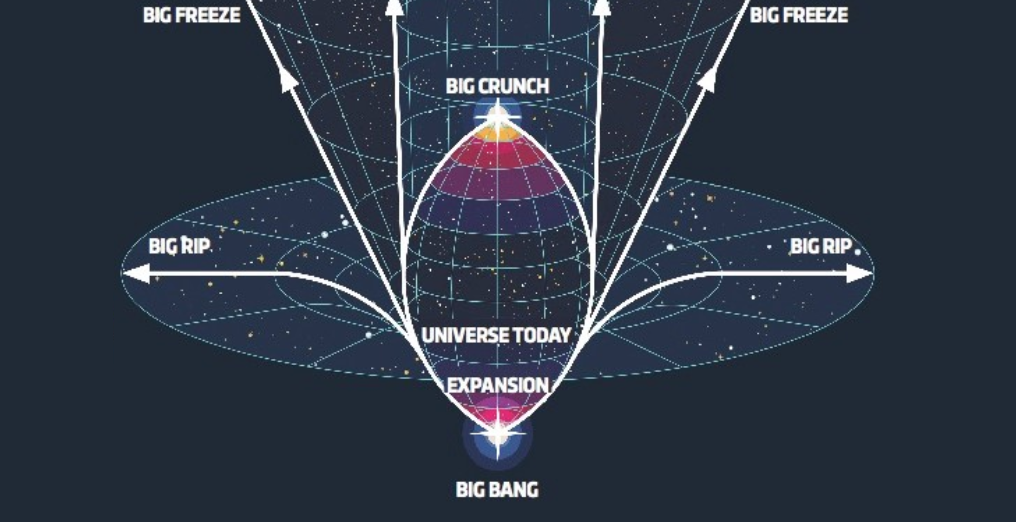
Definition of Dark Energy Dark energy is a mysterious and invisible force believed to be responsible for the accelerated expansion of the universe. It represents an unknown form of energy that permeates all of space, exerting a repulsive effect that counteracts gravitational attraction. This phenomenon challenges traditional cosmological models and remains one of the most […]

Read More →

How Scientists Hunt Dark Matter Deep Underground

Understanding Dark Matter Dark matter is a mysterious and invisible substance that permeates the universe, accounting for roughly 27% of its total mass-energy composition. Unlike ordinary matter, it does not emit, absorb, or reflect light, making it undetectable through conventional electromagnetic observations. Its existence is inferred primarily through gravitational effects on visible matter, radiation, and […]

Read More →

The Hidden Backbone of the Universe—Dark Matter Explained

Definition of Dark Matter Dark matter is a mysterious and invisible form of matter that constitutes a significant portion of the universe’s total mass. Unlike ordinary matter, it does not emit, absorb, or reflect light, making it undetectable through traditional electromagnetic observations. Despite its invisibility, dark matter exerts a powerful gravitational influence that shapes the […]

Read More →

What the Universe Is Really Made Of (Simple Guide)

Definition of the Universe’s Composition The universe encompasses everything that exists in space and time, including all matter, energy, galaxies, stars, planets, and the vast voids between them. Understanding what constitutes the universe involves identifying its fundamental components, both visible and invisible, and recognizing their roles in shaping cosmic evolution. This knowledge extends beyond scientific […]

Read More →

What Is Dark Matter? The Simplest Explanation Ever

Definition of Dark Matter Dark matter is a form of matter that neither emits, absorbs, nor reflects electromagnetic radiation, rendering it invisible to conventional telescopes and detectors. Unlike the luminous components of the universe such as stars, planets, and gas clouds, dark matter cannot be observed directly. Its existence is inferred through its gravitational influence […]

Read More →