Are Dark Matter and Dark Energy Linked? Scientists Debate

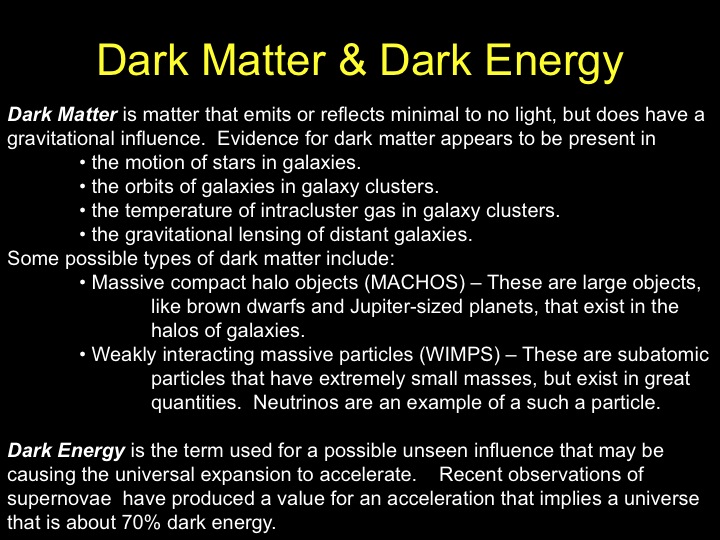
Definition of Dark Matter and Dark Energy Within the vast universe, two mysterious components-dark matter and dark energy-dominate modern astrophysical research. Together, they constitute approximately 95% of the universe’s total mass-energy content, yet their fundamental nature remains elusive. These invisible elements are critical to understanding the cosmos, prompting scientists to investigate whether they represent distinct […]

Read More →

Could Dark Matter Be Part of a Hidden “Shadow World”?

Definition of the Shadow World Hypothesis The shadow world hypothesis proposes the existence of an unseen sector of particles and forces that coexist alongside the familiar matter and energy in our universe. This hidden realm, largely disconnected from ordinary matter, could account for dark matter-an elusive component making up about 27% of the universe’s total […]

Read More →

Dark Energy vs Dark Matter—What’s the Difference?

Definition of Dark Matter and Dark Energy Dark matter and dark energy are two mysterious components that dominate the universe, together making up about 95% of its total content. Despite their prevalence, both remain invisible and undetectable through conventional means, challenging our understanding of the cosmos. Dark Matter: An invisible form of matter that does […]

Read More →

Has the James Webb Space Telescope Found “Dark Stars”?

Definition of Dark Stars Dark stars represent a theoretical category of stellar objects proposed within astrophysics as an alternative to traditional stars powered by nuclear fusion. Unlike typical stars that shine due to hydrogen fusion in their cores, dark stars are hypothesized to derive their energy primarily from the annihilation of dark matter particles. These […]

Read More →

Could We Use Dark Energy as a Power Source?

Definition of Dark Energy Dark energy is a mysterious and pervasive form of energy that constitutes about 68% of the total energy content of the universe. Unlike ordinary matter and radiation, dark energy does not emit, absorb, or reflect light, making it invisible and undetectable through conventional electromagnetic observations. It is characterized by its uniform […]

Read More →

What If Dark Matter Is Just Invisible Ordinary Matter?

Definition of Dark Matter Dark matter refers to a form of matter that does not emit, absorb, or reflect light, making it invisible to current electromagnetic detection methods. Despite its elusive nature, it exerts gravitational influence on visible matter, shaping the structure and dynamics of galaxies and the universe at large. Invisible Substance: Dark matter […]

Read More →

Is Modern Cosmology Getting Dark Matter Wrong?

Understanding Dark Matter Dark matter is a hypothesized form of matter that does not emit, absorb, or reflect light, making it invisible to current electromagnetic observational methods. Despite its invisibility, its existence is inferred from gravitational effects on visible matter, radiation, and the large-scale structure of the universe. It plays a crucial role in explaining […]

Read More →