
Short Answer
Understanding Gravity in the Context of Space Exploration
Gravity, a fundamental force intimately linked to Earth, may hold the key to enabling human survival and well-being in the vast emptiness of space. While space is often associated with weightlessness and freedom from Earth’s pull, this absence of gravity presents significant challenges to human physiology. As humanity advances toward long-term space habitation, exploring how gravity-or its artificial replication-can support health beyond our planet becomes essential.
Definition and Nature of Gravity in Space
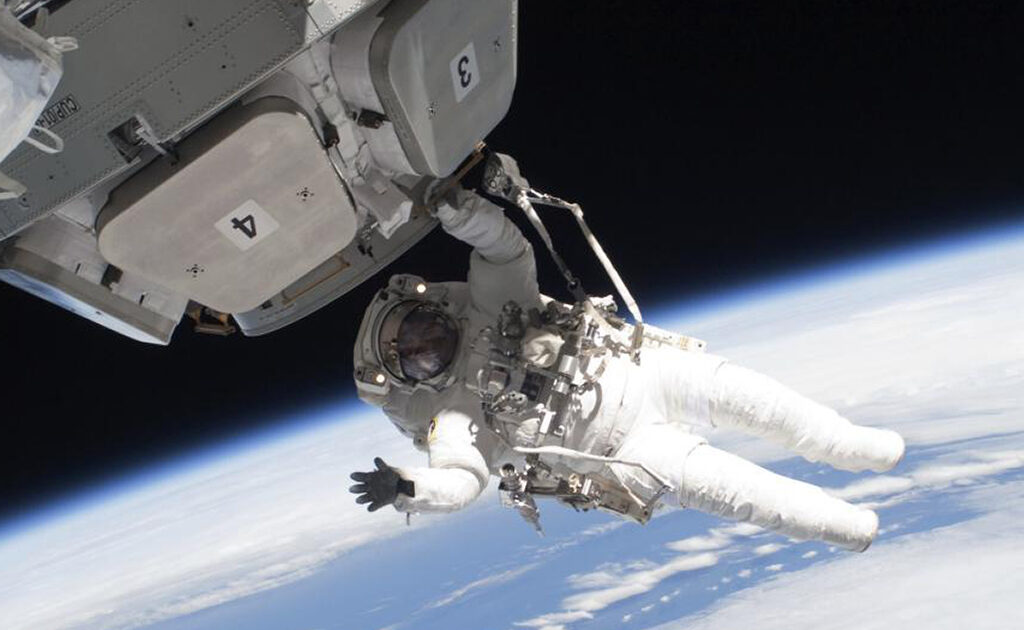
Contrary to popular belief, space is not a gravity-free zone. Gravitational forces extend throughout the universe, weakening with distance but never completely disappearing. For instance, the International Space Station (ISS), orbiting roughly 400 kilometers above Earth, remains within Earth’s gravitational field. The sensation of weightlessness experienced there is due to microgravity, a condition where gravitational pull is present but counteracted by the station’s free-fall orbit, creating an environment that profoundly influences biological systems.
- Gravity:
A natural force of attraction between masses, responsible for keeping planets in orbit and objects grounded on Earth. - Microgravity:
A state of near-weightlessness experienced in orbit, where gravitational forces are significantly reduced but not absent.
Physiological Effects of Reduced Gravity
The lack of Earth’s normal gravitational force in space leads to several adverse health effects. Muscle atrophy is a primary concern, as muscles no longer bear the usual load, resulting in weakening and shrinkage. Similarly, bones lose density due to diminished mechanical stress, accelerating a process akin to osteoporosis. The cardiovascular system also adapts maladaptively, with bodily fluids shifting toward the upper body, which can cause difficulties in blood pressure regulation upon return to Earth.
- Muscle Atrophy:
Loss of muscle mass and strength due to reduced physical demand in microgravity. - Bone Demineralization:
Decrease in bone density caused by lack of mechanical stress, increasing fracture risk. - Cardiovascular Changes:
Fluid redistribution leading to potential orthostatic intolerance and other circulatory issues.
Artificial Gravity: Concept and Implementation
To counteract the detrimental effects of microgravity, scientists and engineers have proposed creating artificial gravity within spacecraft. The most promising approach involves centrifugation, where rotating sections of a spacecraft generate centrifugal force that simulates gravity. This artificial gravity could help maintain muscle and bone health, normalize fluid distribution, and support neurological functions closer to Earth-like conditions.
- Centrifugal Force:
The outward force experienced in a rotating frame, used to mimic gravitational pull. - Rotating Habitats:
Spacecraft modules designed to spin, creating a consistent artificial gravity environment.
Engineering Challenges of Artificial Gravity
Designing rotating habitats introduces complex issues. The Coriolis effect, which causes perceived motion distortions, can lead to dizziness and nausea. To minimize these effects, the radius of the rotating section must be sufficiently large, balancing human comfort with engineering constraints such as material requirements and energy consumption. Additionally, transitions between spinning and stationary areas pose further physiological and technical challenges.
Gravity’s Influence on Cellular and Molecular Processes
Gravity affects more than just the mechanical aspects of the body; it also plays a role at the cellular and molecular levels. Microgravity can disrupt immune responses, slow wound healing, and alter cell growth and gene expression. Therefore, replicating Earth-like gravity might be crucial not only for structural health but also for maintaining cellular homeostasis. This insight opens avenues for combining artificial gravity with targeted medical treatments to support astronaut health.
Psychological and Cultural Significance of Gravity in Space
Beyond physical health, gravity contributes to psychological well-being. Humans are evolutionarily adapted to a gravitational environment, which influences spatial orientation, movement, and circadian rhythms. The presence of gravity helps maintain a sense of normalcy and mental stability during prolonged space missions, potentially reducing feelings of disorientation and cognitive stress.
Philosophical Reflections on Gravity and Human Spaceflight
Gravity’s role in space travel also invites deeper contemplation. Carrying Earth’s gravitational force into space symbolizes a connection to our origins and evolutionary history. It represents more than a survival mechanism; it is a cultural and existential anchor that links humanity to its terrestrial roots even as we venture into the cosmos.
Gravity and Planetary Colonization
Exploring gravity’s impact extends to future colonization efforts on other celestial bodies. Mars, with approximately 38% of Earth’s gravity, offers a partial gravity environment that may mitigate some microgravity effects, though research remains ongoing. The Moon’s gravity, at about 16.5% of Earth’s, presents greater uncertainty. Understanding how different gravitational levels affect human physiology is critical for designing sustainable habitats on these worlds.
Technological Innovations and Future Directions
Developing artificial gravity solutions involves significant technological hurdles. Rotating spacecraft modules and compact centrifuges for exercise are among the proposed methods, each requiring careful consideration of energy use, space constraints, and reliability. Long-term studies are necessary to assess potential side effects and adaptive responses, necessitating collaboration across physics, biology, engineering, and astronautics disciplines.
Balancing Weightlessness and Gravity: The Path Forward
The interplay between the freedom of weightlessness and the necessity of gravity highlights a fundamental tension in human space exploration. While zero gravity offers unique opportunities, the human body’s dependence on gravitational forces demands innovative solutions. Mastering artificial gravity or leveraging natural partial gravity environments may be essential for sustaining human life beyond Earth.
Conclusion: Gravity as a Vital Partner in Space Habitation
Gravity should not be viewed merely as an obstacle to overcome but as a crucial ally in humanity’s journey through space. Whether through engineered artificial gravity or adaptation to partial gravity on other planets, incorporating this elemental force into space habitat design will be indispensable. As efforts to colonize the Moon, Mars, and beyond accelerate, gravity’s subtle yet profound influence may become humanity’s most reliable companion-keeping us grounded, balanced, and alive among the stars.

Leave a Reply