
Short Answer
Definition of the Earth-Moon-Sun Orbital Relationship
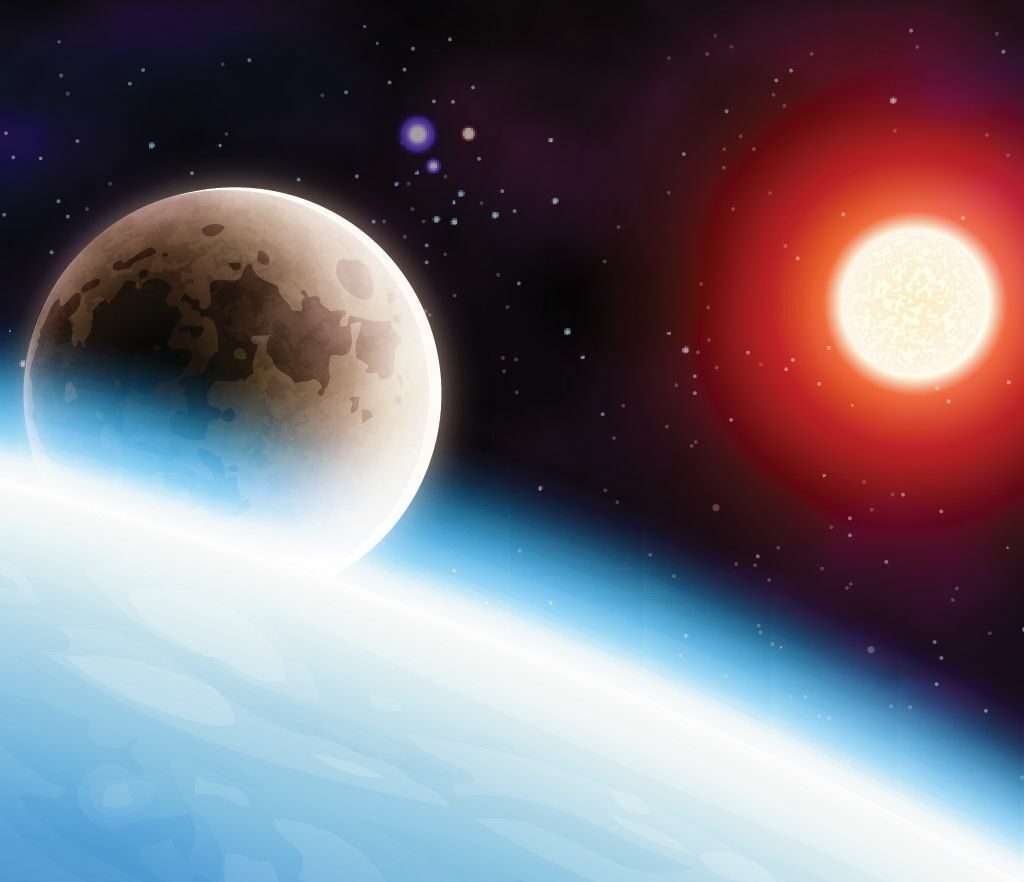
The question of whether Earth orbits the Sun or the Moon may seem straightforward, but it actually reveals a complex celestial interaction. In reality, Earth revolves around the Sun, while the Moon orbits Earth. Together, Earth and the Moon form a gravitationally bound system that moves collectively around the Sun, illustrating a sophisticated cosmic arrangement that has intrigued humanity for centuries.
Observational Perspectives and Common Views
From everyday observation, the Moon appears to circle Earth, changing phases and tracing a path across the night sky. Earth, by contrast, seems stationary, serving as a fixed vantage point. This intuitive viewpoint, however, oversimplifies the true nature of their motion, which involves mutual gravitational influence and a shared journey through space.
The Earth-Moon System: A Gravitational Partnership
Rather than the Moon simply orbiting Earth, both bodies revolve around a mutual center of mass called the barycenter. This point lies just beneath Earth’s surface, indicating that Earth itself also moves slightly in response to the Moon’s gravitational pull. This mutual orbit highlights the dynamic gravitational relationship between the two bodies, challenging the simplistic notion of a fixed Earth with a Moon in orbit.
Orbital Mechanics of the Earth-Moon Duo Around the Sun
The Earth-Moon barycenter follows an elliptical orbit around the Sun, meaning the entire system travels together through space. This shared orbit reflects the combined gravitational forces acting on the pair and underscores that Earth and Moon are components of a larger solar system dynamic rather than isolated entities.
Historical Evolution of Orbital Understanding
Human comprehension of the Earth-Moon-Sun system has evolved significantly over time. Ancient cultures often embraced geocentric models, placing Earth at the universe’s center with the Sun and Moon revolving around it. The heliocentric model introduced by Copernicus revolutionized this view, establishing the Sun as the central body with Earth and other planets orbiting it. Despite this, intuitive geocentric perceptions persist, illustrating the difference between direct observation and scientific measurement.
Scientific Explanation of Orbital Dynamics
Earth’s orbit around the Sun is an elliptical path governed by gravitational forces and the momentum from the solar system’s formation. The Moon remains gravitationally bound to Earth, and together they orbit the Sun as a unit. This arrangement exemplifies the balance of forces that maintain the stability of planetary motions and support life on Earth.
Relativity of Motion and Frames of Reference
Motion in space is relative, and understanding orbits depends on the observer’s frame of reference. From Earth’s surface, the Sun appears to move daily across the sky, but from a broader astronomical perspective, Earth is the one orbiting the Sun. This shift in viewpoint is crucial for grasping the true nature of celestial mechanics.
Significance of the Moon’s Influence on Earth
- Axial Stability:
The Moon helps stabilize Earth’s axial tilt, which regulates seasonal climate patterns and supports diverse ecosystems. - Tidal Forces:
Lunar gravity drives ocean tides, influencing marine life and coastal environments. - Protection:
The Moon acts as a shield by absorbing or deflecting smaller asteroids and comets, reducing potential impacts on Earth.
Why Understanding This Relationship Matters
Recognizing the Earth-Moon-Sun orbital dynamics is essential for appreciating how celestial forces shape life on our planet. This knowledge informs fields ranging from astronomy and geology to ecology and climate science. It also deepens our awareness of humanity’s place in the cosmos and the delicate balances that sustain our environment.
Common Misconceptions About Earth and Moon Orbits
Earth is completely stationary while the Moon orbits it.
Both Earth and Moon orbit their common barycenter, causing Earth to move slightly in response to the Moon’s gravity.
The Moon orbits the Sun independently.
The Moon orbits Earth, and together they orbit the Sun as a combined system.
Real-World Implications and Examples
The Earth-Moon gravitational relationship affects everyday phenomena such as tides, which influence navigation, fishing, and coastal ecosystems. The Moon’s role in stabilizing Earth’s tilt contributes to predictable seasonal cycles, which are vital for agriculture and biodiversity. Additionally, understanding these orbits aids space missions and satellite deployments, ensuring accurate trajectory planning.
Conclusion: The Cosmic Dance of Earth, Moon, and Sun
In summary, Earth unquestionably orbits the Sun, but the presence of the Moon adds complexity to this celestial journey. Both bodies revolve around a shared center of mass while collectively traveling around the Sun, illustrating a harmonious gravitational dance. This intricate relationship not only enriches scientific understanding but also inspires a profound appreciation for the cosmic forces that govern our existence.
Leave a Reply