
Short Answer
Definition of White Dwarfs
White dwarfs are dense stellar remnants formed when stars of moderate mass exhaust their nuclear fuel and shed their outer layers. These compact objects, roughly the size of Earth but with masses comparable to the Sun, no longer sustain nuclear fusion in their cores. Despite this, they continue to emit a faint, persistent glow, making them intriguing subjects in the study of stellar evolution and energy emission.
Formation and Evolution
The lifecycle of a star leading to a white dwarf begins when it depletes hydrogen in its core. The star expands into a red giant and eventually expels its outer layers, leaving behind a dense core. This remnant, the white dwarf, is composed primarily of carbon and oxygen ions and is supported against gravitational collapse by electron degeneracy pressure-a quantum mechanical effect where electrons resist being squeezed into the same energy state.
Energy Emission Mechanisms
Unlike main-sequence stars that generate energy through nuclear fusion, white dwarfs emit energy primarily by radiating residual heat stored during their active phases. This thermal radiation gradually diminishes over billions of years as the white dwarf cools. The initial surface temperature of a white dwarf can be extremely high, sometimes reaching around 100,000 Kelvin, due to gravitational energy released during its formation.
Thermal Radiation and Cooling
The primary source of a white dwarf’s luminosity is the slow release of internal heat. As the star cools, it emits light in visible and ultraviolet wavelengths. This cooling process is prolonged, making white dwarfs cosmic embers that fade gradually rather than extinguishing suddenly.
Crystallization and Latent Heat Release
As white dwarfs cool below certain temperatures, their cores undergo a phase transition called crystallization. During this process, carbon and oxygen ions arrange into a crystalline lattice, releasing latent heat. This release temporarily slows the cooling rate, providing an additional internal energy source beyond simple thermal emission.
Element Sedimentation and Gravitational Energy
Within some white dwarfs, heavier elements slowly sink toward the center while lighter elements rise. This sedimentation causes a redistribution of mass that releases gravitational potential energy, subtly contributing to the star’s luminosity and further complicating the energy dynamics of these stellar remnants.
Quantum Mechanics and Degeneracy Pressure
Electron degeneracy pressure is a quantum mechanical phenomenon that prevents the white dwarf from collapsing under its own gravity. In this state, electrons are packed so densely that their pressure becomes independent of temperature. While this pressure stabilizes the star, it does not produce energy. Instead, it allows the white dwarf to maintain its structure while slowly radiating away stored thermal energy over extensive timescales.
Mathematical Explanation of Degeneracy Pressure
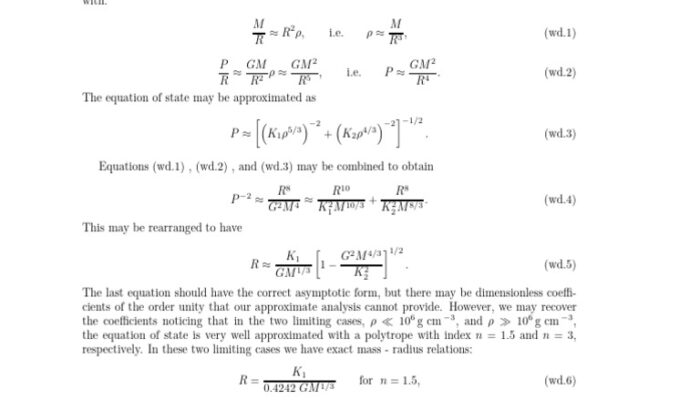
The pressure exerted by degenerate electrons can be described by the equation for electron degeneracy pressure in a non-relativistic regime:
P = K cdot rho^{5/3}
- P: Degeneracy pressure
- K: Constant depending on fundamental constants and electron mass
- ρ: Density of the white dwarf material
This pressure counterbalances gravitational forces, stabilizing the white dwarf without the need for thermal pressure from fusion.
Real-World Examples and Observations
White dwarfs serve as cosmic chronometers, helping astronomers estimate the ages of star clusters and the Milky Way. Observations of their cooling rates and luminosity functions provide insights into the physics of dense matter and electron degeneracy. For instance, the crystallization process observed in some white dwarfs parallels phase transitions studied in condensed matter physics, linking astrophysics with terrestrial material science.
Common Misconceptions
White dwarfs continue nuclear fusion like main-sequence stars.
White dwarfs no longer sustain fusion; their energy comes from residual heat and other subtle internal processes.
Degeneracy pressure generates energy.
Degeneracy pressure stabilizes the star but does not produce energy; the emitted light is from cooling thermal energy.
Significance in Astrophysics and Beyond
Understanding white dwarfs challenges traditional views of stellar energy production and lifecycle. Their slow cooling and unique internal processes provide natural laboratories for studying quantum mechanics, phase transitions, and dense matter physics. Moreover, white dwarfs’ luminosity evolution aids in mapping the history of our galaxy and refining cosmological models, highlighting their importance beyond stellar remnants to broader scientific fields.
Conclusion: The Quiet Luminescence of Stellar Remnants
White dwarfs exemplify the universe’s complexity by emitting light without ongoing nuclear fusion. Their glow arises from a combination of residual thermal energy, quantum mechanical stability, crystallization, and element sedimentation. These processes sustain a gentle, enduring brilliance that serves as a cosmic testament to the stars’ former lives, inviting deeper exploration into the diverse mechanisms by which the cosmos generates and preserves light.




Leave a Reply