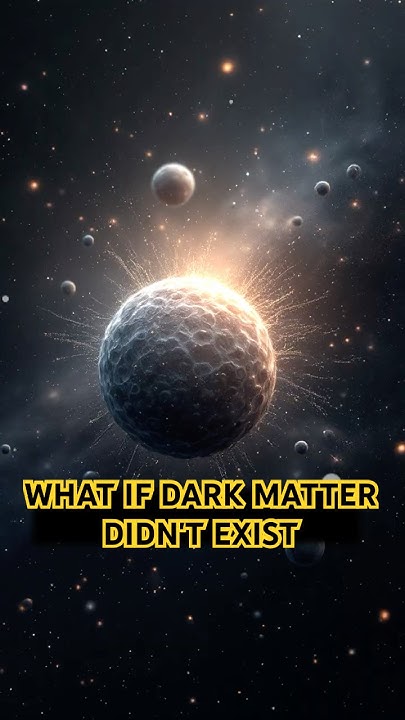
What If Dark Matter Didn’t Exist at All?

Definition of Dark Matter Dark matter is a mysterious and invisible form of matter that is believed to constitute a significant portion of the universe’s total mass. Unlike ordinary matter, it does not emit, absorb, or reflect light, making it undetectable through direct electromagnetic observations. Despite its invisibility, dark matter exerts a strong gravitational influence, […]

Read More →

Why Scientists Say Most of the Universe Is Invisible

Understanding the Invisible Universe The night sky, adorned with sparkling stars and distant galaxies, presents a stunning cosmic panorama. However, this visible display represents only a tiny fraction of the entire universe. The vast majority of the cosmos remains hidden from view, imperceptible even to the most sophisticated telescopes and instruments. This profound mystery has […]

Read More →

Do Stars Provide All Light in the Universe?

Definition of Cosmic Illumination Cosmic illumination refers to the diverse sources of light that collectively brighten the universe. While stars are the most visible and celebrated emitters of light, the universe’s radiance is a complex amalgamation of various phenomena, each contributing uniquely to the cosmic glow. This illumination encompasses everything from the brilliant light of […]

Read More →

Why Dark Matter Is So Hard to Detect

Definition of Dark Matter Dark matter is a mysterious and invisible form of matter that constitutes approximately 27% of the total mass-energy content of the universe. Unlike ordinary matter, which makes up stars, planets, and living beings, dark matter does not interact with electromagnetic radiation-meaning it neither emits, absorbs, nor reflects light. This invisibility makes […]

Read More →

What’s Beyond Gamma Rays in the Universe?

Understanding Gamma Rays and Their Cosmic Significance Gamma rays represent the most energetic form of electromagnetic radiation, characterized by their extremely high-frequency photons. These rays emerge from some of the universe’s most violent and energetic events, such as the explosive deaths of massive stars, collisions involving neutron stars or black holes, and the powerful jets […]

Read More →

Dark Matter Might Be Older Than the Big Bang—New Study

Definition of Dark Matter Dark matter is a mysterious and invisible form of matter that constitutes about 27% of the universe’s total mass-energy content. Although it cannot be observed directly through electromagnetic radiation, its presence is inferred from its gravitational effects on visible matter, radiation, and the large-scale structure of the universe. Invisible Substance: Dark […]

Read More →

Can Dark Matter Ever Turn Into Normal Matter?

Understanding Dark Matter Dark matter is a mysterious and invisible component of the universe that profoundly influences its structure and evolution. Unlike ordinary matter, which makes up stars, planets, and living organisms, dark matter does not emit, absorb, or reflect light, making it undetectable through conventional electromagnetic observations. Despite this invisibility, its presence is inferred […]

Read More →

How Do Scientists Weigh Planets and Stars?

Definition Measuring the mass of astronomical objects such as planets and stars is a fundamental yet complex task in astronomy. Unlike terrestrial objects that can be weighed directly using scales, celestial bodies are located at immense distances, making direct measurement impossible. Instead, astronomers rely on indirect methods grounded in gravitational physics and orbital dynamics to […]

Read More →