
Short Answer
Definition of Black Holes
Black holes are extraordinary astronomical entities characterized by gravitational fields so powerful that nothing, including light, can escape their grasp. This extreme gravitational pull creates a boundary known as the event horizon, beyond which all matter and radiation are irrevocably trapped. Despite their invisibility in traditional optical wavelengths, black holes have become a focal point of astrophysical research due to their profound implications for gravity, spacetime, and cosmic evolution.
Challenges in Observing Black Holes
The primary obstacle in studying black holes stems from their inherent invisibility; since no light or electromagnetic radiation can escape from within the event horizon, direct observation is impossible. Consequently, astronomers must rely on indirect evidence to detect and analyze these objects. This involves examining the effects black holes exert on their surroundings, such as the behavior of nearby matter and the distortion of spacetime itself.
Indirect Detection Techniques
Accretion Disk Emissions
One of the most prominent indicators of black holes is the presence of accretion disks-structures formed by matter spiraling inward toward the black hole. As gas and stellar material from a companion star or interstellar medium fall into the black hole’s gravitational well, they form a rotating disk. Friction and gravitational forces heat this material to millions of degrees, causing it to emit intense X-rays and other high-energy radiation. Space-based observatories like Chandra and XMM-Newton detect these emissions, pinpointing regions where black holes are likely present.

Stellar and Gas Dynamics
Another critical method involves monitoring the motion of stars and gas clouds near suspected black holes. By tracking the orbits and velocities of these objects with high-resolution infrared telescopes, scientists can infer the mass and location of unseen massive bodies exerting gravitational influence. A landmark example is the observation of stars orbiting the center of the Milky Way, revealing a supermassive black hole known as Sagittarius A*. These gravitational effects serve as indirect but compelling evidence of black holes.
Gravitational Wave Astronomy
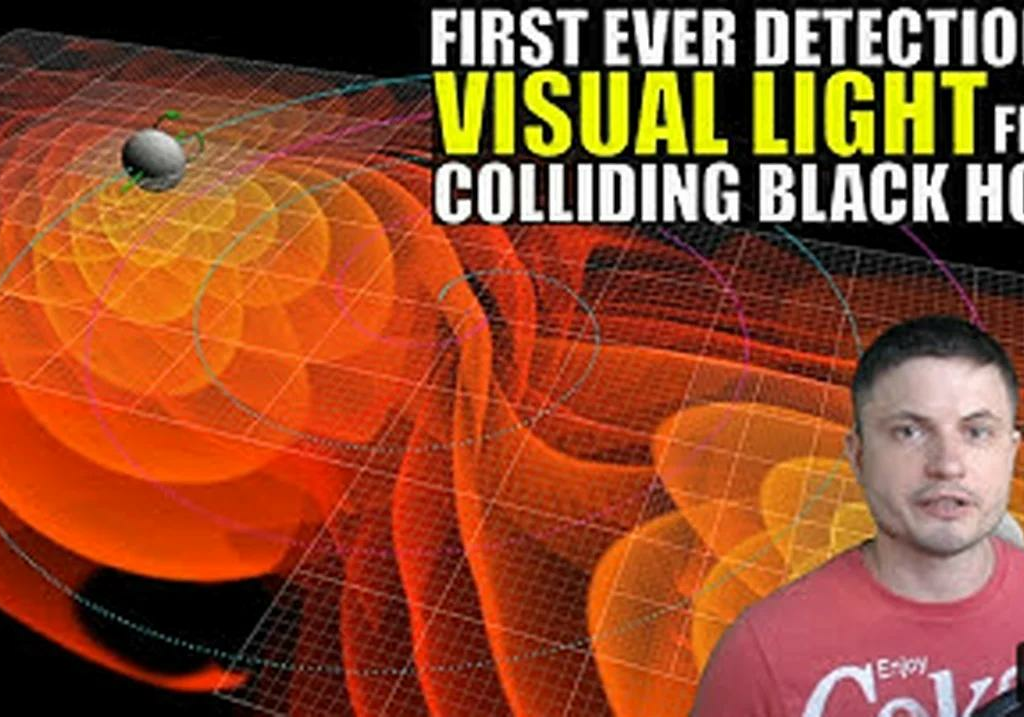
The detection of gravitational waves has revolutionized black hole research. These waves are ripples in the fabric of spacetime generated by violent cosmic events, such as the merger of two black holes. Facilities like the Laser Interferometer Gravitational-Wave Observatory (LIGO) and Virgo have successfully recorded these signals, which carry detailed information about the masses, spins, and orbital dynamics of the merging black holes. Unlike electromagnetic radiation, gravitational waves are not hindered by the event horizon, providing a direct probe into black hole interactions.
Multi-Messenger Observations
Combining gravitational wave data with electromagnetic signals enhances our understanding of black hole phenomena. For instance, mergers involving neutron stars and black holes can produce energetic jets observable across the electromagnetic spectrum. This multi-messenger approach allows astronomers to study the physics of these extreme events from multiple perspectives, enriching the overall picture of black hole behavior.
Radio Interferometry and Imaging
Radio astronomy, particularly through Very Long Baseline Interferometry (VLBI), offers another powerful tool for black hole detection. By linking radio telescopes worldwide, VLBI achieves an effective aperture the size of Earth, enabling unprecedented resolution. This technique was instrumental in capturing the first-ever image of a black hole’s shadow in the galaxy M87, revealing the silhouette of the event horizon surrounded by glowing accretion material. These observations provide direct visual confirmation of black holes and validate predictions from general relativity.
Transient Phenomena: Tidal Disruption Events
Tidal disruption events occur when a star ventures too close to a black hole and is torn apart by intense gravitational forces. The resulting burst of electromagnetic radiation acts as a luminous signal of the black hole’s presence. Time-domain astronomy surveys monitor the sky for such sudden flares, offering rare opportunities to study the extreme environments near black holes.
Microquasars and Jet Emissions
Microquasars, systems where a stellar-mass black hole accretes matter from a companion star, provide additional insights. These objects often emit powerful jets detectable in radio and X-ray wavelengths. By analyzing their variability, spectral features, and jet structures, astronomers gain a deeper understanding of accretion processes and relativistic effects close to black holes.
How Black Hole Detection Works
Detecting black holes relies on synthesizing multiple observational methods to overcome their invisibility. By studying the energetic emissions from accretion disks, gravitational influences on nearby objects, gravitational wave signals from mergers, and direct radio imaging, scientists assemble a comprehensive picture of black hole properties and behaviors. This multi-faceted approach integrates data across the electromagnetic spectrum and gravitational signals, enabling robust identification and characterization of black holes.
Mathematical and Physical Principles
The detection and study of black holes are grounded in fundamental physics, including general relativity and orbital mechanics. For example, the mass of a black hole can be estimated by applying Kepler’s laws to the orbits of nearby stars:
- Orbital Velocity (v):
( v = sqrt{frac{GM}{r}} ), where ( G ) is the gravitational constant, ( M ) is the mass of the black hole, and ( r ) is the orbital radius. - Event Horizon Radius (Schwarzschild radius, ( r_s )):
( r_s = frac{2GM}{c^2} ), where ( c ) is the speed of light.
Gravitational waveforms detected by LIGO and Virgo are analyzed using complex numerical relativity simulations to extract parameters such as mass, spin, and orbital characteristics of merging black holes.
Real-World Examples of Black Hole Detection
- Sagittarius A*:
The supermassive black hole at the center of the Milky Way, identified through stellar orbit tracking and radio observations. - M87 Black Hole Image:
Captured by the Event Horizon Telescope using VLBI, providing the first direct image of a black hole’s shadow. - LIGO Black Hole Mergers:
Multiple detections of gravitational waves from binary black hole mergers, confirming theoretical predictions. - Tidal Disruption Events:
Observed flares from stars being disrupted by black holes, detected by time-domain surveys.
Common Misconceptions About Black Hole Detection
Black holes can be seen directly with optical telescopes.
Black holes emit no light themselves; detection relies on indirect evidence such as accretion emissions and gravitational effects.
Gravitational waves are blocked by black holes.
Gravitational waves propagate through spacetime and are not trapped by black holes, allowing direct observation of black hole mergers.
All black holes are the same size.
Black holes vary widely in mass, from stellar-mass black holes to supermassive black holes millions or billions of times the Sun’s mass.
Significance of Black Hole Detection
Understanding and detecting black holes is crucial for advancing knowledge in astrophysics, cosmology, and fundamental physics. Black holes serve as natural laboratories for testing general relativity under extreme conditions and provide insights into galaxy formation and evolution. The study of black holes also drives technological innovation in observational astronomy, including the development of gravitational wave detectors and high-resolution imaging techniques. Ultimately, black hole research deepens our comprehension of the universe’s most enigmatic and powerful phenomena.



Leave a Reply