
Short Answer
Definition of Black Holes
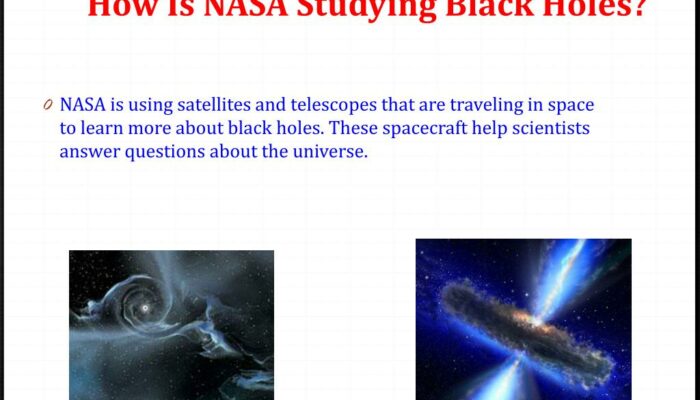
Black holes are extraordinary cosmic objects characterized by gravitational fields so intense that nothing, not even light, can escape their pull. These regions of spacetime exhibit extreme curvature, resulting from the collapse of massive stars or other high-density phenomena. Their enigmatic nature has fascinated both scientists and the general public, as they challenge our understanding of physics and the universe.
Scientific Disciplines Involved in Black Hole Research
Astrophysics: The Core Field
Astrophysics serves as the primary scientific discipline dedicated to exploring black holes. It combines principles from physics and astronomy to analyze the formation, development, and intrinsic properties of these celestial bodies. Astrophysicists rely on data collected from telescopes, satellites, and other observational instruments to detect indirect evidence of black holes, such as radiation emissions and gravitational influences on nearby matter.
Gravitational Physics and General Relativity
A specialized branch within astrophysics, gravitational physics, focuses on the role of gravity under extreme conditions. Black holes represent the ultimate manifestation of gravitational forces, where classical physics gives way to relativistic effects. Albert Einstein’s theory of general relativity provides the mathematical framework to understand how massive objects distort spacetime, particularly near the event horizon-the point beyond which escape is impossible. Researchers use complex models to predict the behavior of matter and light in these intense gravitational fields.

Quantum Mechanics and Theoretical Physics
The intersection of quantum mechanics with gravitational physics is crucial for addressing paradoxes associated with black holes, such as the information loss problem. This area of study aims to unify quantum theory with general relativity, striving for a comprehensive quantum gravity theory. Concepts like Hawking radiation emerge from this synthesis, proposing that black holes can emit particles and gradually lose mass over time, challenging the notion of their permanence.
Cosmology: Black Holes in the Universe
Cosmology examines the broader implications of black holes on the universe’s structure and evolution. Supermassive black holes, often found at the centers of galaxies, play a significant role in galaxy formation and dynamics. Cosmologists study how these massive entities influence cosmic background radiation and the distribution of matter, integrating observational data with theoretical models to understand their impact on the universe’s past, present, and future.
Methods and Technologies for Studying Black Holes
Observational Astronomy Techniques
Detecting black holes directly is impossible due to their light-trapping nature, so astronomers observe their effects on surrounding matter. Instruments such as X-ray observatories, radio telescopes, and space probes monitor emissions from accretion disks-hot, glowing matter spiraling into black holes. These observations help determine key characteristics like mass, spin, and accretion rates.
Gravitational Wave Astronomy
The advent of gravitational wave detectors has revolutionized black hole research by capturing spacetime ripples generated during black hole mergers. This breakthrough provides direct evidence of black hole interactions and offers a new method to test predictions of general relativity under extreme conditions.
Computational Simulations and Numerical Relativity
Advanced computer simulations enable scientists to model complex black hole environments and interactions with nearby matter or other compact objects. Numerical relativity uses high-performance computing to simulate gravitational collapse and black hole mergers, aiding in the interpretation of observational data and forecasting novel phenomena. These tools are essential for understanding the lifecycle of black holes, from formation to potential evaporation.
Types of Content on Black Hole Science
Popular Science and Educational Media
Black holes are frequently featured in popular science articles, documentaries, and lectures that simplify complex concepts for general audiences. These resources often use vivid imagery and accessible language to explain the fascinating and counterintuitive aspects of black holes.
Academic and Research Publications
Scholarly literature delves into the mathematical, experimental, and theoretical aspects of black holes. Research papers, conference proceedings, and textbooks provide detailed analyses for specialists and students, fostering the development of new theories and refinement of existing models.
Public Outreach and Interactive Experiences
Innovative outreach programs highlight recent discoveries, such as the first images of black hole event horizons and gravitational wave detections. Interactive simulations and virtual reality applications offer immersive experiences, allowing users to visualize spacetime distortions and the extreme environments near black holes, thereby enhancing public engagement and understanding.
Why Studying Black Holes Is Important
The investigation of black holes is vital for advancing our knowledge of fundamental physics, including gravity, quantum mechanics, and cosmology. Understanding black holes helps scientists test the limits of current theories, explore the origins and evolution of galaxies, and gain insights into the universe’s ultimate fate. This multidisciplinary research not only deepens our cosmic perspective but also drives technological innovations in observational instruments and computational methods.
Summary
Black hole research is a multidisciplinary endeavor primarily rooted in astrophysics, supported by gravitational physics, quantum mechanics, and cosmology. Combining theoretical frameworks with cutting-edge observational and computational techniques, scientists continue to unravel the complexities of these cosmic enigmas. Through diverse content ranging from rigorous academic studies to engaging popular science, the exploration of black holes enriches our understanding of the universe and inspires ongoing scientific discovery.



Leave a Reply