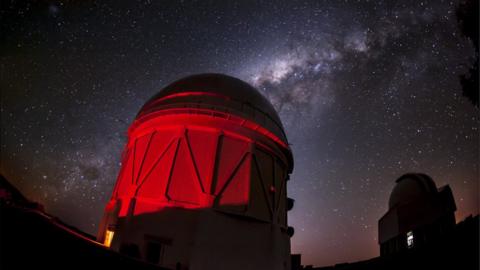
Record-Breaking Experiments Are Closing In on Dark Matter

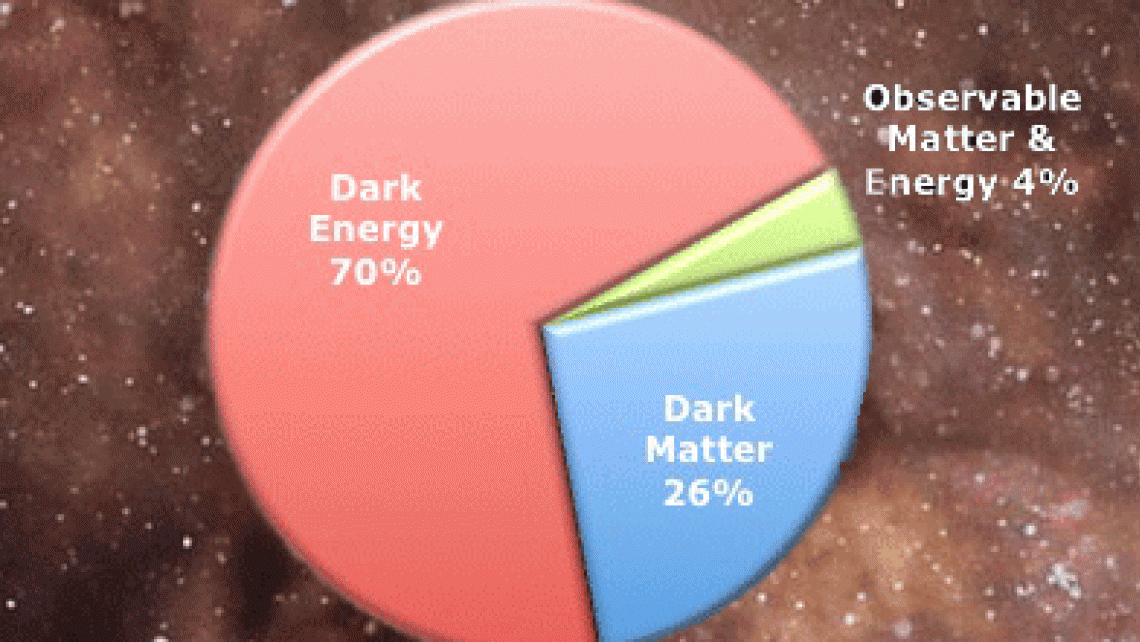
Understanding Dark Matter Dark matter constitutes one of the most mysterious and intriguing components of the universe. Unlike ordinary matter, it neither emits nor absorbs light, rendering it invisible to traditional observational techniques. Despite its elusive nature, dark matter is estimated to make up about 27% of the universe’s total mass-energy content. Its gravitational influence […]

Read More →

How Do Scientists Measure Gravity Across Planets?

Definition of Gravity in Planetary Contexts Gravity is the fundamental force that causes two masses to attract each other. On Earth, this force results in a consistent acceleration of approximately 9.8 meters per second squared, which governs how objects fall and move. When considering other planets, gravity varies depending on factors such as the planet’s […]

Read More →

Is Dark Matter Real? The Evidence Explained

Definition of Dark Matter Dark matter is a mysterious and invisible form of matter that permeates the universe, exerting gravitational effects without emitting, absorbing, or reflecting any form of electromagnetic radiation. Unlike ordinary matter, it cannot be detected through conventional observational methods such as light or heat, making it effectively invisible to current instruments. Despite […]

Read More →

What NASA Is Doing to Solve the Dark Matter Mystery

Understanding Dark Matter Dark matter represents one of the most perplexing and invisible components of our universe. Although it neither emits nor absorbs electromagnetic radiation, making it undetectable by conventional telescopes, its gravitational influence is unmistakable. Constituting roughly 27% of the universe’s total mass-energy budget, dark matter vastly exceeds the amount of ordinary matter that […]

Read More →

What Happens When Gravity Fights the Expanding Universe?

Definition The interaction between gravity and the expanding universe represents a fundamental cosmic phenomenon where two opposing forces shape the structure and evolution of the cosmos. Gravity, the attractive force pulling matter together, competes with the universe’s expansion, which stretches spacetime and drives galaxies apart. This dynamic interplay governs the formation of celestial bodies and […]

Read More →

What Happens When Gravity Is Compressed to Extremes?

Definition of Gravitational Compression Gravitational compression refers to the process by which gravity exerts an intense inward force on matter, causing it to condense into increasingly dense states. This phenomenon is fundamental in shaping cosmic structures, from planets and stars to the most extreme objects in the universe such as neutron stars and black holes. […]

Read More →

Dark Energy Might Be Stranger Than We Thought

Definition of Dark Energy Dark energy is a mysterious and pervasive force believed to be responsible for the accelerated expansion of the universe. Unlike ordinary matter or radiation, it does not emit, absorb, or reflect light, making it invisible and detectable only through its gravitational effects on cosmic structures and the fabric of spacetime. Cosmological […]

Read More →