
Short Answer
Definition of Cosmic Illumination
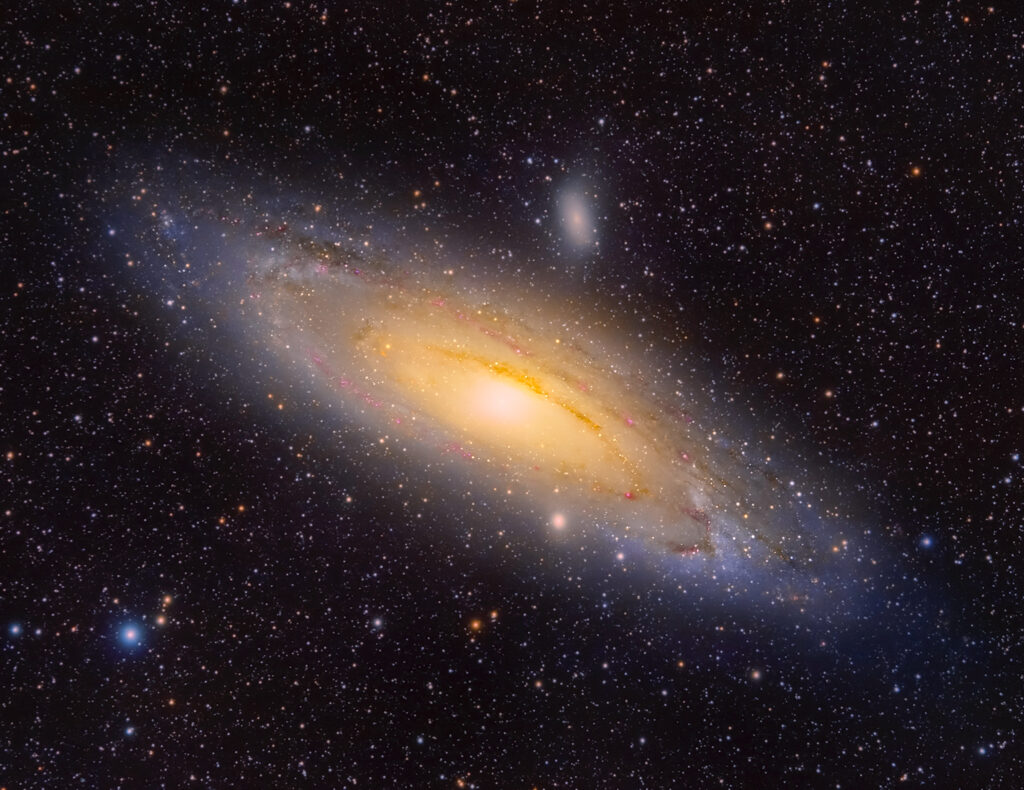
Cosmic illumination refers to the diverse sources of light that collectively brighten the universe. While stars are the most visible and celebrated emitters of light, the universe’s radiance is a complex amalgamation of various phenomena, each contributing uniquely to the cosmic glow. This illumination encompasses everything from the brilliant light of stars to the faint afterglow of the Big Bang, creating a multifaceted celestial panorama.
Primary Sources of Cosmic Light
Stars: The Universe’s Radiant Beacons
Stars are massive nuclear reactors that generate light by fusing hydrogen atoms into helium, releasing vast amounts of energy in the form of photons. These photons travel across immense distances, allowing us to observe the universe’s history and structure. Stars serve as the fundamental sources of visible light in the cosmos, illuminating galaxies and providing insight into the processes of stellar evolution and cosmic time.
Quasars: The Cosmic Lighthouses
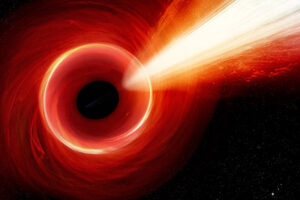
Beyond stars, quasars represent some of the most luminous objects in the universe. Powered by supermassive black holes consuming surrounding matter at extraordinary rates, quasars emit intense radiation from their accretion disks. Their brightness can surpass that of entire galaxies, making them critical markers for studying the early universe and the formation of large-scale cosmic structures.
Diffuse Gas and Nebulae
Interstellar and intergalactic media, composed of gas and dust, emit subtle glows that contribute to the universe’s overall light. Nebulae, vast clouds of ionized gas, shine softly when energized by ultraviolet radiation from nearby stars. These emissions reveal regions where new stars are born and play a vital role in the ongoing cycle of matter and energy in space.
Cosmic Microwave Background Radiation (CMB)
The CMB is a pervasive, faint radiation that fills the universe, originating from the Big Bang approximately 13.8 billion years ago. Although invisible to the naked eye, this relic light provides a snapshot of the early universe, encoding information about primordial density fluctuations that eventually led to galaxy formation. Its omnipresence makes it a fundamental component of cosmic illumination.
Transient Phenomena: Supernovae
Supernovae are explosive events marking the death of massive stars. These cataclysmic bursts emit intense, short-lived light that can outshine entire galaxies temporarily. Supernovae distribute heavy elements into space, enriching the cosmic environment and influencing subsequent generations of stars and planets.
Exotic Light Emissions: Fluorescence and Cherenkov Radiation
Some cosmic light arises from less common processes such as fluorescence and Cherenkov radiation. Cherenkov radiation occurs when charged particles travel through a medium faster than light can propagate in that medium, producing a characteristic blue glow. These phenomena, often detected through specialized instruments, reveal the universe’s capacity to generate light through diverse and unexpected mechanisms.
How Cosmic Illumination Works
The universe’s light emerges from a dynamic interplay of physical processes occurring at various scales. Nuclear fusion within stars produces steady, long-lasting light, while accretion onto black holes generates intense radiation through gravitational energy conversion. Gas clouds emit light when energized by nearby sources, and relic radiation from the Big Bang permeates all space. Transient events like supernovae inject bursts of brilliance, and particle interactions create subtle glows. Together, these mechanisms weave a complex tapestry of illumination that spans the cosmos.
Analogy: The Cosmic Cathedral
Imagine the universe as a vast cathedral illuminated by a grand chandelier. The stars are the chandelier’s bright lamps, drawing immediate attention with their concentrated light. However, the cathedral’s architecture-stained glass, reflective surfaces, and ambient lighting-adds a diffuse, pervasive glow that no single lamp can replicate. Similarly, diffuse gas, cosmic background radiation, and other sources complement stellar light, creating a rich and layered cosmic luminance.
Real-World Examples of Cosmic Light Sources
- Stellar Light:
The Sun, our closest star, provides the primary source of light and energy for Earth, sustaining life and driving climate systems. - Quasars:
The quasar 3C 273, located in the constellation Virgo, is one of the brightest known quasars, visible across billions of light-years. - Nebulae:
The Orion Nebula is a well-studied star-forming region emitting soft glows from ionized gases. - Cosmic Microwave Background:
Detected by satellites like COBE and Planck, the CMB provides a map of the early universe’s temperature fluctuations. - Supernovae:
Supernova 1987A in the Large Magellanic Cloud was a nearby stellar explosion observed in 1987, offering valuable data on stellar death and element formation.
Common Misconceptions About Cosmic Light
Stars are the sole sources of light in the universe.
While stars are prominent, other sources such as quasars, nebulae, and the cosmic microwave background also contribute significantly to cosmic illumination.
The cosmic microwave background is bright and visible.
The CMB is extremely faint and invisible to the naked eye, detectable only with sensitive instruments.
Supernovae are constant light sources.
Supernovae are transient events, producing intense but short-lived bursts of light.
Significance of Understanding Cosmic Illumination
Comprehending the various sources and mechanisms of cosmic light is crucial for astronomy and cosmology. It enables scientists to reconstruct the universe’s history, understand the life cycles of stars, and explore the large-scale structure of the cosmos. Moreover, studying cosmic illumination informs technologies such as telescopes and detectors, enhancing our ability to observe and interpret the universe. Beyond science, this knowledge enriches our appreciation of the universe’s complexity and beauty, inspiring continual exploration and discovery.


Leave a Reply