
Short Answer
Understanding Dark Matter
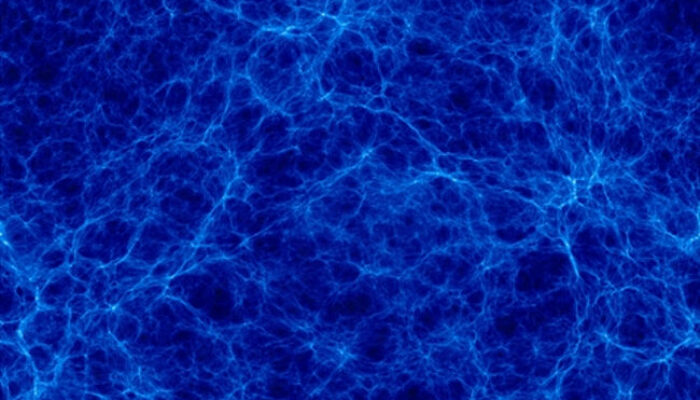
Dark matter is a mysterious and invisible component of the universe that profoundly influences its structure and evolution. Unlike ordinary matter, which makes up stars, planets, and living organisms, dark matter does not emit, absorb, or reflect light, making it undetectable through conventional electromagnetic observations. Despite this invisibility, its presence is inferred from gravitational effects on visible matter, such as the rotation speeds of galaxies and the behavior of galaxy clusters. The concept of dark matter emerged in the 20th century to explain discrepancies between observed cosmic phenomena and predictions based solely on visible matter.
Distinguishing Dark Matter from Normal Matter
Normal matter, also known as baryonic matter, consists of particles like protons, neutrons, and electrons, which are governed by the Standard Model of particle physics. These particles interact electromagnetically, allowing them to emit or absorb light. In contrast, dark matter does not fit within the Standard Model framework and interacts primarily through gravity, with little to no electromagnetic interaction. Leading theoretical candidates for dark matter include Weakly Interacting Massive Particles (WIMPs), axions, and sterile neutrinos, which arise from extensions of the Standard Model such as supersymmetry or theories involving extra dimensions.
Can Dark Matter Transform into Normal Matter?
The intriguing question of whether dark matter can convert into normal matter challenges our understanding of fundamental physics. Some theoretical models suggest that dark matter particles might not be entirely inert but could undergo processes like decay or annihilation, producing normal matter particles as byproducts. For example, in certain supersymmetric frameworks, dark matter annihilation could generate gamma rays, neutrinos, or other detectable particles. Detecting such signals would provide compelling evidence that dark matter can, under specific conditions, transform or yield normal matter.
Early Universe and Particle Interactions
During the universe’s infancy, extreme temperatures and energy densities created an environment where particle transformations were frequent. It is believed that dark matter and normal matter coexisted and possibly interconverted through high-energy interactions in this primordial epoch. As the universe expanded and cooled, these processes diminished, leaving behind the current proportions of dark and normal matter. This cosmological context implies that while dark matter may have been more dynamically linked to normal matter in the past, any ongoing conversion today would be exceedingly rare or constrained by physical laws.
Experimental Efforts to Detect Dark Matter Conversion
Scientists employ various observational and experimental techniques to search for signs of dark matter transforming into normal matter. Space-based instruments like the Fermi Gamma-ray Space Telescope monitor the cosmos for excess gamma radiation that could indicate dark matter annihilation events. Additionally, underground detectors aim to capture rare interactions between dark matter particles, such as WIMPs, and ordinary matter. Although definitive proof remains elusive, these efforts continue to refine our understanding and detection capabilities.
Implications of Dark Matter Conversion
If dark matter were capable of converting into normal matter, it would revolutionize our comprehension of the universe’s composition and the nature of matter itself. Such a transformation would blur the lines between the visible and invisible components of the cosmos, suggesting a dynamic interplay rather than a static dichotomy. This possibility enriches philosophical and scientific perspectives, highlighting the universe’s complexity and the evolving nature of its fundamental constituents.
Theoretical Challenges and Constraints
Despite the allure of dark matter conversion, significant theoretical and empirical challenges remain. Conservation laws and the observed stability of matter impose strict limits on how and when such transformations could occur. The longevity of dark matter inferred from galactic observations suggests that if conversion happens, it does so over timescales far exceeding the age of the universe or under extraordinary conditions not yet observed. Alternative explanations, such as modifications to gravitational theory or novel interactions, further complicate the interpretation of potential signals.
Exploring the Dark Sector
Emerging theories propose the existence of a “dark sector,” a hidden realm of particles and forces that interact weakly with known matter. This concept envisions a parallel set of physical laws and particles that could mediate transitions between dark matter and normal matter. Unlocking the secrets of the dark sector could provide pathways for understanding dark matter’s nature and its potential to transform, thereby reshaping cosmology, particle physics, and our grasp of fundamental natural laws.
Significance in Modern Science
The question of dark matter’s ability to convert into normal matter is more than a theoretical curiosity; it drives the frontier of astrophysics and particle physics research. Understanding this potential transformation could illuminate the composition of the universe, the evolution of cosmic structures, and the fundamental interactions governing matter and energy. Advances in technology and theory may eventually unravel this enigma, offering profound insights into the universe’s hidden fabric.
Common Misconceptions About Dark Matter
Dark matter is just ordinary matter that is invisible.
Dark matter is fundamentally different from ordinary matter, as it does not interact electromagnetically and cannot be detected by light-based instruments.
Dark matter frequently converts into normal matter.
Current evidence suggests that if such conversion occurs, it is extremely rare or happens under conditions not yet observed.
Dark matter is a form of antimatter.
Dark matter is distinct from antimatter; it neither annihilates with normal matter in the same way nor fits the properties of antimatter particles.
Conclusion: The Ongoing Quest to Understand Dark Matter
The possibility that dark matter might transform into normal matter invites us to reconsider the boundaries of known physics and the nature of the cosmos. While definitive answers remain out of reach, the pursuit of this knowledge fuels scientific innovation and deepens our appreciation for the universe’s complexity. As research progresses, the invisible scaffolding of the cosmos may one day reveal itself not as a static backdrop but as a dynamic participant in the cosmic story, bridging the unseen with the tangible and expanding humanity’s cosmic horizon.



Leave a Reply