

Short Answer
Definition of Magnetic Resonance Imaging (MRI)
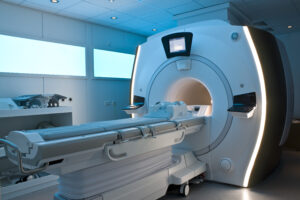
Magnetic Resonance Imaging (MRI) is a sophisticated medical imaging technique that utilizes powerful magnetic fields and radiofrequency waves to generate detailed images of the internal structures of the human body. Unlike traditional imaging methods, MRI provides high-resolution, cross-sectional views without the use of ionizing radiation, making it a vital tool in modern diagnostics.
Fundamental Principles of MRI
At the heart of MRI technology lies a strong magnet, typically producing a magnetic field strength between 1.5 and 3.0 tesla. This magnetic field causes the protons in hydrogen atoms-abundant in water and fat molecules within the body-to align along its direction. When a radiofrequency pulse is applied, these protons are temporarily displaced from their alignment. As they return to their original state, they emit signals that are detected by the MRI scanner. Advanced computer algorithms then process these signals to construct detailed images of the body’s internal anatomy.
How MRI Functions
The MRI process involves several key steps:
- Proton Alignment:
The strong magnetic field aligns hydrogen protons in the body. - Radiofrequency Excitation:
A radiofrequency pulse disturbs this alignment, causing protons to resonate. - Signal Emission:
As protons relax back to alignment, they emit radio signals. - Image Reconstruction:
These signals are captured and converted into images by sophisticated software.
Applications Across Medical Specialties
Neurological Imaging
MRI is indispensable in neurology for diagnosing a range of conditions such as multiple sclerosis, brain tumors, and cerebrovascular disorders. Its ability to detect subtle changes in brain structure and pathology provides critical insights into complex neurological diseases.
Orthopedic Diagnostics
In orthopedics, MRI excels at visualizing soft tissues including ligaments, muscles, and cartilage. This capability allows clinicians to accurately assess injuries and develop targeted treatment strategies, surpassing the limitations of conventional X-rays.
Oncological Evaluation
MRI plays a crucial role in cancer diagnosis and management by characterizing tumors and determining their stage. The use of contrast agents enhances visualization of tumor vascularity and perfusion, aiding oncologists in treatment planning and prognosis assessment.
Advanced MRI Techniques
Functional MRI (fMRI)
Functional MRI measures changes in blood flow and oxygenation related to neural activity, enabling real-time mapping of brain function. This technique has propelled advances in cognitive neuroscience by revealing the neural basis of thought, behavior, and mental processes.
Diffusion Tensor Imaging (DTI)
DTI is an advanced MRI method that visualizes white matter tracts in the brain, providing valuable information about neural connectivity and aiding in the study of neurological diseases and injuries.
Safety and Patient Considerations
MRI is a non-invasive imaging modality that avoids the risks associated with ionizing radiation, making it safer for sensitive groups such as children and pregnant women. However, the strong magnetic fields require strict safety measures. Patients with pacemakers, metallic implants, or other ferromagnetic devices may be at risk and often cannot undergo MRI scans. Additionally, the enclosed design of traditional MRI machines can cause discomfort or anxiety in claustrophobic individuals. Innovations like open MRI systems aim to alleviate these issues, though they may sometimes compromise image quality.
Technological Innovations and Future Directions
Ongoing advancements in MRI technology include the integration of artificial intelligence to enhance image analysis and diagnostic accuracy. These developments promise to improve radiologists’ ability to interpret scans and support more precise clinical decision-making. Furthermore, novel imaging techniques continue to expand the scope of MRI applications in medicine.
Significance of MRI in Healthcare
MRI not only facilitates accurate diagnosis but also fosters interdisciplinary collaboration among radiologists, neurologists, surgeons, and oncologists. This comprehensive approach enhances patient management by providing detailed anatomical and functional information, ultimately leading to better treatment outcomes and personalized care.
Common Misconceptions About MRI
MRI uses harmful radiation.
MRI employs magnetic fields and radio waves, which do not involve ionizing radiation, making it safer than X-rays or CT scans.
All patients can safely undergo MRI.
Individuals with certain implants or metal fragments may be at risk due to the strong magnetic fields and require alternative imaging methods.
Conclusion
Magnetic Resonance Imaging represents a transformative leap in medical imaging, offering unparalleled insights into the human body’s structure and function. By revealing intricate anatomical details and physiological processes, MRI deepens our understanding of health and disease. As technology evolves, MRI continues to be a cornerstone of diagnostic medicine, driving innovation and improving patient care worldwide.
FAQ
Does an MRI scan use ionizing radiation?
No, MRI scans use magnetic fields and radio waves, which do not involve ionizing radiation, making the procedure safer than X-rays or CT scans.
Can everyone safely undergo an MRI scan?
No, individuals with pacemakers, metallic implants, or other ferromagnetic devices may be at risk and often cannot undergo MRI scans.
What are the common applications of MRI?
MRI is commonly used in neurology, orthopedics, and oncology for detailed imaging of soft tissues, brain structure, tumors, and functional brain activity.
What are advanced MRI techniques like fMRI and DTI?
Functional MRI (fMRI) measures brain activity by detecting blood flow changes, while Diffusion Tensor Imaging (DTI) visualizes white matter tracts to study neural connectivity.
Are there any safety concerns with MRI?
MRI is generally safe but requires caution for patients with metallic implants; some may experience discomfort due to the enclosed space or loud noises during the scan.



Leave a Reply