

Short Answer
Definition of Magnetic Resonance Imaging (MRI)
Magnetic Resonance Imaging (MRI) is a sophisticated medical imaging technique that combines principles from physics, biology, and engineering to produce detailed images of the body’s internal soft tissues. It leverages the magnetic properties of atomic nuclei, particularly hydrogen atoms, to generate high-resolution images without the use of ionizing radiation.
- Core Principle:
MRI is fundamentally based on nuclear magnetic resonance (NMR), which involves the interaction of atomic nuclei with magnetic fields and radiofrequency energy. - Primary Focus:
The technique primarily targets hydrogen nuclei due to their abundance in water and fat, making it ideal for imaging soft tissues.
Fundamental Physics Behind MRI
At the heart of MRI technology lies the phenomenon of nuclear magnetic resonance. Hydrogen nuclei, which behave like tiny magnets with north and south poles, align themselves when exposed to a strong external magnetic field. This alignment, known as magnetic polarization, is the first critical step in the imaging process.
Magnetic Polarization and Proton Alignment
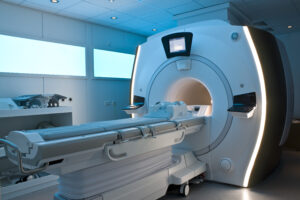
When a patient is placed inside an MRI scanner, a powerful magnet-typically producing a magnetic field between 1.5 and 3 Tesla-forces the hydrogen protons in the body to align with the magnetic field lines. This alignment increases the net magnetization vector, which is essential for generating a detectable signal.
Radiofrequency Excitation and Resonance
Following alignment, a radiofrequency (RF) pulse is applied at a specific frequency, causing the hydrogen nuclei to absorb energy and move out of their equilibrium state. This process, called resonance, temporarily tips the protons into a higher energy state. Once the RF pulse stops, the protons relax back to their original alignment, releasing energy in the form of radio waves that are captured for image formation.
Relaxation Mechanisms and Image Contrast
The return of protons to equilibrium occurs through two distinct relaxation processes, each contributing uniquely to image contrast:
- T1 Relaxation (Longitudinal Relaxation):
This is the time it takes for protons to realign with the external magnetic field after excitation. T1 relaxation influences the brightness of tissues in T1-weighted images. - T2 Relaxation (Transverse Relaxation):
This refers to the loss of phase coherence among spinning protons, causing signal decay in the transverse plane. T2 relaxation times affect contrast in T2-weighted images.
The variation in T1 and T2 relaxation times across different tissues-such as fat, muscle, and water-enables MRI to distinguish between them effectively.
Signal Detection and Image Reconstruction
Specialized receiver coils positioned around the body detect the faint radiofrequency signals emitted by relaxing protons. These coils convert electromagnetic signals into electrical currents, which are then digitized for processing.
Role of Fourier Transform in Image Formation
The raw data collected are complex and exist in the frequency domain. To convert these signals into spatially meaningful images, mathematical techniques like the Fourier Transform are employed. This transformation maps frequency data into spatial coordinates, allowing the construction of detailed images where each voxel represents tissue-specific relaxation properties.
Factors Influencing MRI Image Quality
Several elements can degrade the clarity and accuracy of MRI scans:
- Patient Movement:
Motion during scanning can cause blurring and artifacts. - Magnetic Field Inhomogeneities:
Variations in the magnetic field strength can distort signals. - Metallic Implants:
Presence of metal can create artifacts due to magnetic susceptibility differences.
Effective management of these factors is crucial for obtaining diagnostically reliable images.
Advanced MRI Techniques
Beyond conventional anatomical imaging, MRI technology has evolved to include advanced modalities that provide functional and microstructural insights:
- Diffusion Tensor Imaging (DTI):
Measures the diffusion of water molecules in tissues, revealing the integrity and orientation of white matter tracts in the brain. - Functional MRI (fMRI):
Detects changes in blood flow related to neural activity, enabling the mapping of brain function and connectivity.
Clinical Interpretation and Significance
Interpreting MRI scans requires a blend of radiological expertise and understanding of the underlying physics. Radiologists analyze the images in the context of clinical information to diagnose diseases accurately. The integration of physics, technology, and medical knowledge makes MRI a cornerstone of modern diagnostic imaging.
Why MRI is Essential in Medicine
MRI plays a vital role in healthcare by providing non-invasive, high-resolution images that aid in the diagnosis and monitoring of numerous conditions. Its ability to differentiate soft tissues with exceptional contrast makes it indispensable for neurological, musculoskeletal, cardiovascular, and oncological imaging. Furthermore, ongoing advancements continue to expand its applications, improving patient outcomes and advancing medical research.
Frequently Asked Questions (FAQ)
What physical principle underlies MRI technology?
MRI operates on the principle of nuclear magnetic resonance, where hydrogen nuclei align with a strong magnetic field and emit signals upon excitation by radiofrequency pulses.
How do T1 and T2 relaxation times affect MRI images?
T1 and T2 relaxation times determine how quickly protons return to equilibrium after excitation, creating contrast that differentiates various tissue types in MRI scans.
What process converts MRI signals into visual images?
Signals captured by coils are processed using mathematical algorithms such as the Fourier Transform, which reconstructs spatial images from frequency data.
Which factors can compromise MRI image quality?
Image quality can be affected by patient movement, magnetic field inconsistencies, and artifacts caused by metallic objects within the body.
What are some advanced MRI techniques beyond standard imaging?
Techniques like diffusion tensor imaging (DTI) and functional MRI (fMRI) provide additional information about brain structure and function by analyzing water diffusion and blood flow changes.
FAQ
What is the basic physical principle behind MRI scans?
MRI scans are based on the principle of nuclear magnetic resonance (NMR), where hydrogen nuclei in the body align with a strong magnetic field and are excited by radiofrequency pulses to emit signals used for imaging.
What roles do T1 and T2 relaxation times play in MRI imaging?
T1 and T2 relaxation times represent different rates at which protons return to equilibrium after excitation, providing contrast that helps differentiate tissue types in MRI images.
How are MRI signals converted into images?
Signals emitted by relaxing protons are captured by coils and processed using mathematical algorithms like the Fourier Transform to reconstruct spatial images.
What factors can affect the quality of MRI images?
Image quality can be affected by patient movement, magnetic field inhomogeneities, and artifacts from metallic implants, which must be managed for accurate diagnostics.
What advanced MRI techniques extend beyond conventional imaging?
Techniques like diffusion tensor imaging (DTI) and functional MRI (fMRI) provide additional insights into brain structure and function by measuring water diffusion and blood flow changes.




Leave a Reply