

Short Answer
Definition of Medical Physics and Neuroscience
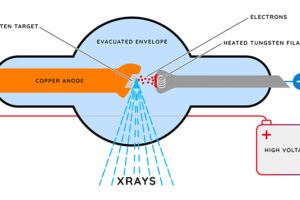
Medical Physics: Medical physics is a specialized branch of physics focused on applying physical principles and techniques to healthcare. It primarily deals with the use of radiation in medicine, encompassing diagnostic imaging, radiation therapy, and safety measures to protect patients and healthcare workers. Medical physicists develop, optimize, and maintain medical technologies that aid in disease diagnosis and treatment.
Neuroscience: Neuroscience is the scientific study of the nervous system, including the brain, spinal cord, and peripheral nerves. This multidisciplinary field integrates biology, chemistry, psychology, and engineering to investigate neural structures, functions, and cognitive processes. Subfields such as cognitive neuroscience and computational neuroscience explore mental functions and use mathematical models to understand brain activity.
Interdisciplinary Connections Between Medical Physics and Neuroscience
The convergence of medical physics and neuroscience creates opportunities for innovative research and technological advancements. One of the most significant areas of overlap is neuroimaging, where physics-based techniques are essential for visualizing brain activity and structure.
Neuroimaging Techniques
- Magnetic Resonance Imaging (MRI):
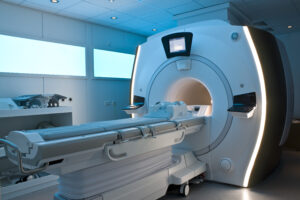
Utilizes magnetic fields and radio waves to produce detailed images of brain anatomy and function, relying heavily on principles of physics. - Positron Emission Tomography (PET):
Employs radioactive tracers to observe metabolic processes in the brain, combining nuclear physics with neuroscience.
Medical physicists’ expertise in imaging technology makes them valuable collaborators in advancing neuroimaging methods and interpreting complex data.
Electrophysiological Applications
Medical physics principles also enhance the study of neuronal electrical activity. Techniques such as electroencephalography (EEG) and transcranial magnetic stimulation (TMS) depend on understanding electromagnetic fields and wave interactions.
- EEG:
Records electrical activity generated by neurons, providing insights into brain function and disorders. - TMS:
Uses magnetic fields to non-invasively stimulate specific brain regions, offering therapeutic potential for neurological and psychiatric conditions.
Medical physicists’ knowledge of electromagnetism can improve these tools and develop new methods for probing brain activity.
Therapeutic Innovations at the Intersection
Beyond diagnostics, medical physics contributes to therapeutic strategies in neuroscience, particularly through neuromodulation techniques that alter nerve activity.
- Radiation Therapy Expertise:
Medical physicists skilled in radiation treatment can apply their understanding to optimize neuromodulation therapies, ensuring safety and efficacy. - Non-Invasive Neuromodulation:
Techniques like TMS offer promising treatments for disorders such as depression and epilepsy, where physics-based approaches enhance precision and outcomes.
Computational Modeling and Quantitative Analysis
Neuroscience frequently utilizes computational models to simulate neural dynamics and brain behavior. Medical physicists, with their strong quantitative and analytical skills, can contribute significantly to developing these models.
- Simulation of Neural Activity:
Creating mathematical representations of brain function to understand diseases like Parkinson’s, Alzheimer’s, and epilepsy. - Interdisciplinary Collaboration:
Combining physics-based modeling with biological data to design innovative interventions and deepen understanding of neurological disorders.
Challenges in Bridging Medical Physics and Neuroscience
While the integration of these fields is promising, it requires overcoming several obstacles:
- Extensive Knowledge Requirements:
Neuroscience demands familiarity with biology, chemistry, and psychology, areas that may require additional education for medical physicists. - Research Methodology Differences:
Physics emphasizes quantitative rigor, whereas neuroscience often incorporates qualitative and interdisciplinary approaches, necessitating adaptability in research methods.
Why Combining Medical Physics and Neuroscience Is Important
The fusion of medical physics and neuroscience holds significant potential for advancing healthcare and scientific understanding. Medical physicists bring a unique perspective and skill set that can enhance neuroimaging, electrophysiology, and therapeutic techniques. This interdisciplinary collaboration can lead to improved diagnostic tools, innovative treatments, and deeper insights into the complexities of the human brain, ultimately benefiting patient care and expanding the frontiers of neuroscience research.
FAQ
What is medical physics?
Medical physics applies physics principles to medicine, focusing on medical imaging, radiation therapy, and safety.
What does neuroscience study?
Neuroscience studies the nervous system, including brain function, structure, and cognitive processes.
How do medical physics and neuroscience intersect?
They intersect in neuroimaging techniques like MRI and PET, electrophysiological methods such as EEG, and therapeutic technologies like neuromodulation.
Is additional education needed for medical physicists to study neuroscience?
Yes, additional training in biology, chemistry, and psychology is usually necessary to fully engage in neuroscience research.




Leave a Reply