

Short Answer
Understanding Black Holes
Black holes, once confined to the theoretical domains of astrophysics, are increasingly being explored beyond their cosmic origins. These enigmatic objects, characterized by their intense gravitational pull and event horizons, challenge our comprehension of physics. Recent scientific advancements suggest that the properties of black holes might be replicated in controlled laboratory environments, opening new avenues for research into gravity, spacetime, and the universe’s fundamental fabric.
Definition and Key Characteristics
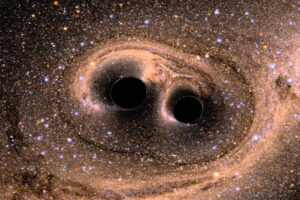
A black hole is a region in space where gravity is so strong that nothing, not even light, can escape its grasp. This boundary is known as the event horizon, marking the point of no return. At the core lies a singularity, a point where density becomes infinite and the laws of physics as we know them cease to apply. Black holes raise profound questions about the interplay between quantum mechanics and general relativity, two pillars of modern physics that remain difficult to reconcile.
- Event Horizon:
The boundary beyond which no information or matter can escape the black hole’s gravitational pull. - Singularity:
The infinitely dense core where conventional physics breaks down. - Hawking Radiation:
A theoretical emission of particles from black holes, suggesting they can slowly evaporate over time.
Laboratory Analogues of Black Holes
Scientists have developed innovative methods to simulate black hole-like conditions using analogue gravity systems. These setups manipulate fluids or light to mimic the behavior of black holes, allowing researchers to study phenomena such as event horizons and Hawking radiation in a controlled setting. For example, flowing fluids can create horizons that affect wave excitations similarly to how gravity influences light near a black hole.
- Analogue Gravity Systems:
Experimental platforms that replicate black hole dynamics using fluid flow or optical media. - Wave Propagation:
Waves in these systems behave like light in a gravitational field, enabling the study of horizon effects. - Hawking Radiation Simulation:
These models provide a way to observe radiation analogous to that predicted by Stephen Hawking.
Creating Micro Black Holes in Particle Accelerators
Beyond analogues, the possibility of generating microscopic black holes in high-energy particle accelerators like the Large Hadron Collider (LHC) has been a subject of theoretical interest. Under extreme energy densities, similar to those moments after the Big Bang, the formation of tiny black holes could occur. However, achieving this requires surpassing the Planck energy scale, a threshold where current physical theories may no longer hold, potentially revealing new physics beyond the Standard Model.
Scientific and Safety Considerations
The creation of artificial black holes raises important safety and ethical questions. Concerns focus on whether micro black holes could persist or grow uncontrollably, though prevailing theories suggest they would rapidly evaporate via Hawking radiation. Rigorous safety assessments accompany such experiments to mitigate risks. Despite these concerns, the potential scientific rewards-such as insights into dark matter, early universe conditions, and black hole thermodynamics-justify continued exploration.
Philosophical and Interdisciplinary Implications
The endeavor to produce miniature black holes in laboratories transcends physics, inviting philosophical reflection on the nature of existence, knowledge, and human capability. This research fosters interdisciplinary collaboration, integrating cosmology, quantum field theory, and thermodynamics. It challenges traditional boundaries between theoretical and experimental science, encouraging a holistic approach to understanding the cosmos.
Potential Applications and Future Directions
As techniques for creating and studying black hole analogues advance, practical applications may emerge. The unique gravitational and spacetime properties of black holes could inspire innovations in energy generation, data storage, and gravitational wave detection technologies. Continued research may unlock new methods to harness these phenomena, transforming theoretical insights into tangible technological progress.
Impact on Education and Public Understanding
The concept of laboratory-created black holes enriches scientific literacy by making complex astrophysical ideas more accessible. Incorporating these topics into educational curricula promotes interdisciplinary learning and stimulates curiosity about the universe. This approach nurtures a generation equipped to engage with advanced scientific concepts and contribute to future discoveries.
Ethical Reflections on Scientific Exploration
Simulating cosmic phenomena in laboratory settings necessitates careful ethical consideration. The responsibility to understand and manage the consequences of manipulating fundamental aspects of the universe is paramount. As scientific capabilities expand, so must our awareness of the broader implications, ensuring that progress aligns with societal values and safety.
Conclusion: Bridging Theory and Experimentation
The pursuit of creating black holes within laboratory environments exemplifies the spirit of scientific innovation and inquiry. By transforming abstract theoretical constructs into experimental realities, researchers are poised to deepen our understanding of some of the universe’s most mysterious objects. This journey promises groundbreaking discoveries, inspiring both scientific and philosophical exploration as humanity ventures further into the frontiers of knowledge.
FAQ
What are black holes?
Black holes are regions in space where the gravitational pull is so strong that nothing can escape from them, not even light.
How can black holes be created in a lab?
Scientists use analogue gravity systems and particle accelerators to simulate conditions similar to those of black holes.
What is Hawking radiation?
Hawking radiation is a theoretical prediction that black holes can emit particles and gradually evaporate over time.


Leave a Reply