
Short Answer
Understanding Matter: A Fundamental Overview
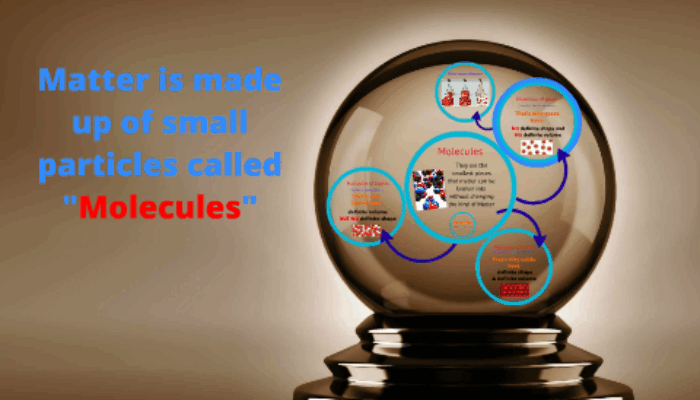
Matter, in its broadest sense, is defined as anything that occupies space and has mass. This includes the familiar states of solids, liquids, and gases, all of which are traditionally understood to be composed of molecules. Molecules themselves are assemblies of two or more atoms bonded together through chemical interactions, forming the basic units of chemical substances. However, this conventional view of matter as strictly molecular is challenged by various phenomena and theoretical constructs that suggest the existence of matter beyond molecular composition.
Defining Molecules and Their Role in Matter
Molecules are the smallest units of a chemical compound that retain its chemical properties. They are formed when atoms connect via chemical bonds, such as covalent or ionic bonds. This molecular structure underpins much of classical chemistry and physics, providing a framework for understanding the physical and chemical properties of substances.
- Atoms:
The fundamental units of chemical elements, consisting of protons, neutrons, and electrons. - Molecules:
Groups of atoms bonded together, forming the building blocks of most matter encountered in daily life.
Exploring Non-Molecular Forms of Matter
While molecules dominate the composition of everyday matter, certain states and forms of matter exist that do not conform to this molecular framework. These include plasma, exotic states of matter, and theoretical entities such as dark matter.
Plasma: The Ionized State of Matter
Plasma is often referred to as the fourth state of matter, distinct from solids, liquids, and gases. It consists of ionized particles-atoms that have lost or gained electrons-resulting in a soup of charged particles including ions and free electrons. This ionization means plasma lacks the stable molecular structures found in other states of matter.
- Characteristics:
Highly conductive, responsive to magnetic and electric fields, and capable of emitting light. - Occurrence:
Common in the universe, found in stars, lightning, and neon signs.
Exotic Matter and Extreme States
Beyond plasma, physics explores exotic forms of matter that arise under extreme conditions. One notable example is the quark-gluon plasma, a state believed to have existed shortly after the Big Bang and recreated in particle accelerators. In this state, quarks and gluons-the fundamental constituents of protons and neutrons-are no longer confined within atomic nuclei, representing a form of matter devoid of traditional molecular structure.
Dark Matter: The Mysterious Cosmic Component
Dark matter is a hypothesized form of matter that does not emit, absorb, or reflect light, making it invisible to current detection methods. It is estimated to constitute about 27% of the universe’s mass-energy content. Unlike ordinary matter, dark matter does not interact via electromagnetic forces, suggesting it is not composed of molecules or atoms as we understand them.
Quantum States and Condensed Matter Physics
Condensed matter physics reveals additional non-molecular states of matter, such as Bose-Einstein condensates (BECs). These occur at temperatures near absolute zero, where particles known as bosons occupy the same quantum state, resulting in macroscopic quantum phenomena like superfluidity and superconductivity. Such states challenge the traditional molecular paradigm by exhibiting collective behaviors that transcend individual molecular interactions.
Mechanisms Behind Non-Molecular Matter
The existence of non-molecular matter arises from the fundamental particles and forces that govern the universe. At subatomic scales, protons, neutrons, and electrons form atoms, but these particles themselves are not molecular. In plasma, ionization breaks molecular bonds, creating a charged particle environment. In exotic states like quark-gluon plasma, the confinement of quarks is lifted, leading to a fundamentally different matter organization. Dark matter, while still theoretical, suggests matter forms that do not rely on electromagnetic interactions or molecular bonds.
Mathematical and Physical Descriptions
While molecular matter is often described using chemical formulas and bonding theories, non-molecular matter requires different mathematical frameworks:
- Plasma Physics Equations:
Governed by Maxwell’s equations and fluid dynamics to describe charged particle behavior. - Quantum Chromodynamics (QCD):
The theory describing quark-gluon plasma, involving complex interactions between quarks and gluons. - Dark Matter Models:
Utilize gravitational effects and particle physics theories to infer properties, as direct detection remains elusive.
Practical Examples of Non-Molecular Matter
Non-molecular matter is not just theoretical; it has tangible manifestations:
- Stars and the Sun:
Composed primarily of plasma, where high temperatures strip electrons from atoms. - Laboratory Bose-Einstein Condensates:
Created using ultra-cold atoms to study quantum phenomena on a macroscopic scale. - Particle Accelerator Experiments:
Generate quark-gluon plasma to investigate conditions of the early universe.
Common Misunderstandings About Matter Composition
- Misconception: All matter is made exclusively of molecules.
Correction: Matter can exist in forms such as plasma, quark-gluon plasma, and dark matter, which do not rely on molecular structures. - Misconception: Plasma is just a gas.
Correction: Plasma is an ionized state with unique properties distinct from gases, including electrical conductivity and magnetic responsiveness. - Misconception: Dark matter is just ordinary matter we cannot see.
Correction: Dark matter interacts differently from ordinary matter and is not composed of atoms or molecules as known.
Significance of Non-Molecular Matter in Science and Technology
Recognizing the existence of non-molecular matter expands our comprehension of the universe and the fundamental nature of physical reality. It informs astrophysics, cosmology, and particle physics, providing insights into the origins of the universe, the behavior of stars, and the composition of cosmic structures. Technologically, understanding plasma has led to advancements in energy generation, lighting, and materials processing. Moreover, studying exotic states like Bose-Einstein condensates opens pathways to quantum computing and precision measurement technologies.
Future Directions and Evolving Perspectives
As scientific inquiry progresses, the boundaries defining matter continue to evolve. The distinction between molecular and non-molecular matter may become more nuanced, with new states and forms yet to be discovered. This ongoing exploration challenges existing paradigms and promises to deepen our understanding of the cosmos and the fundamental laws that govern it.
FAQ
What is matter?
Matter is anything that occupies space and has mass, traditionally understood to be composed of molecules.
Can matter exist without molecules?
Yes, forms such as plasma, dark matter, and quark-gluon plasma exist beyond the molecular framework.



Leave a Reply