3D Cloak Works in Free Space: Goodbye Visibility

Definition of 3D Cloaking Technology 3D cloaking refers to the advanced scientific technique of rendering objects invisible by manipulating the behavior of light waves around them. This concept, once confined to the realm of science fiction, has evolved into a tangible field of research within optical physics and materials science. The technology relies on specially […]

Read More →

Body Talk: The Physics of Human Motion and Vibration

Understanding Human Motion and Vibration The human body is an intricate system composed of bones, muscles, and connective tissues that collectively enable movement and transmit vibrations. Exploring how these components interact physically during everyday activities reveals the foundational principles of biomechanics and physics that govern our motions. By analyzing concepts from dynamics, kinematics, and acoustics, […]

Read More →

Is majoring in mathematics worth the money in 2020?

Understanding the Value of a Mathematics Major In today’s data-centric society, choosing to major in mathematics prompts a complex evaluation of its worth. The question of whether investing in a mathematics degree is financially justifiable in 2020 transcends a simple yes-or-no response. Instead, it demands a comprehensive exploration of the academic, economic, and personal factors […]

Read More →

Do some artists do both 3D and 2D art?

Understanding 2D and 3D Art Artistic expression has undergone significant evolution in recent years, influenced by technological progress and shifting cultural conversations. A fascinating inquiry emerges: can artists effectively work across both two-dimensional (2D) and three-dimensional (3D) art forms? The answer extends beyond a simple yes, revealing a complex and innovative fusion of creative practices […]

Read More →

Cold Antiatoms Now in Bulk: Antimatter Ramps Up

Definition of Antimatter and Cold Antiatoms Antimatter is the mirror counterpart to ordinary matter, consisting of particles that have the same mass but opposite charge and quantum properties compared to their matter equivalents. For example, electrons correspond to positrons, and protons have antiprotons as their antiparticles. When matter and antimatter meet, they annihilate each other, […]

Read More →

Rust as Art: Corrosion Sculpts 3D Nanoworlds

Definition of Rust and Corrosion Corrosion, a fundamental concept in materials science, is often viewed negatively as the deterioration of metals. However, this natural process, particularly rust formation, transcends mere degradation to become a fascinating subject of artistic and scientific interest. Rust, chemically known as iron oxide, emerges when iron interacts with oxygen and moisture, […]

Read More →

How can we compare a 2D printer to a 3D printer?

Definition and Overview of 2D and 3D Printing Technologies In the landscape of contemporary fabrication technologies, 2D and 3D printers represent two fundamentally different approaches to transforming digital data into physical forms. Both devices convert virtual designs into tangible outputs, yet their methods, applications, and impacts diverge significantly. Understanding these distinctions provides insight into how […]

Read More →

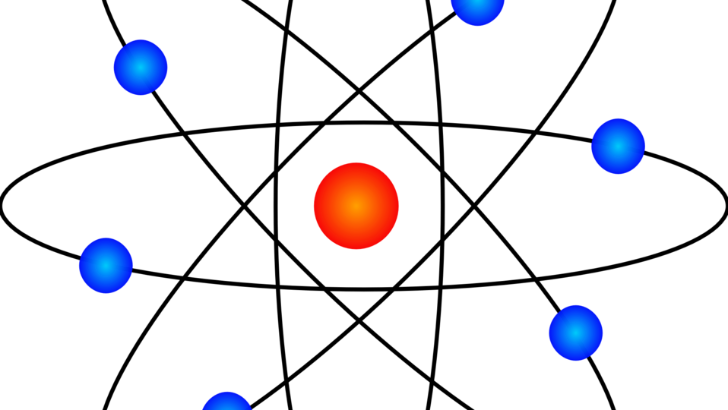
Are we atoms studying themselves? How is it possible?

Definition The idea that conscious beings are essentially atoms examining themselves presents a profound philosophical and scientific concept. It merges ancient philosophical thought with modern scientific inquiry, exploring the intersection of self-awareness and the fundamental nature of matter. This concept invites us to consider the relationship between consciousness and the atomic composition of the universe. […]

Read More →

Spintronics from the Cold: Atoms Could Power Future Transistors

Definition of Spintronics Spintronics, derived from the term “spin transport electronics,” is an innovative branch of semiconductor technology that exploits the intrinsic spin of electrons alongside their electric charge. This quantum mechanical property of electrons offers a new dimension for data processing and storage, promising significant improvements in the speed, efficiency, and functionality of electronic […]

Read More →

Hot Topic: The Physics Behind Climate Debates

Understanding Temperature in the Context of Climate Change Temperature is a fundamental physical property that quantifies the average kinetic energy of particles within a material. As particles move more rapidly, the temperature rises, reflecting increased molecular motion. This concept, rooted in kinetic molecular theory, forms the basis for interpreting weather patterns and broader climatic phenomena. […]

Read More →